My Solo Itinerary in Central Japan

I recently took a 38-day solo trip through central Japan. This was an itinerary I had put off for some time. Honestly, I knew it would be a little out of my comfort zone, and it fell lower on my list than other places. Europe, Australia, and New Zealand were easier.
But as I was traveling in Europe last spring, Japan kept coming up in conversations with fellow travelers. People were raving about cheap airfares and the natural beauty of the country. One person, knowing my love of hiking, urged me to go. How could I not consider it?

Then, a family member had to change her travel plans, and I was no longer obligated to dog sit for her in October. I could head straight there after cat sitting in Hawaii for two weeks.  Everything pointed to Japan—it was time.

Even though I live this crazy, fluid nomadic life, I am a planner at heart. I book most of my accommodations far in advance. This time, I was on a tighter timeline. Finding places to stay, within my budget, was challenging. October and November are popular months for travel in Japan. The weather has cooled, and that beautiful autumn color is coming on.

Unlike people who go on vacation for a week or two, I am a traveler, going at a slower pace. I like to stay at least five days in each destination. Some of my nomad friends stay as long as a month in a place.

I decided to focus on central Japan. My trip to Australia and New Zealand last year involved too many flights for my taste. I wanted this one to be simpler.

First stop: Tokyo (Six Nights)

My flight was from Honolulu to Haneda. From what I read online, Haneda was the preferred airport with easier access to the city center. This proved to be true.

Since my flight arrived late at night (10:00 pm), I booked a hotel near the airport in case of delays and because I knew I would be exhausted.

The hotel was perfect: nice, clean room for one, onsen (community bath) in the hotel, and breakfast included.

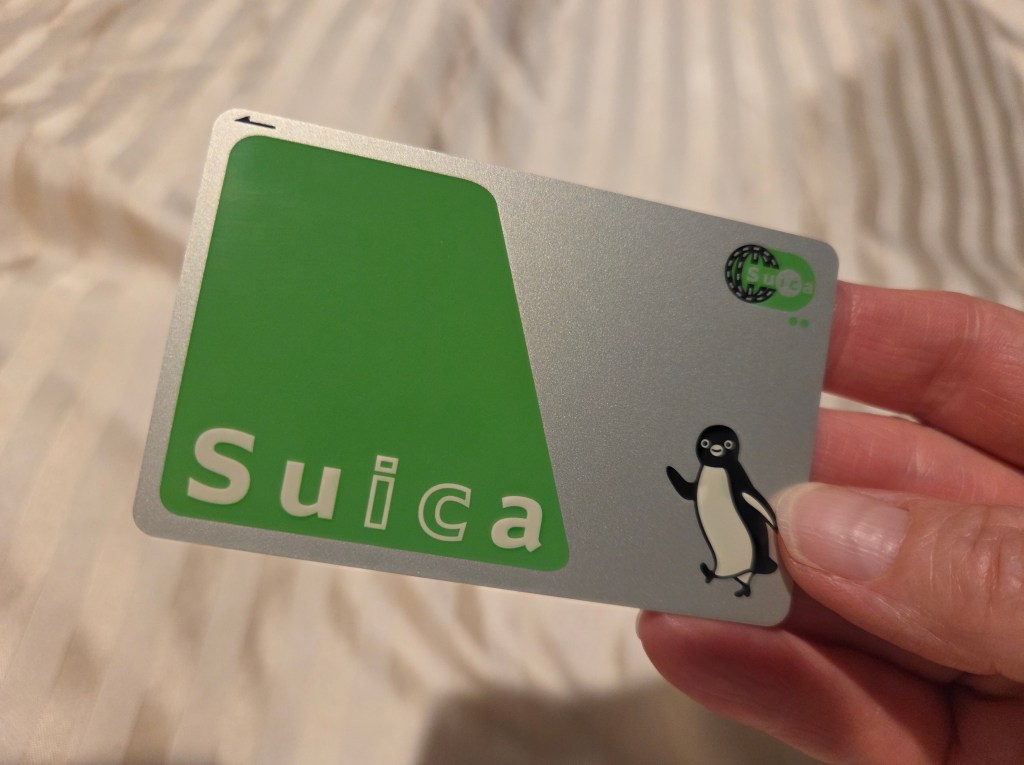
The next morning, I caught the hotel shuttle back to Terminal Two at Haneda Airport. This is the place to buy a real Suica Card, not the tourist one. You load it with cash to use on public transportation in Japan. Much easier than fumbling for change on a bus, subway, or train. You can even use it for purchases at convenience stores like 7-Eleven and some vending machines.
I stayed in Tokyo five more nights in the Harumi Flag neighborhood. It was enough time to take in the primary sights on my list. Could I have stayed longer? Yes! I’m sure that I could easily keep myself occupied in Tokyo for a month.

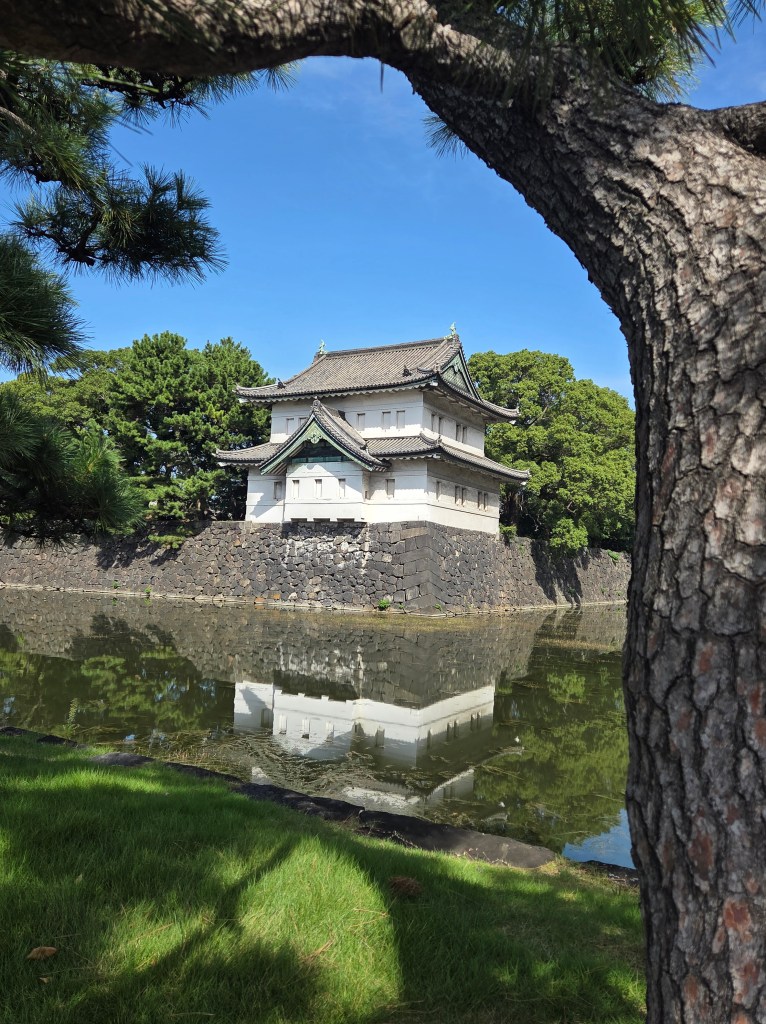
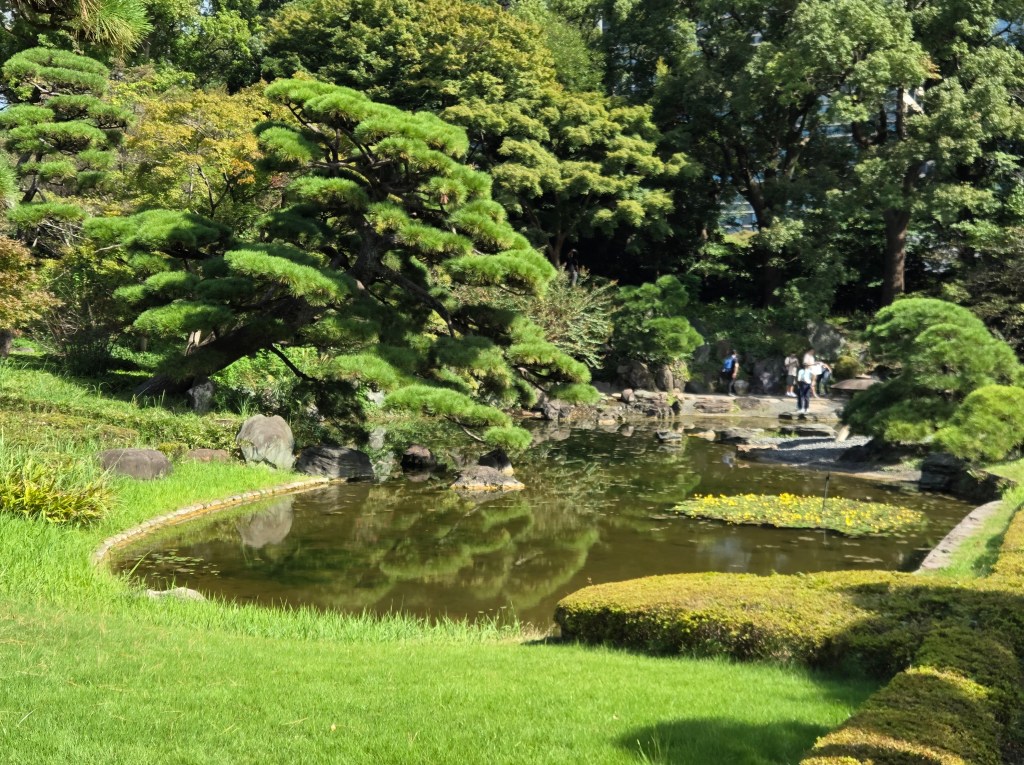
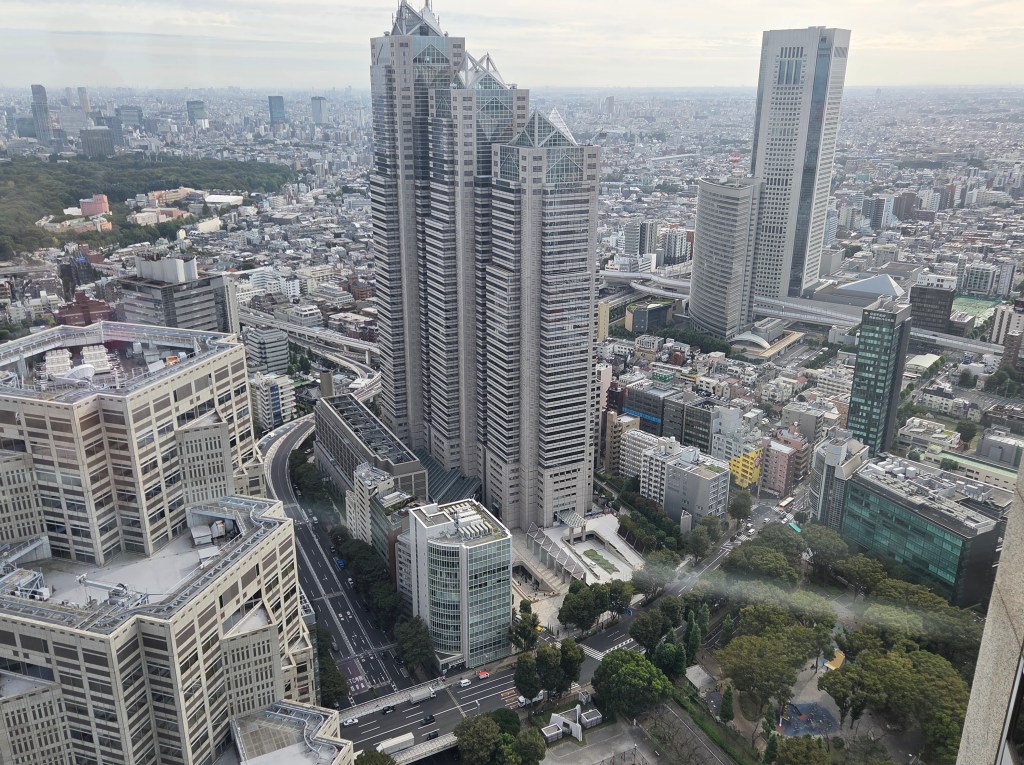
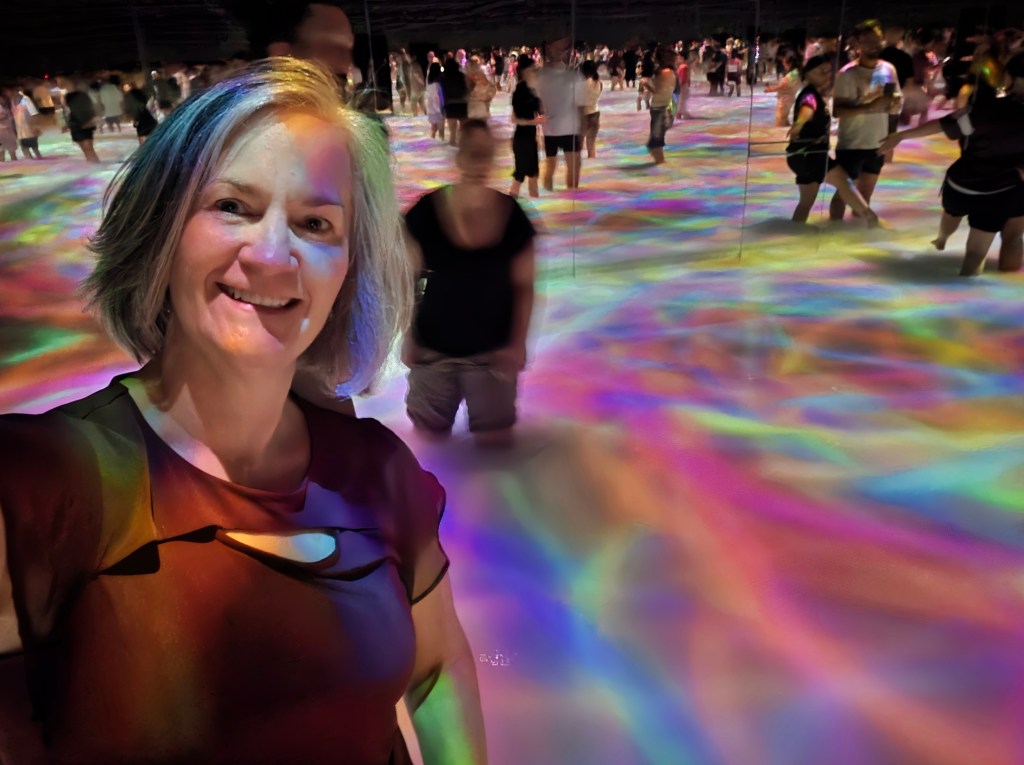
Tokyo highlights: Tokyo Metropolitan Government Building for a no-cost high-rise view of the city; Team Lab Planets (Make a reservation online well in advance.); Imperial Palace and East Garden; Meiji Jingu Shrine and Garden
Nikko (Three nights)

I didn’t want to miss this spectacular UNESCO World Heritage Site, just 150 kilometers north of Tokyo.

Warning: Accommodations are expensive in Nikko. It’s a popular destination and not all that big. The best thing that I could find within a reasonable budget was a family-owned pension a mile or so outside of town. My room was tired and dated and the hallway carpet smelled. But it was worth it to be able to explore Nikko and the surrounding area. And my hosts were lovely.

If you are like me and you don’t like to drive in foreign countries, the good news is that there are buses in Nikko to transport you to the local sights. The bus station is right across the street from the main train station, and the bus routes are clearly marked for tourists. You can pay in cash or with your Suica Card.
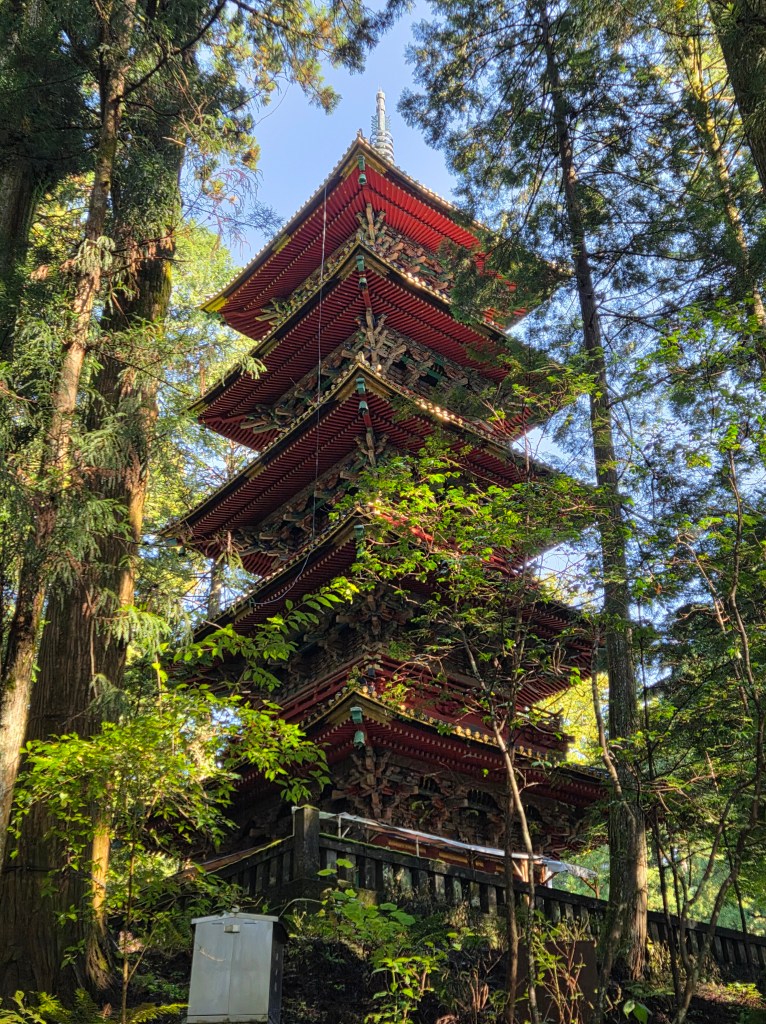
I spent the first day walking around the main temple sites in Nikko. The local walking map that I used had two main routes. I chose the Takino Path. If you have the energy, be sure to go all the way to the top. You will find it’s much quieter up there with fewer tourists, and there are numerous interesting sights along the way.

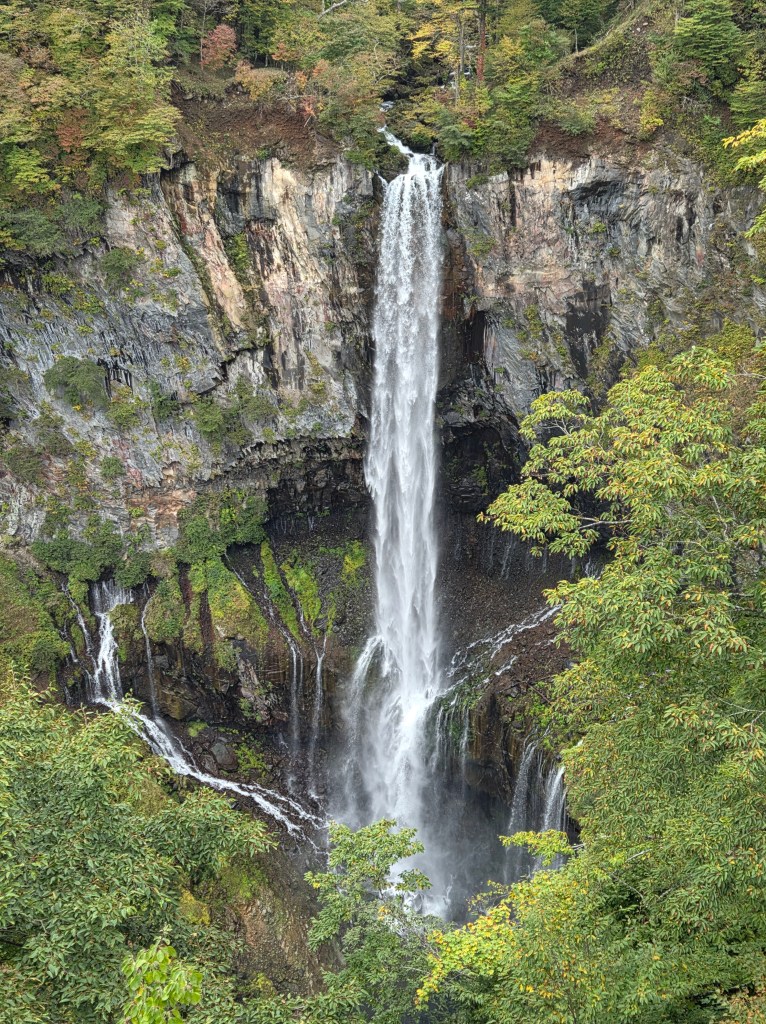
The second day, I took the bus to Kegon Falls and Lake Chuzenji. On the way back to Nikko, I got off the bus and walked to Yashio-no-yu Onsen. From there, I was able to walk part of the Kanman Path back to town.
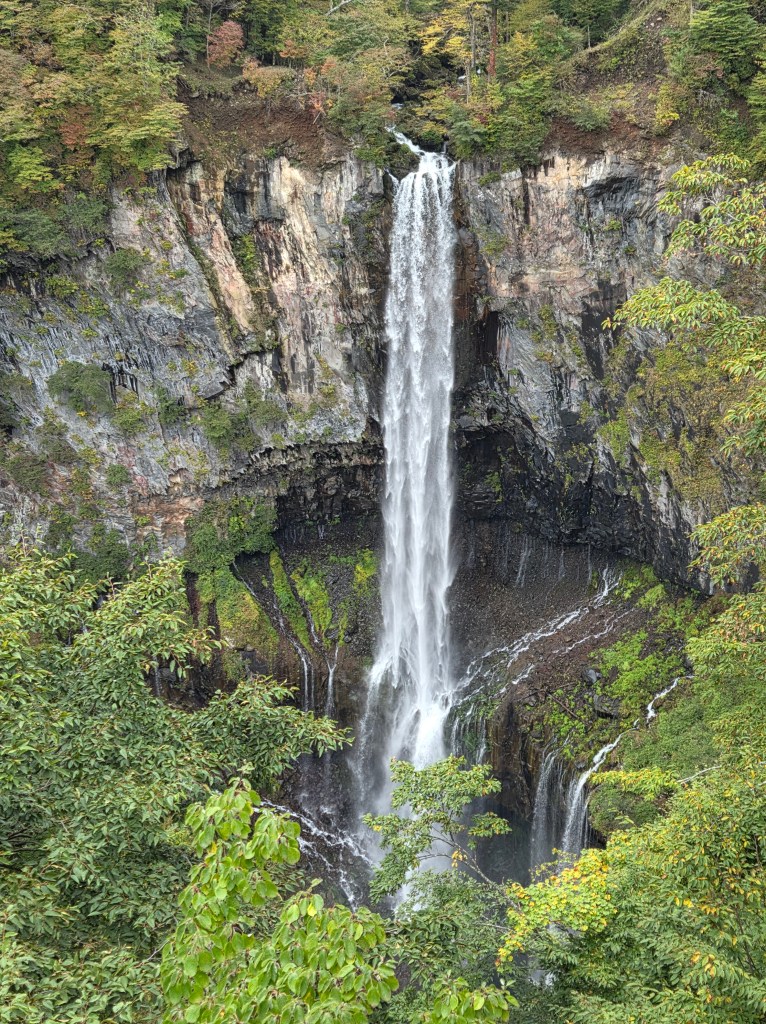
I wish I had taken one more day in Nikko. I wasn’t able to see everything in the two full days that I was there.

Matsumoto (Seven nights)

I booked a longer stay in Matsumoto because I knew I would be taking day trips from there. I would have been okay with five or six nights, but it was nice to slow down a bit after the busy days in Tokyo and Nikko.

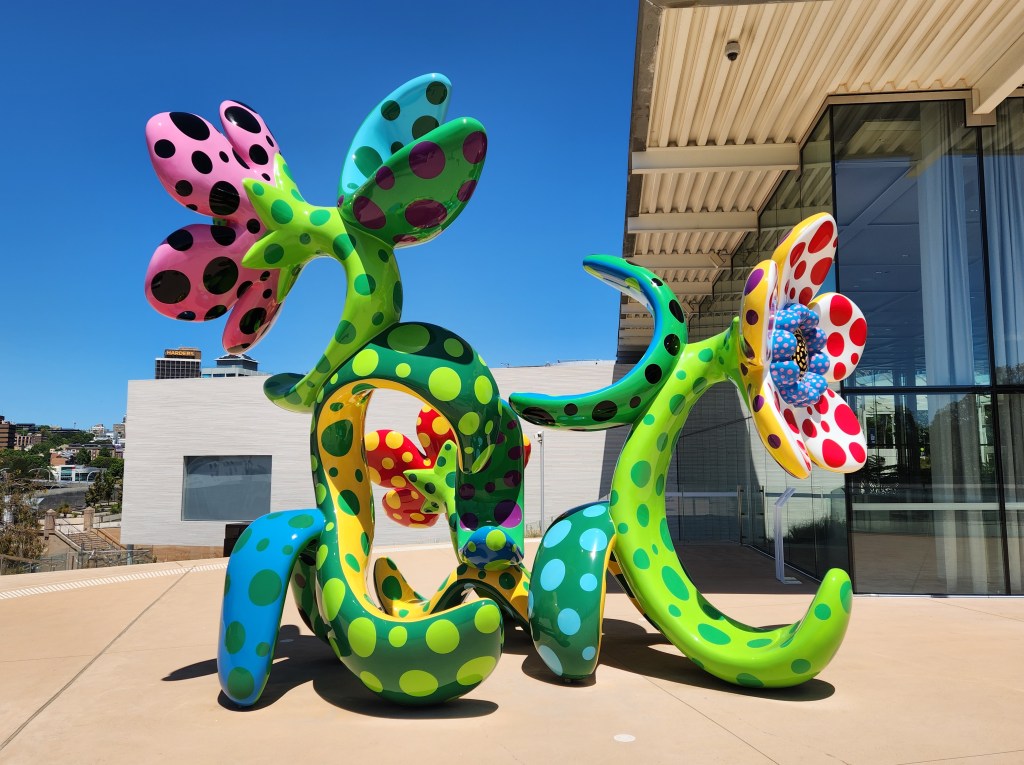
Matsumoto is a small city near the Japanese Alps. It’s the home of the famous Matsumoto Castle and is the birthplace of Yayoi Kusama, the artist known internationally for her large, vibrant creations. The train station is clean and new with the bus station out front. The people working at tourist information in the train station are very helpful. Be sure to stop there when you get off the train.

There are several museums, large and small. Don’t miss the City Art Museum and Kaichi School. There are some gems like Nawate Shopping Street, City Art Museum, and Alps City Park. Accommodations are reasonably priced. I stayed in a nice modern hotel with a kitchenette just three blocks from the train station.

Day trips from Matsumoto

Azumino: You can reach Azumino by trainin under half an hour. Be sure to go on a nice day, if possible, because you will be renting a bike to see the town. The local tourism agency has smartly created a map with bike routes. You can rent a bike from your pick of a few shops near the train station for just 200 yen/hour. (Four hours cost $5.30 US.) Then, it is off on two wheels through the rice paddies and along the river to the Wasabi Farm and other local sights. If you enjoy sculptures, don’t miss the Rokukan Art Museum.
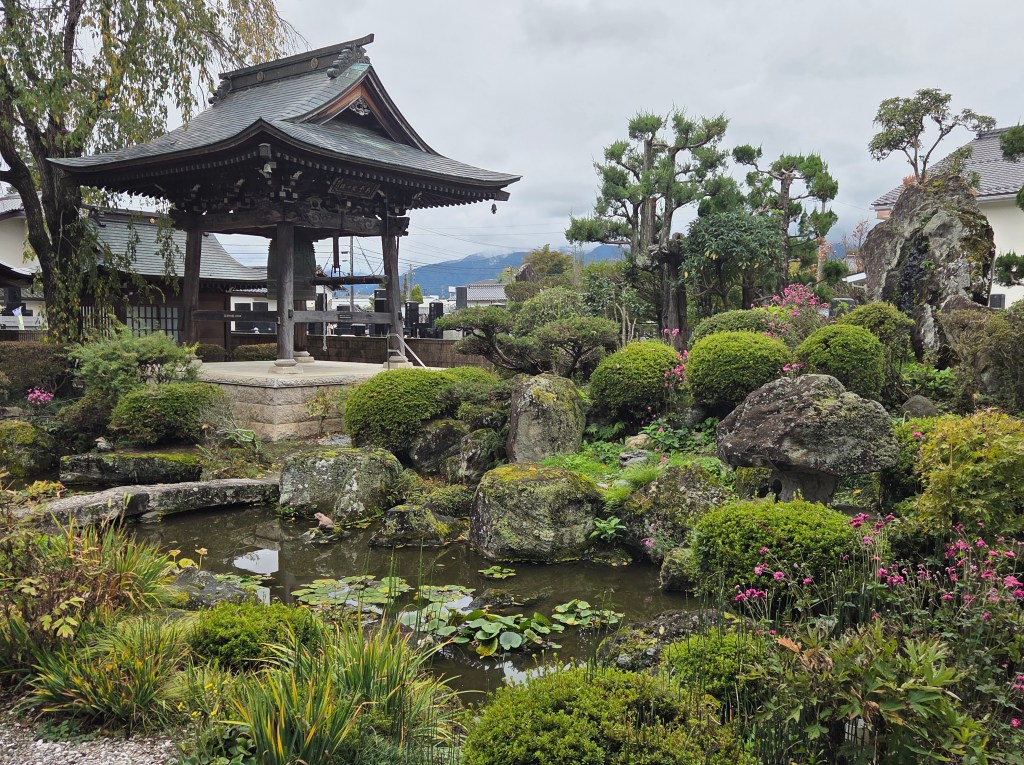
Kamikochi: This is the location in Chubu Sangaku National Park that you must see. You can get there by bus, or bus and train combination. When you arrive in Matsumoto, head straight to the bus station (visible across from the train station) to reserve your round-trip tickets. Or you can prebook online.
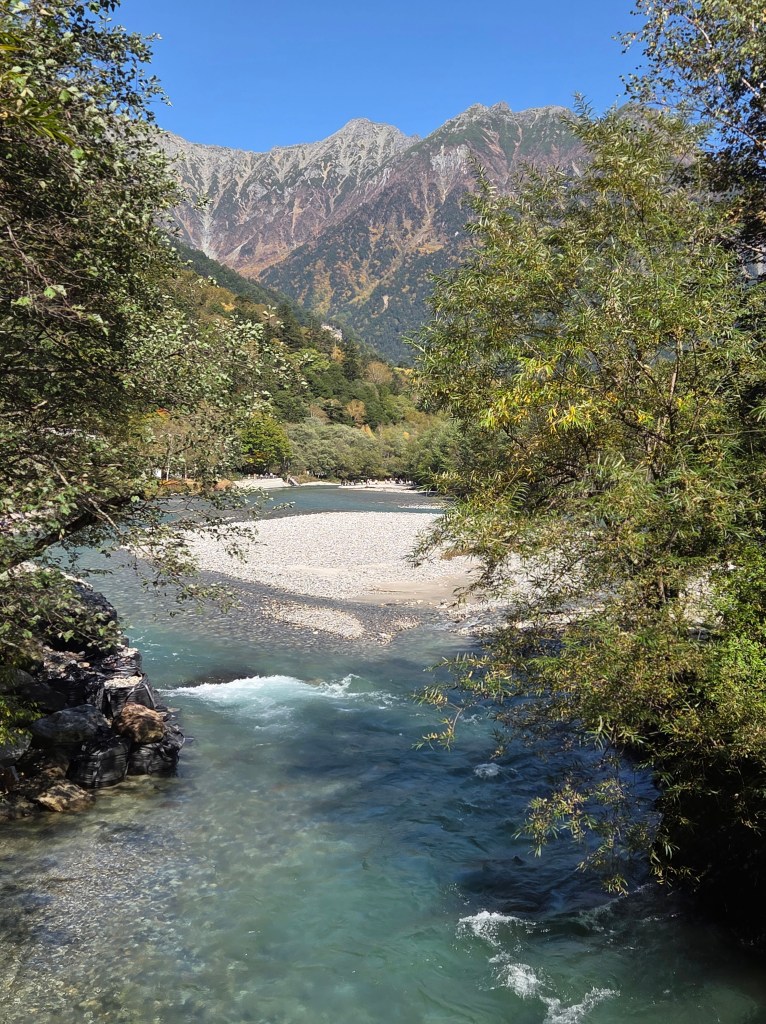
The bus ride up to Kamikochi is thrilling, to say the least. If you are on the left side of the bus, you seem to get more of the straight-down-OMG views. If you are a walker, get off the bus at Tashio Pond to walk through the park. Otherwise, get off at the main bus station in the park. The visit was a highlight of my trip. I walked about eight miles that day.

Torii Pass Hike:

Take the train from Matsumoto to Yabuhara. From there, you will hike up and over Torii Pass on an ancient path to Narai, a town with a nationally designated historic district. The trail is well-marked the entire distance, and you will see shrines, ancient stone paths, and other historic sights along the way. It is a moderate hike with some elevation, so make sure you are prepared. You will be able to fill your water bottle at several points along the way.

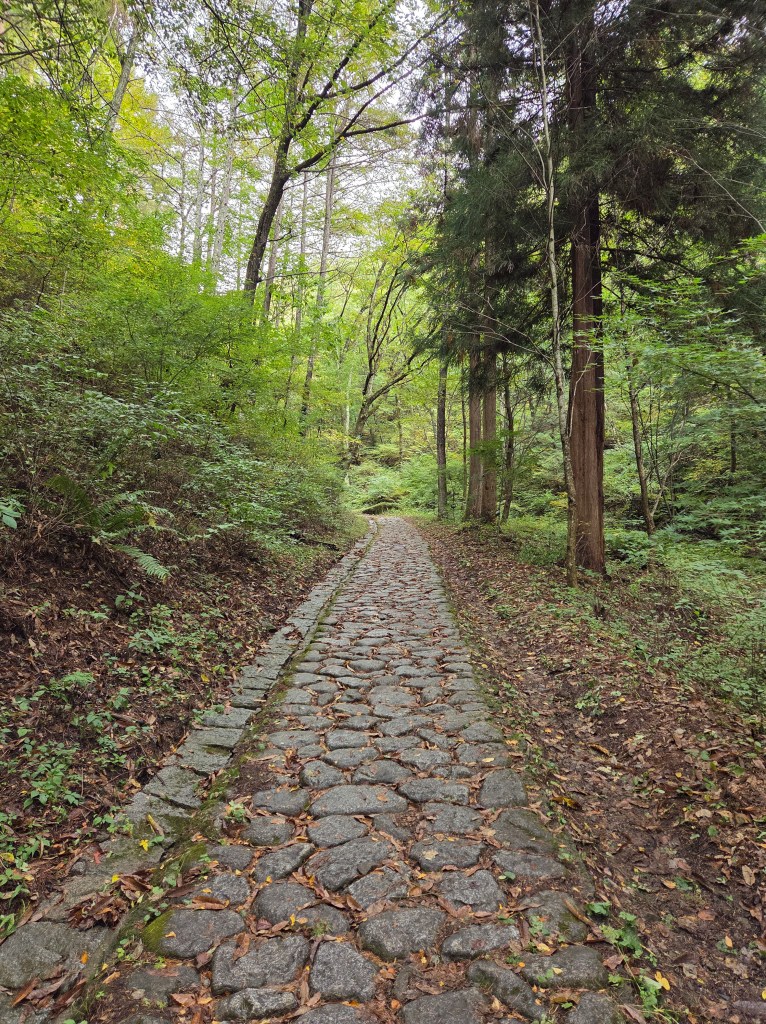
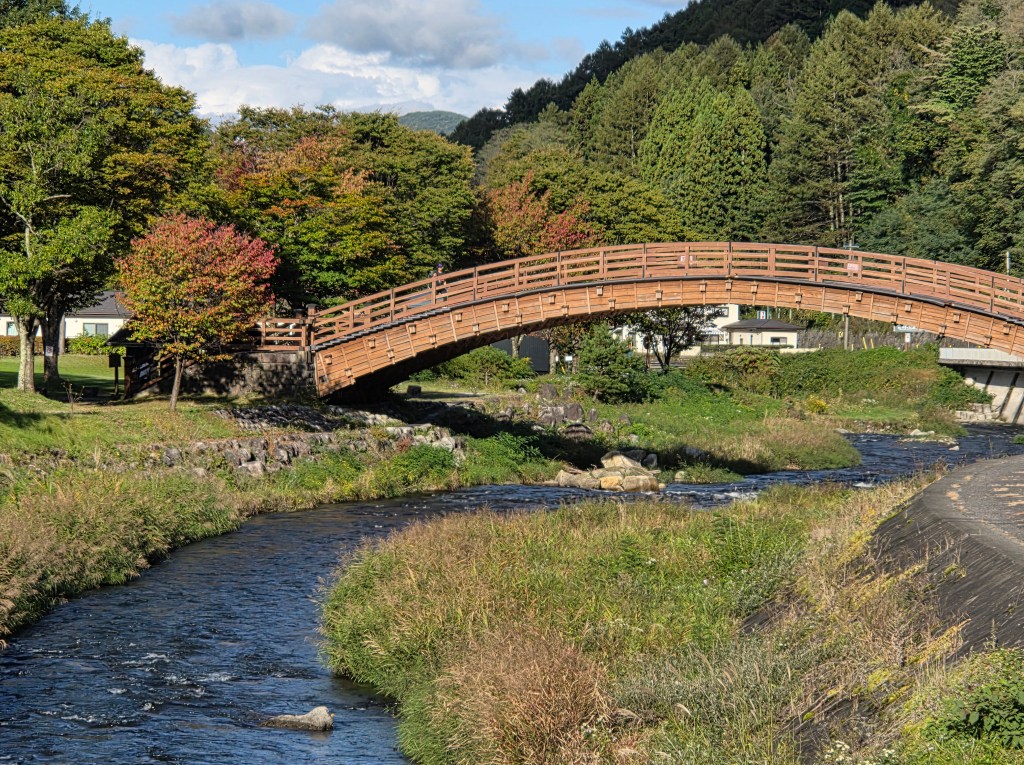
If you aren’t a hiker, take the train to Narai. The historic town is not to be missed. Plan to spend a couple of hours strolling through the town, perhaps with lunch. There are historic houses to tour and fun shops to visit. Be sure to see the Kiso Ohashi Bridge, too. It is over 300 years old and is one of Japan’s largest arched bridges.
Takayama (Six Nights)

Takayama has much to offer! If you only have time for one stop in this region of Japan, I feel like Takayama is it. It is a fun, cute, walkable town with tons of opportunities packed into a compact space. There are two daily morning markets, so you can pick the one that is closest to your hotel. You will find fresh produce, packaged and freshly made foods, and crafts at the markets.

Again, be sure to stop at the tourism office, right in front of the train station. You will want to get the town map that shows all the main sights and walking routes. There are numerous temples and shrines to see, a walkable historic district, several museums, and a cat café/adoption center.
Day Trips from Takayama:

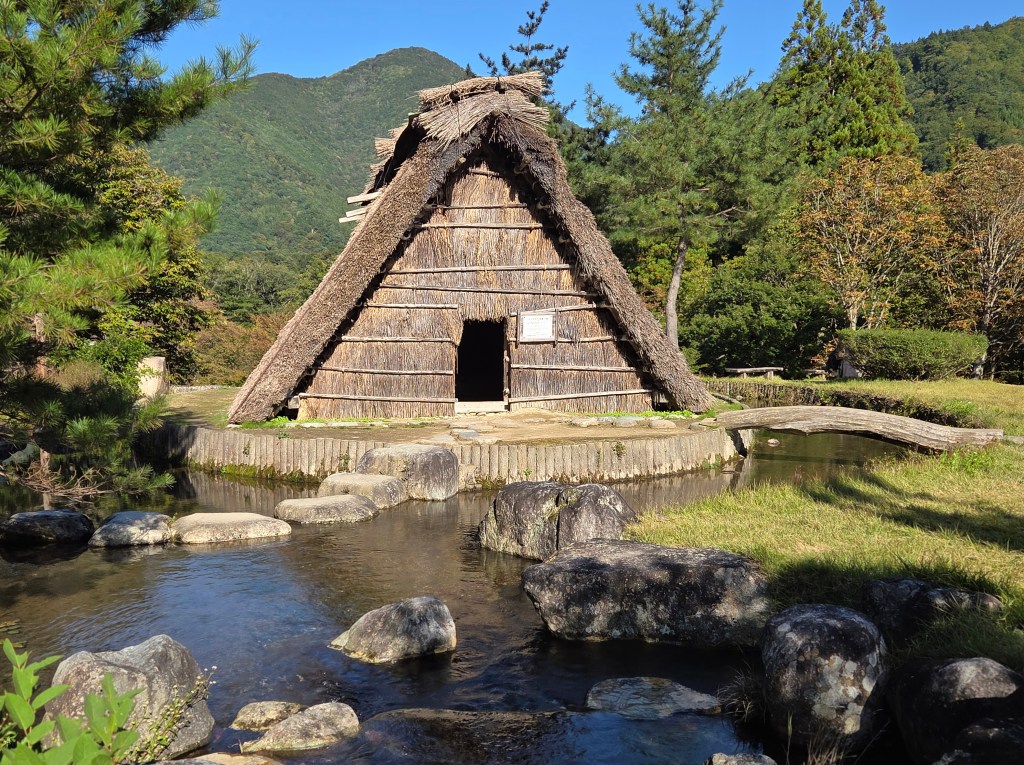
Shirakawa-Go and Ainokura Village: I opted for a bus tour to these two sites. Shirakawa-Go is the larger and more well-known of the two, but I preferred Ainokura because it was much less crowded. There are Gassho (thatched roof) houses throughout the region. If you are pressed for time, you can go to the open-air museum in Takayama.
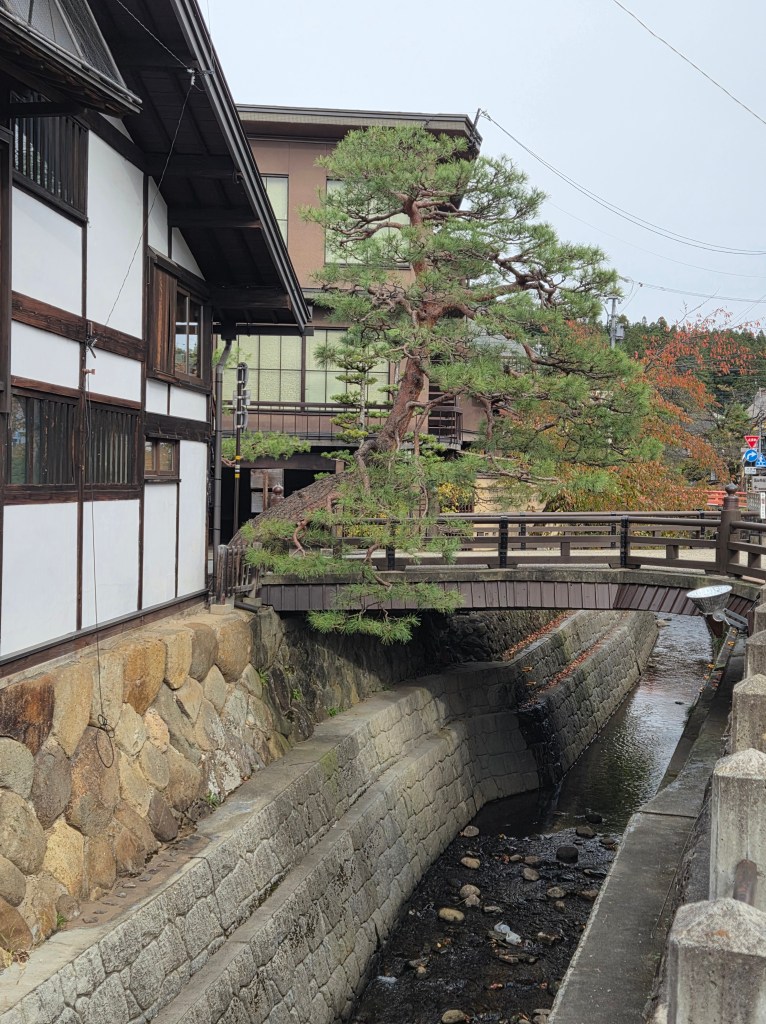
Hida Furukawa: This town, which is much smaller than Takayama, is a short 20-minute train ride away but worth a visit if you have time. There are a few gems like canal street and the Festival Exhibition Hall. I visited in the morning, had lunch, and was back in Takayama for the afternoon.

(You can also get to Kamikochi from Takayama if you decide to skip Matsumoto.)

Kanazawa (Four Nights)

This is the one destination that I planned perfectly. Kanazawa is a medium-sized city close to the Sea of Japan. I feel like it is an up-and-coming place, partly because it was added to the Shinkansen route late in the game. I absolutely loved Kanazawa and am so happy it was part of my itinerary. After spending nearly two weeks in the Japanese Alps region, it felt fresh and modern without being too busy or crowded.

The main sights in Kanazawa are in a rather compact zone, all of which can be reached by two ingenious tourist bus loops that start at the train station.  

When you arrive, pick up a map at the tourist information center in the train station. There was also a nicely designed newspaper made especially for English-speaking tourists.

Some of the top sights in Kanazawa are Kanazawa Castle, Kenrokuen Garden (one of the top three gardens in Japan), Omicho Market, Nagamachi Samurai District, three geisha districts, temple areas, and a museum district including the 21st Century Museum of Contemporary Art and my favorite, the D.T. Suzuki Museum.
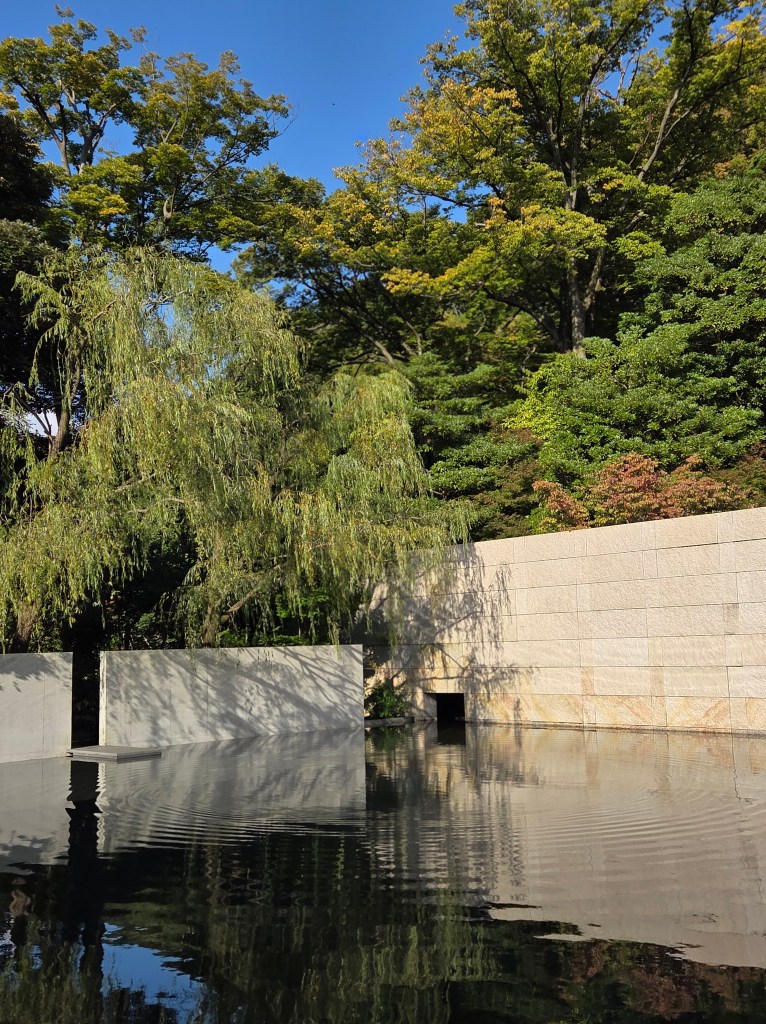
Kanazawa is a great place to eat, too! I have Celiac Disease, but for a city of its size, there were several dining options for me. For those without dietary restrictions, it seemed to be a foodie haven. You could spend days eating your way through Omicho Market!

Kyoto (Eleven Nights)

Most people wouldn’t spend a week and a half in one place, but remember, I’m a slow traveler. I also thought I might be taking day trips to Nara, Lake Biwa, or Osaka. (However, I didn’t.) In the end, I didn’t quite see everything on my list, and I found some extra treasures along the way.

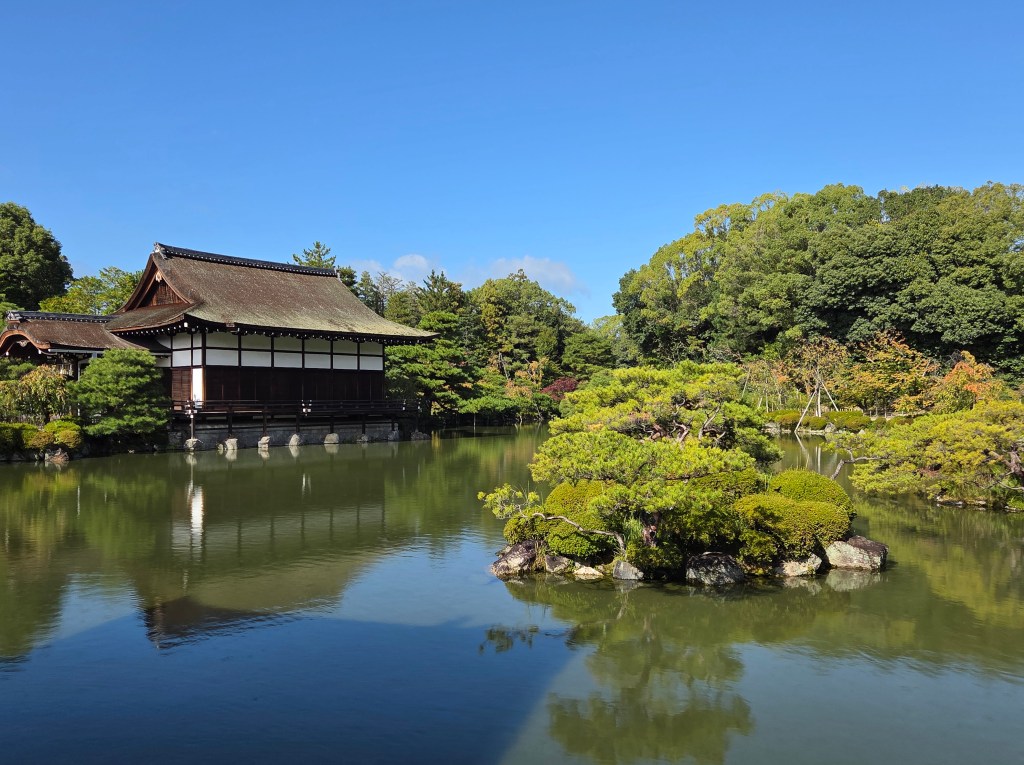
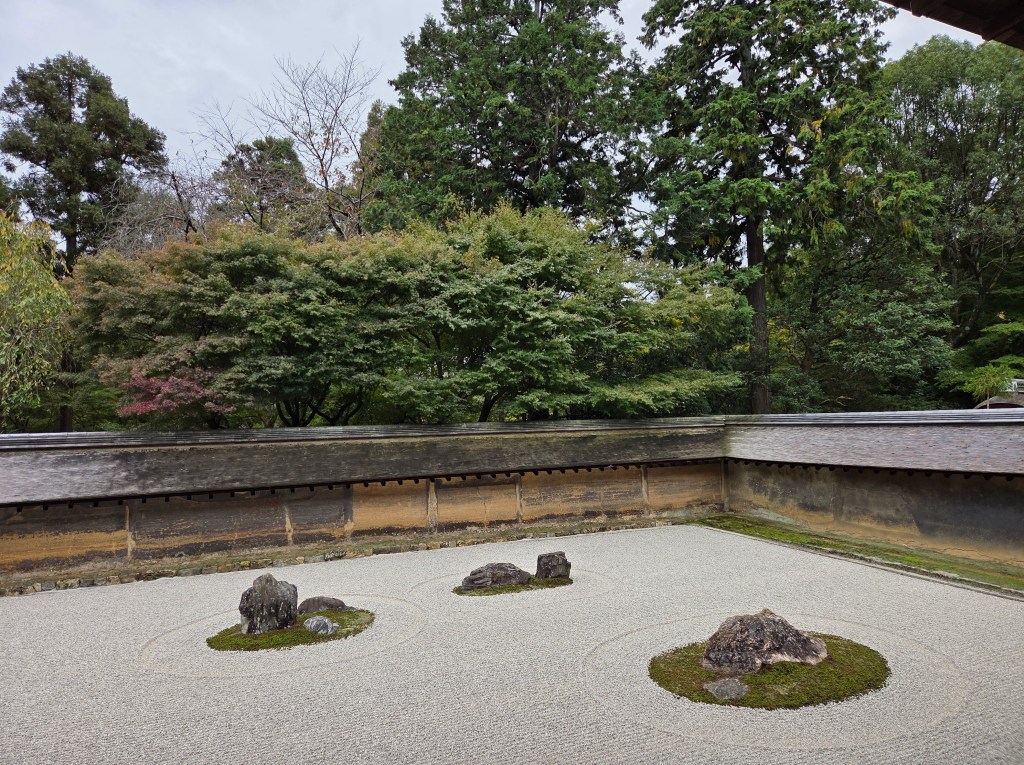
For me, Kyoto was the best place in Japan. I love history and nature, making Kyoto my kind of place. There are also 14 UNESCO World Heritage Sites in the city! Additionally, it is surrounded by mountains. A day trip up to Mount Kurama is a must. The Kyoto Botanical Garden has Japan’s largest collection of plants, and the conservatory alone is worth the trip. Philosopher’s Path is another must-do. Even though I’m not a big shopper, I loved walking through Nishiki Market and some of the other covered pedestrian streets. And museums, so many museums. The list goes on…
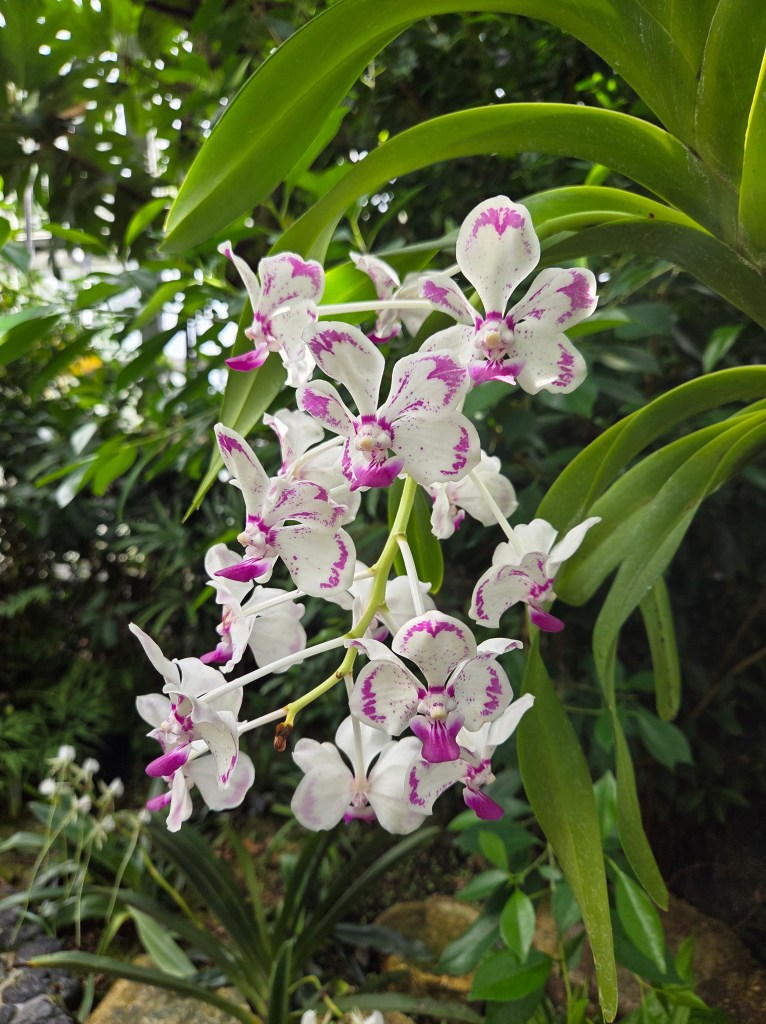
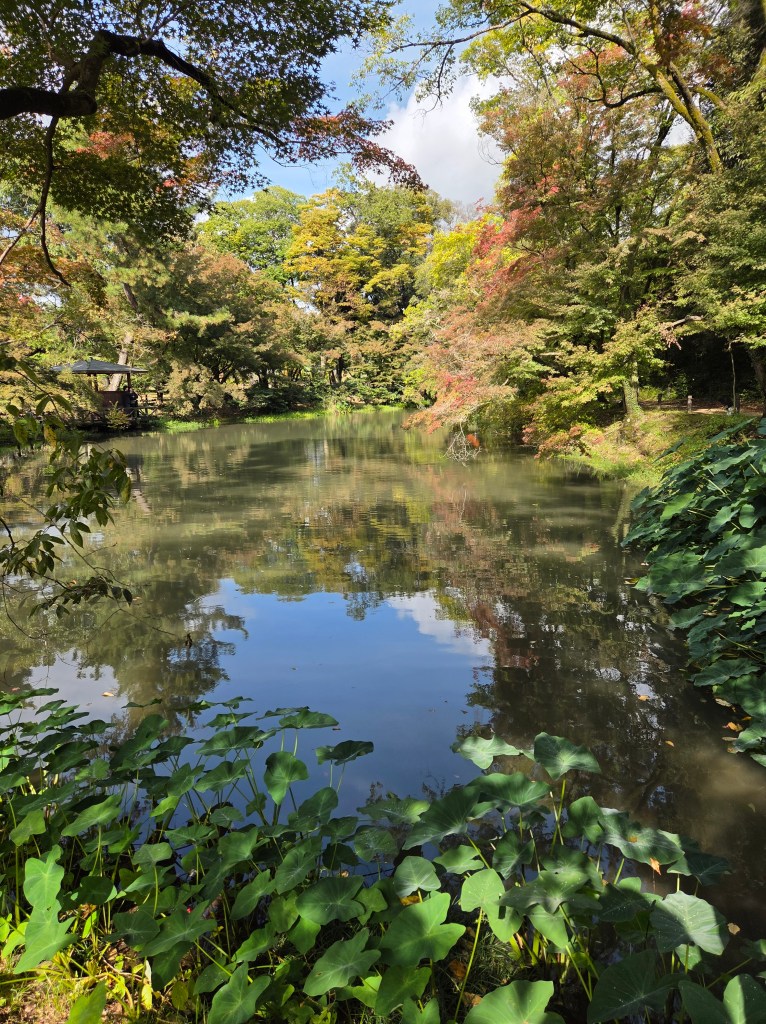
Kyoto was the city where I most fully felt like I was experiencing Japan. I stayed in a hotel that was located between the Kamo River and Kyoto Gyoen National Garden. It was a bit north of the heavily touristed areas of central Kyoto, but I had easy access to buses and trains. I was hanging out with locals and college kids. People seemed more laid back, and I engaged in more conversations with locals. I often took evening strolls along the Kamo River, and I even experienced a shiatsu massage.
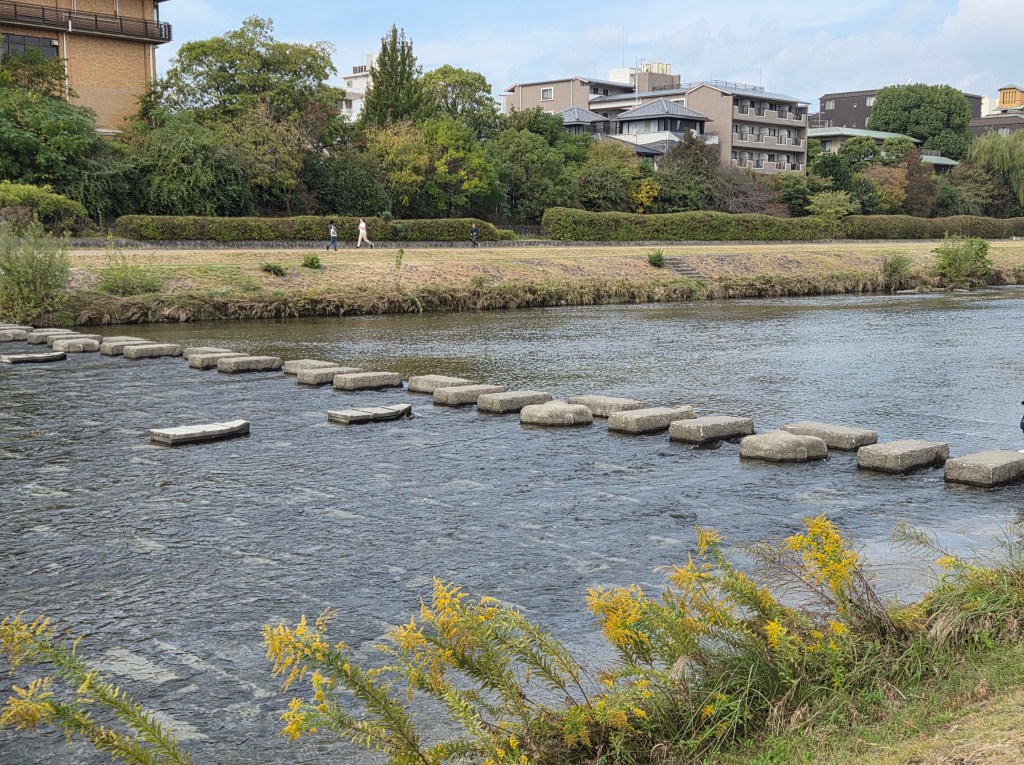
For anyone else out there who suffers from Celiac Disease, Kyoto is the place to go in Japan. I ate lunch out every day and didn’t even make it to all the restaurants on my list. Perhaps it is the number of expats and foreign college students in the city who have influenced this shift. I’m not sure, but it was nice to find a selection of places to eat.
All in all, I’m very happy with my Central Japan experiences. If you’ve never been, I suggest adding it to your travel wish list. Happy travels!
Gluten-Free in Japan: Can it be Done?

(Disclaimer: I am person who has Celiac Disease. I am not an expert and have no medical background. I am simply sharing my travel experiences from one trip to Japan.)

I have been traveling the World for over three years. I put off going to Japan for one reason—gluten. As a Celiac, I knew it would be challenging to find safe things to eat in Japan. After talking to several traveling friends, I decided to give Japan a try and came for 38 days in October and November 2025.

So, how did it go?

First, there is the language barrier. I know just a few words and phrases in Japanese, and frankly, I wasn’t motivated to learn more. Some people in Japan will understand “Gluten Free” and some won’t. I carried a card in Japanese that explained my dietary needs and found it often elicited a strong response. Someone I met in Japan said that many people would see it as demanding and inappropriate. Even in a couple of restaurants that supposedly offered gluten-free food, I was turned away. And believe me, I was turned away numerous times!

Second, there’s a lot of gluten hiding in Japanese food. Soy sauce is the obvious one, but gluten can be found in other places. They seem to add wheat where wheat really doesn’t belong. Also, barley, another grain that contains gluten, is not considered an allergen in Japan.

I understand that Celiac Disease less common among Asian people. Please don’t think I’m a big old complainer; I get it. The majority of Celiac sufferers are Caucasian females. The UK and Australia seem to have the highest numbers.

It was challenging, though. I’m not usually driven to tears because of my dietary needs, but I found myself in a rather desperate state several times during the trip.

When I travel in Europe, I mostly book small apartments so that I can avoid gluten issues. I love visiting local markets and cooking up beautiful soups, stews, and salads. I know I can find basic GF products like noodles, bread, and spaghetti sauce. Of course, I track down gluten-free bakeries and take full advantage of their offerings, too. But, for the most part, I don’t eat out much. And if I want to meet up with friends or enjoy a meal, it’s usually easy to find something gluten-free. The same goes for Australia and New Zealand. In fact, I put on a few pounds when I visited last year because of all the delicious treats!

Unfortunately, it wasn’t cost effective to book studio apartments in many Japanese locations. In some places, I was able to book hotels with kitchenettes, though. (I try to keep an average nightly budget around $100 US when traveling abroad. In Japan, I averaged about $120.)

If you are looking for gluten-free labels in Japanese grocery stores, good luck. There will be very few. I found one brand of GF pho noodles in a cup, some GF pasta, GF almond milk, and that was about it. Many products are labeled only in Japanese. It was tedious to use my translator as I walked through the store. You can find organic or health-oriented stores in larger cities, but still, there were not many GF offerings.

By using sites like Google Maps and Find Me Gluten-Free, you will find restaurants and some bakeries. You may only find one or two restaurants in smaller towns, though. Many times, it will be a curry place. I was tired of curry by the second week.

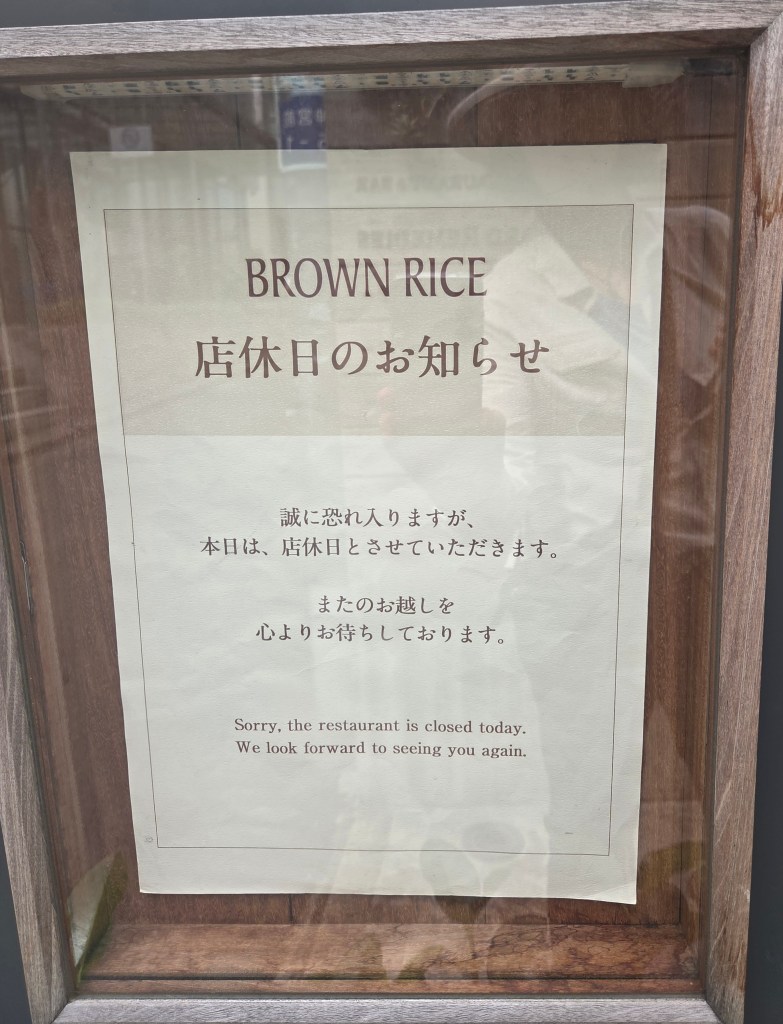
The most frustrating thing that I encountered many times was random closures. I would plan my itinerary for the day with a visit to a certain restaurant, only to find that it was closed for the day. Not a big deal if you have other options. But it got tedious planning my day around finding a lunch spot.

I found some towns/cities more gluten friendly than others. You can see specific notes at the end of this post.

My recommendations if you plan to travel to Japan as a Celiac/gluten intolerant person:

  • Bring your digestive enzymes. I carry Glutenease with me at all times and had to use it several times in Japan.
  • Bring a supply of GF high-protein bars from home. The only protein bars that you will consistently find in Japan are Soy Joy brand. Even though they aren’t labeled gluten-free, my online research indicates that they are. I ate at least one every day and didn’t react. Some flavors are tastier than others, and they are inexpensive, costing 60 to 90 cents at most grocery stores. (I found Kind Bars in a few convenience stores, too.)
  • Of course, fruits and vegetables are safe
  • Most packaged nuts seem to be safe. Again, check the labels.
  • You can get little single-sized servings of many things at grocery stores, such as salad with only vegetables and single packs of legumes and corn
  • Rice noodles and rice crackers might be safe. Read the ingredients carefully!
  • Most potato chips are not safe. There tend to be lots of additional ingredients.
  • In cities with large department stores, you will find gourmet grocery stores in the basement. At Ginza Six (Tokyo), there was even a health food store in one corner. I stocked up on GF snacks for the trip to Nikko.

You certainly won’t starve in Japan, but you may feel deprived at times. I don’t usually feel sorry for myself when I see others eating gluten-filled goodies, but I admit, there were moments when I did in Japan.

Tokyo

Being one of the World’s largest cities, you will find several gluten-free restaurants with great food, and restaurants that offer gluten-free dishes. Here are the places I visited:

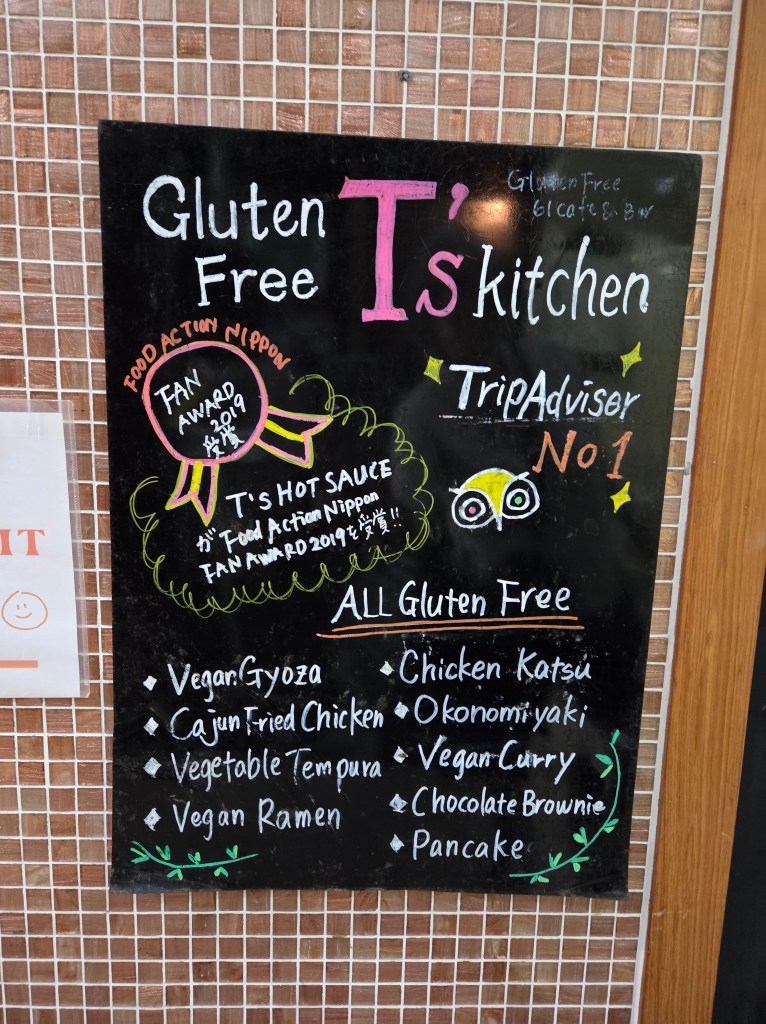
Gluten-Free T’s: Don’t miss it! It is Asia’s first certified gluten-free restaurant. It’s not very big, so you may have to wait for a table. I promise it will be worth it!

Fancl Brown Rice: This restaurant is located in the basement of a cosmetics store in the Ginza district. What a find! It is a serene sit-down restaurant, and you can safely enjoy your meal here.

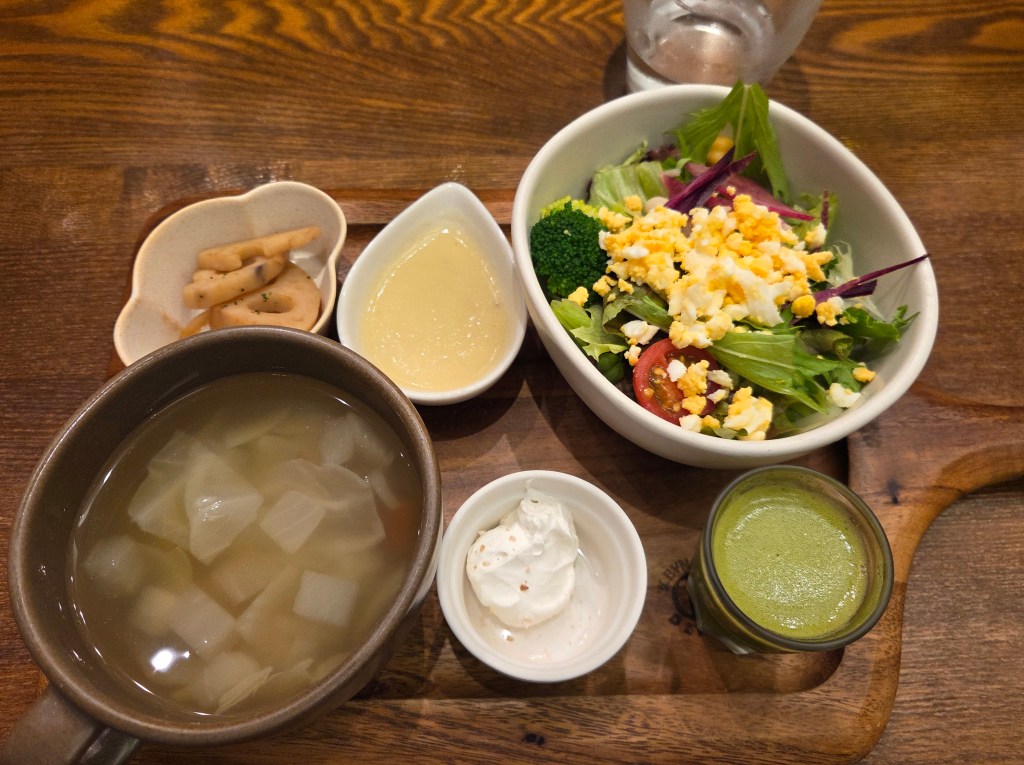
Mr. Farmer: This is a vegan restaurant with some gluten-free offerings. My salad was good, but the tiramisu was amazing! Worth a visit.

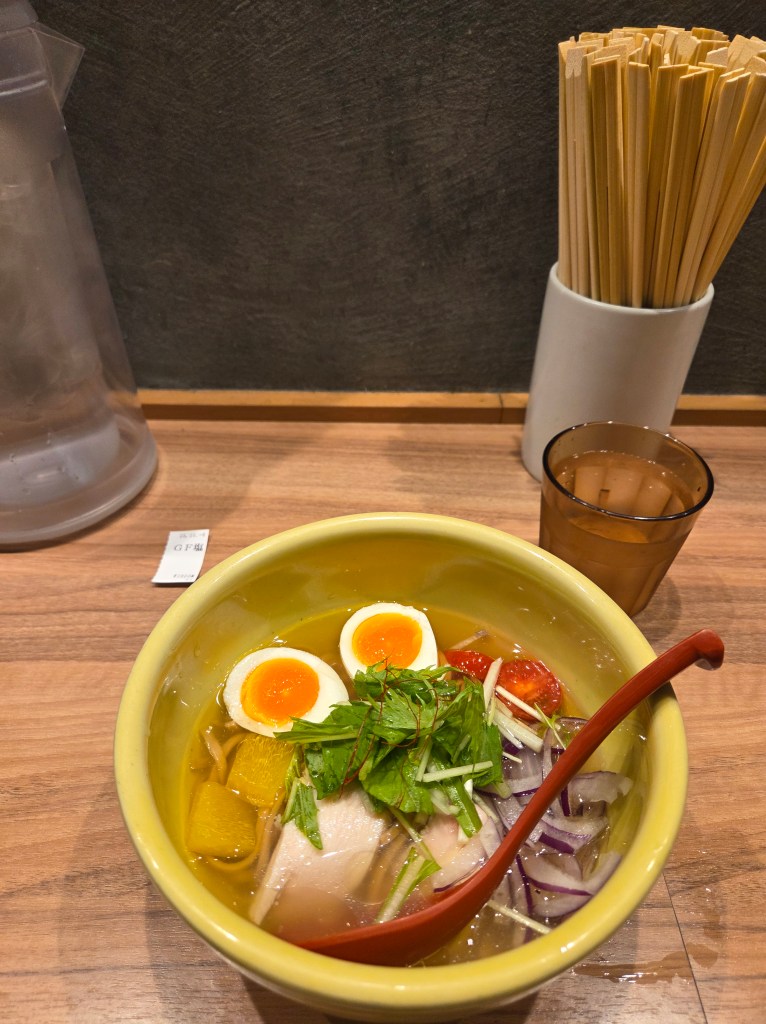
Soranoiro Nippon: Yes, you can have the complete Ramen Street experience in Tokyo Station. When you line up to order, you will see one gluten-free button on the lower right side. It was delicious and good fun!

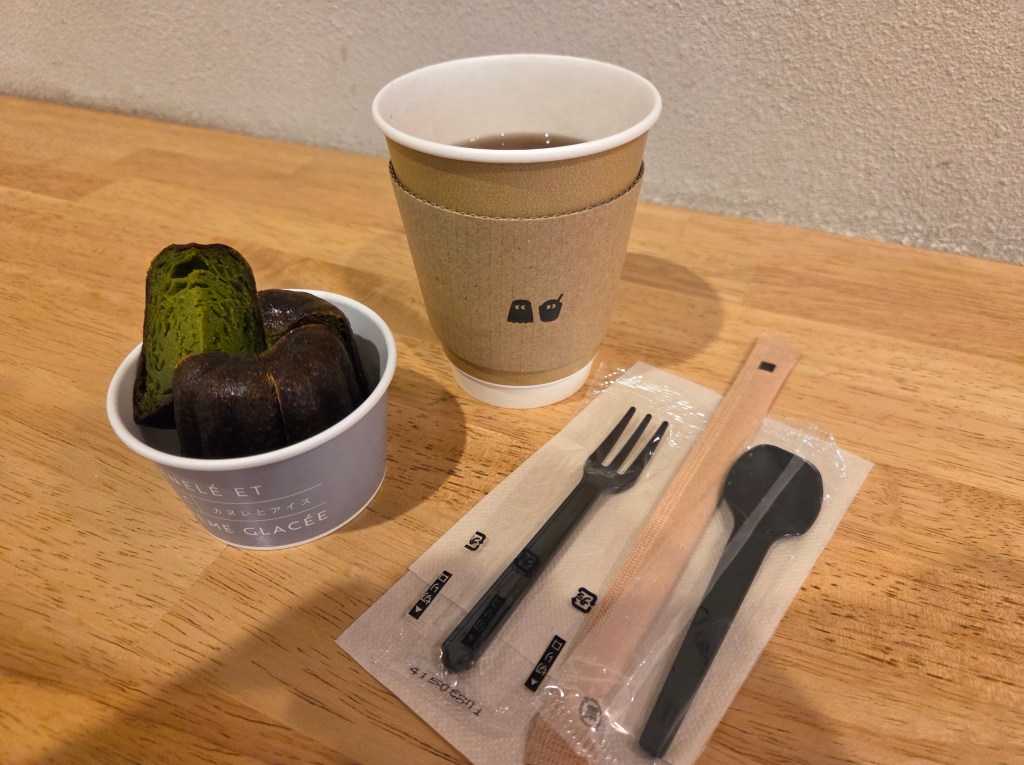
Canele et Creme Glacee: Gluten-free matcha canelle. The Japanese appreciate French goodies.

Avan Gluten Free Cafe: This is a place for a little snack in Ueno Station. It’s tough to find, way up on the fourth floor, but if you like chewy mochi, you will enjoy the mochi churros. They also serve smoothies to round out the treat. Not my favorite, but the father and son who ordered right after me thought it was great.

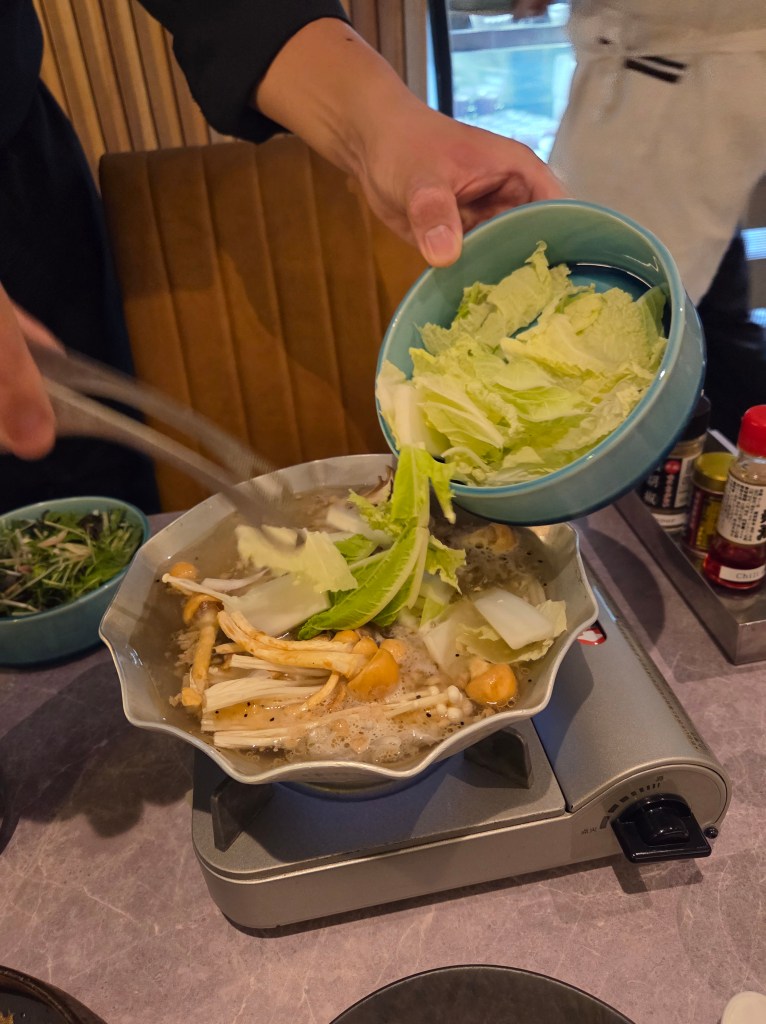
Wagyu Hotpot FOODLAB Tsukiji: I returned to Tokyo for the last 36 hours before flying home. I was fortunate to book a hotel withing walking distance of this restaurant. I was oh-so-happy to experience shabu shabu!

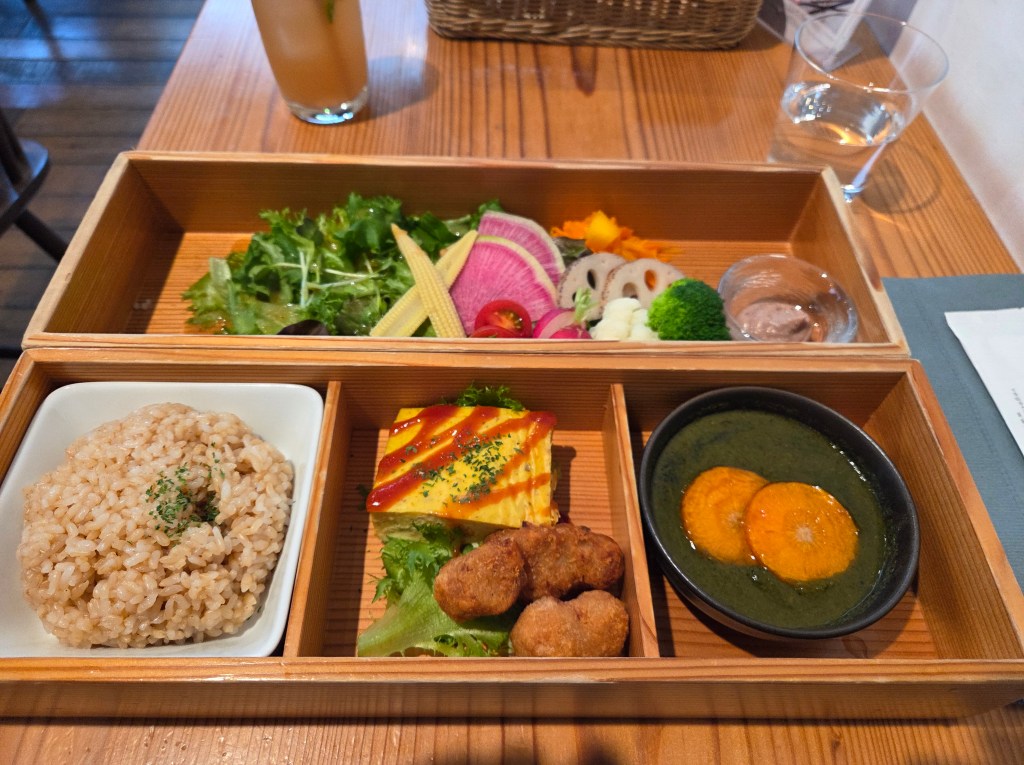
Ain Soph. Ginza: My last meal in Japan! I had lunch at this magnificent vegan restaurant that serves many gluten-free dishes. I ordered the bento box lunch with a craft ginger ale. Amazing!

Nikko

Honestly, I didn’t find much in Nikko. There was a restaurant and at least one café that offered gluten-free food. At the restaurant, the line was long, and I was feeling impatient. I stayed at a small family-owned inn, and the owner made a special dinner for me one night. Otherwise, I survived on food from the grocery store.

Matsumoto

There are a few restaurants with gluten-free food. This was a location where I had a kitchenette, so I prepared my own dinners and some lunches.

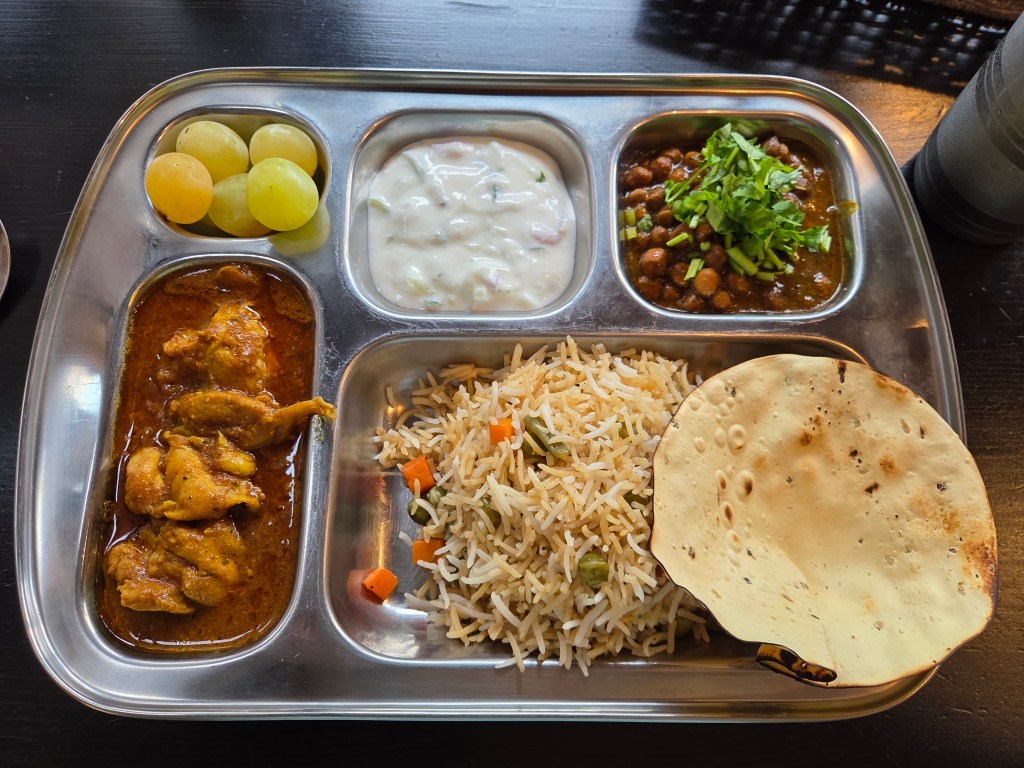
Doon Shokudo Indoyama: The owners were very careful about preparing a gluten-free meal for me, and it was delicious. Yes, curry, but I felt safe eating there, and enjoyed conversing with the owners.

Mount Desert Island Ice Cream: This is an ice cream shop with unique gourmet flavors. You will find allergen labels, and it is really good ice cream! I went twice. It’s conveniently located on Nawate Shopping Street, too!

Takayama

For a small city there are a surprising number of restaurants offering gluten-free food. Some are high-end, and you may need reservations to get in. Unfortunately, I missed those.

Lighthouse Tea Room: Cute little place close to the Takayama Castle Ruins. The owner speaks English well and is a former dietician. She lived in Germany and knows her stuff. She is also an amazing baker! I went back a second time for a slice of her amazing apple cake. I also had an open-faced egg salad sandwich on rice bread. Delicious and not to be missed.

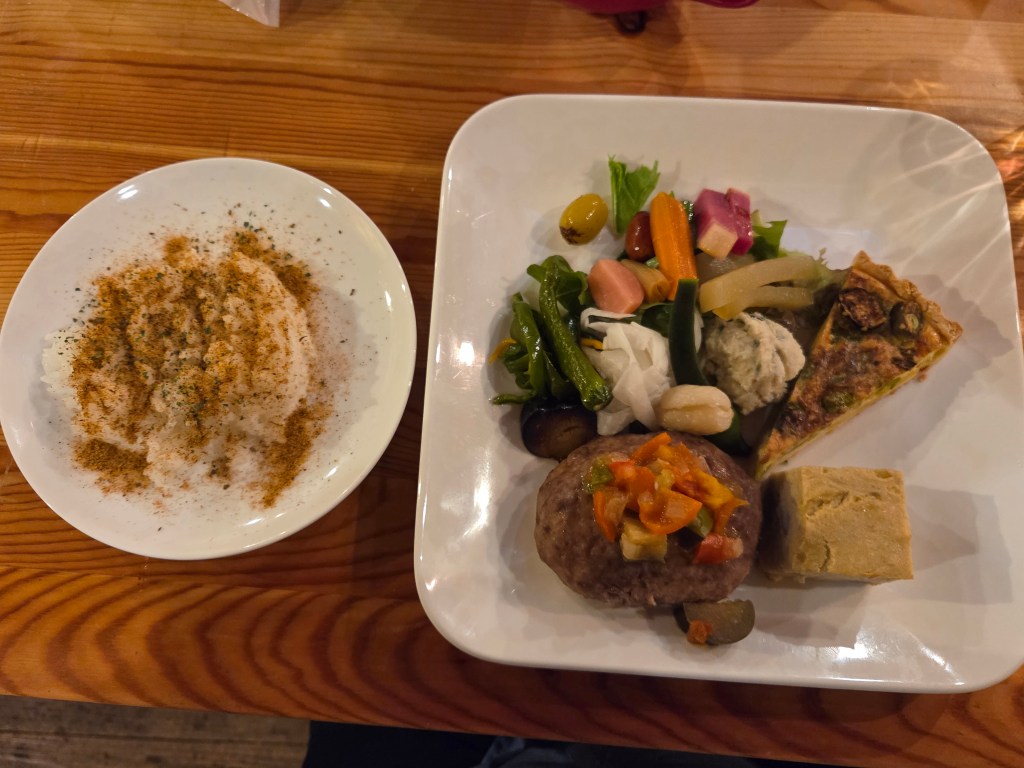
Cha Mame Cafe: Several gluten-free options and another very kind restaurant owner. Order the daily plate special for lunch, and you won’t be disappointed! It was the most amazing meal that I had up to the point of the trip. I returned another day for pho and didn’t like it quite as much.

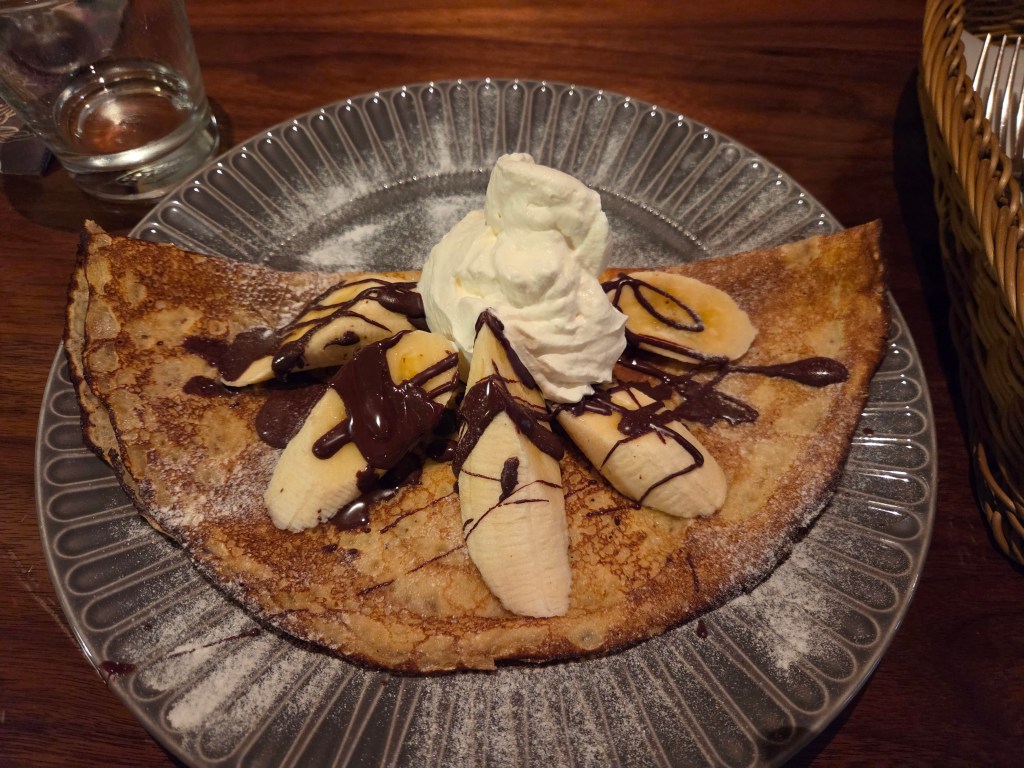
Fukyuan: Located in the historic district of Takayama, you will probably need Google maps to find this one. The gluten-free offerings are spectacular crepes. I had a chocolate-banana one with whipped cream. Absolutely delicious! The atmosphere of the historic building makes the visit worthwhile, too.

Royal Nan House: More curry but quite good! They also speak English.

At the Miyagawa morning market you can find freshly made squares, much like a marshmallow, for 150 yen each. Fun idea and it made me feel like I was participating in the market.

Hida-Furukawa

This is a small town, a short distance by train from Takayama. My first day in Takayama, I happened to meet Kate, who is putting together a gluten-free Hida project. Be sure to check the website before you go to The Hida area: eateasyjapan.com

Shirakawa-go

This is a UNESCO Heritage site of Gassho houses. Hopefully, it’s on your itinerary because it’s not to be missed.

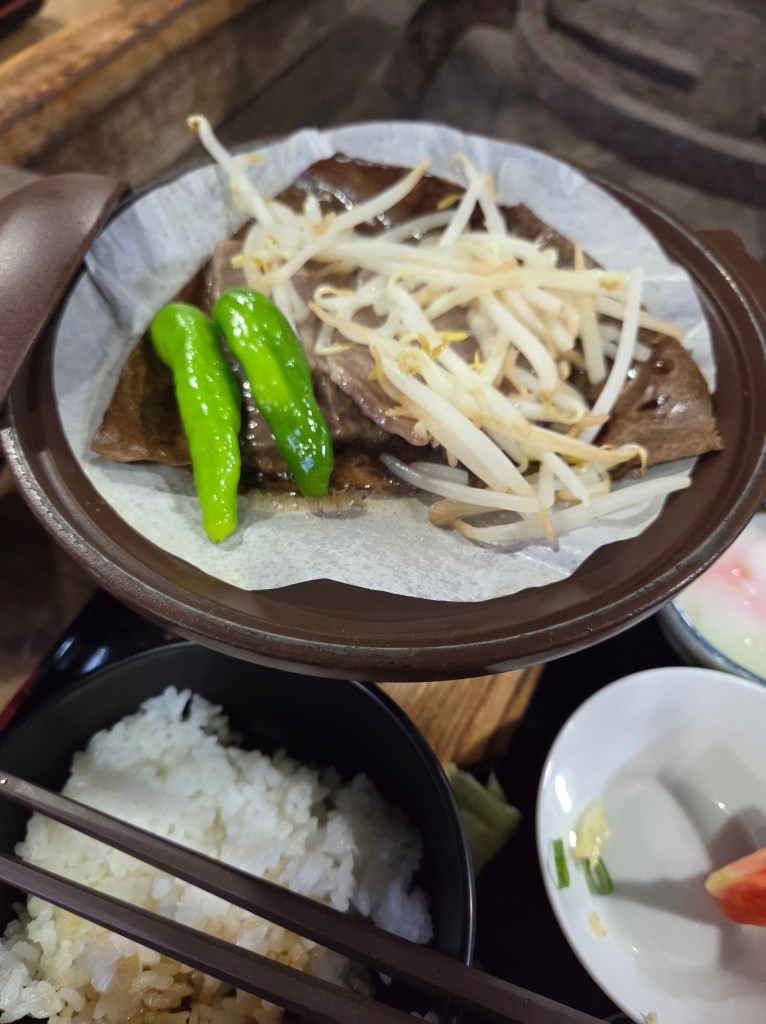
Restaurant Irori: Here you can get a complete Japanese meal with Hida beef. It was rather bland, but you can use the GF soy sauce to make it a little more exciting.

(Egaoya Café is highly rated and offers gluten-free desserts but wasn’t open the day I was in town.)

Kanazawa

Such a nice surprise! Located near the Sea of Japan, Kanazawa has that perfect mix of historic sights and modern attractions. Definitely worth a two-to-four-night stay on your Japan itinerary. Accommodations here are less expensive, too. I stayed at Tokyu Stay in an extra-large room with a kitchenette for $108 USD/night.

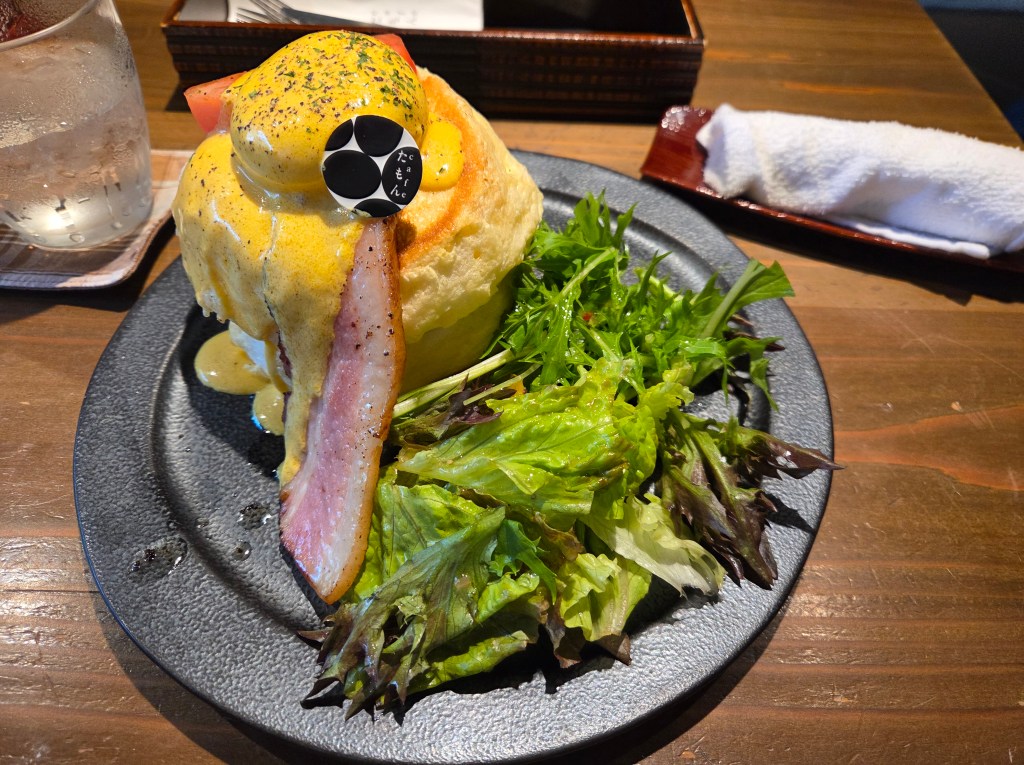
Café Tamon: This one comes up first on Find Me Gluten-Free for a reason. It’s a fun place to eat. You may have to wait for a table, but it will be worth your time to try their delicious fluffy pancakes. I had a clear view of the open kitchen, which enhanced the experience. I ordered eggs Benedict. It was yummy, but not very filling.

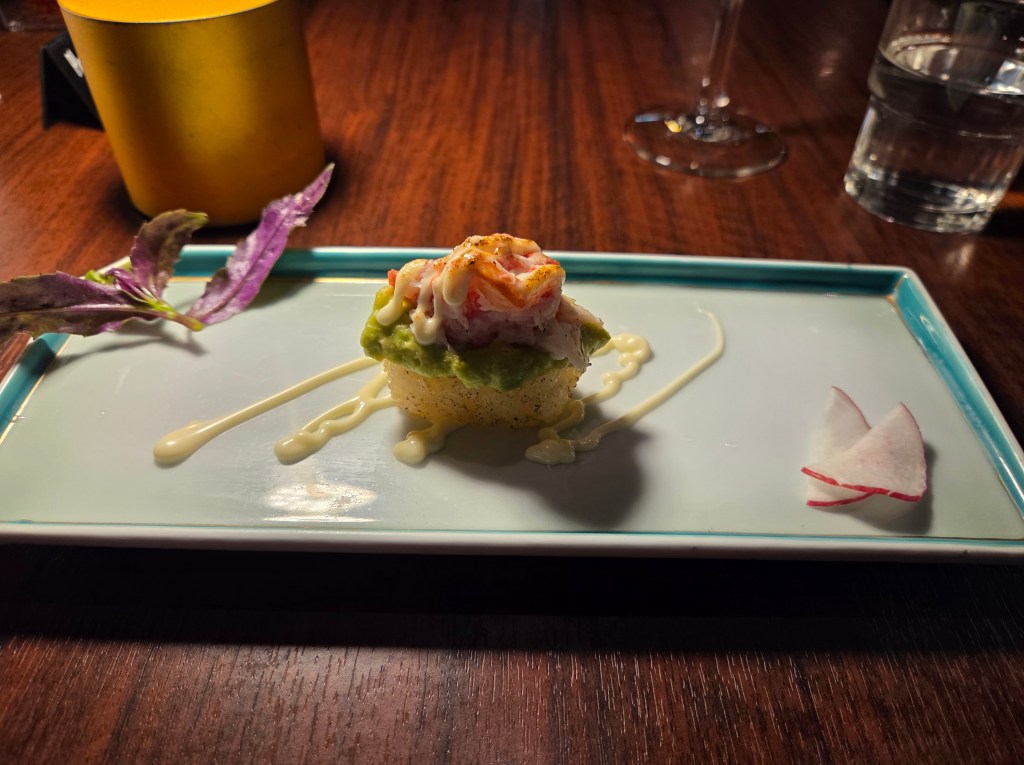
Love For All: I have mixed feelings about this restaurant. First, it felt like a safe place to eat. They are conscientious about gluten-free and vegan food (although they do offer dishes with seafood). If you want to go for dinner, it’s best to stop by in advance to make a reservation. They are open 1:00-3:00 for lunch and serve drinks until 5:00 pm. Then they close for an hour to get ready for dinner. If you have a reservation, you can walk in at 6:00. I indulged in the six-course seafood dinner. It was pricey for Japan, but worth it for the experience. They also require you to order a drink with your meal, which jacks up the price a bit. You can order ala cart and save some money. Lunch is also less expensive.

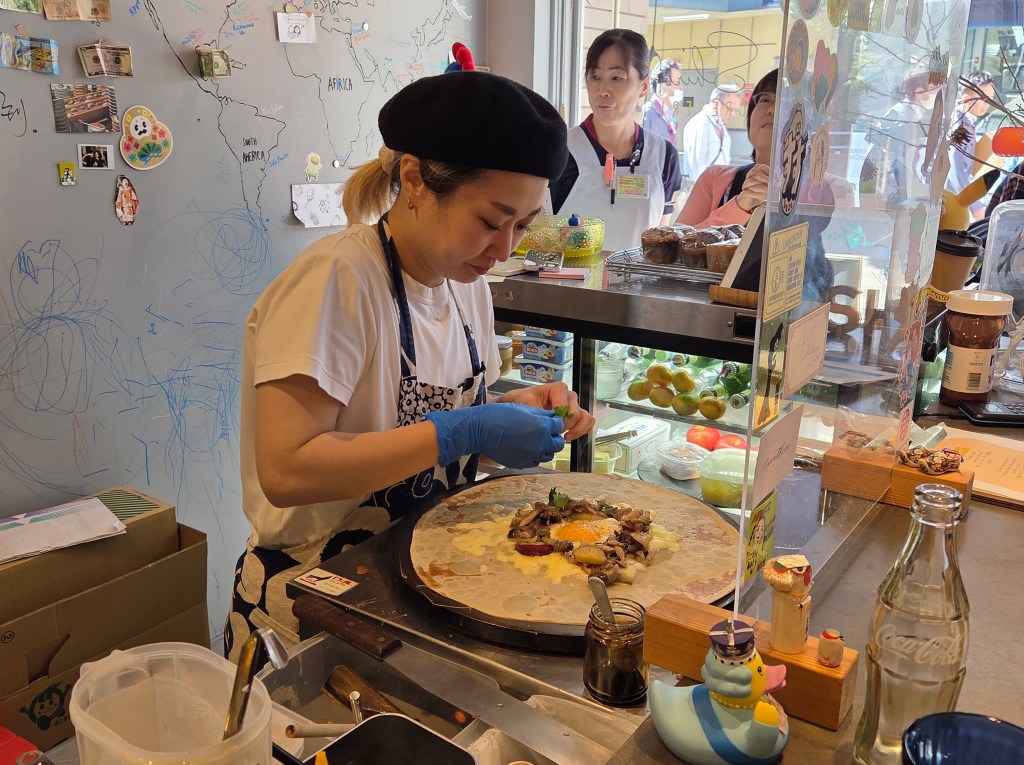
Shirom Creperie: This one isn’t just for sweets. You can get yummy savory crepes for lunch here, too. I sat at the counter and watched to amazing one-woman crepe-making show. A fellow celiac sat next to me, and we compared notes. She also recommended PickPHO and Fuwari.

Kyoto:

Yay for Kyoto! There were so many gluten-free restaurants that I didn’t have time to visit them all.

Kyoto Engine Ramen: Bring your appetite because they serve up one big, filling bowl of ramen! I had the number one, zesty ramen. Wow! It was delicious, and I was stuffed.

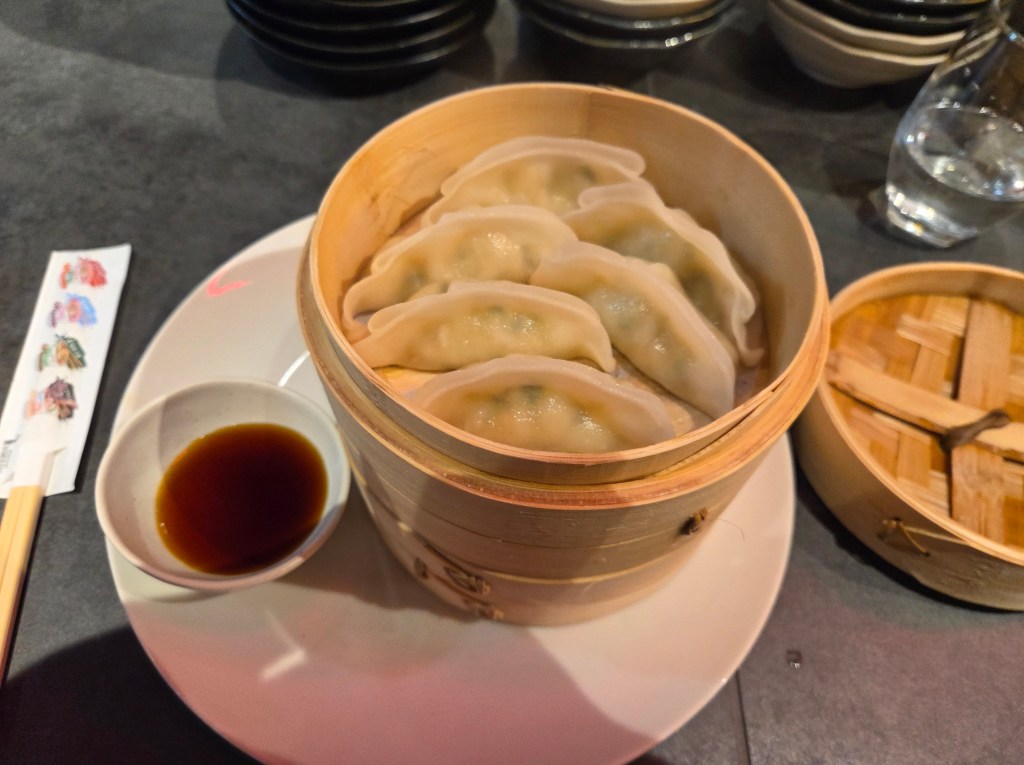
Nishiki Market Alley by MOON and BACK: This place had an extensive gluten-free menu. On the first visit, I ordered the ramen. A few days later, I went back to try some other dishes, including gyoza and fried chicken. What a treat!

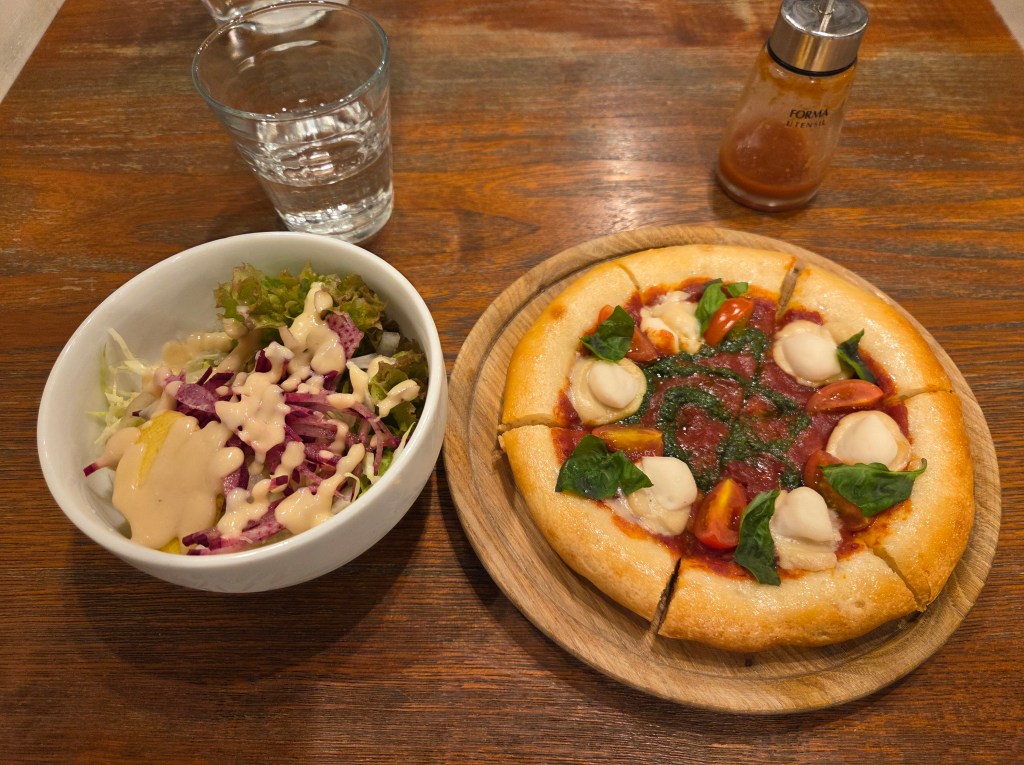
CHOICE: Vegan and 100% gluten-free! I ordered pizza and salad for lunch. My advice is to not expect to be exactly like the pizza you know, and you will enjoy the meal. The crust was phenomenal!

Café Planet: This restaurant was close to my hotel, so I lunched there twice. Like Choice, it is gluten-free and vegan. The food was good but not great. On my first visit I had the pasta lunch and the second time I had the vegan burger. The bun was great, but the filling squished out when I bit it. Not great. Really cute, bright restaurant, popular with the computer and coffee crowd.

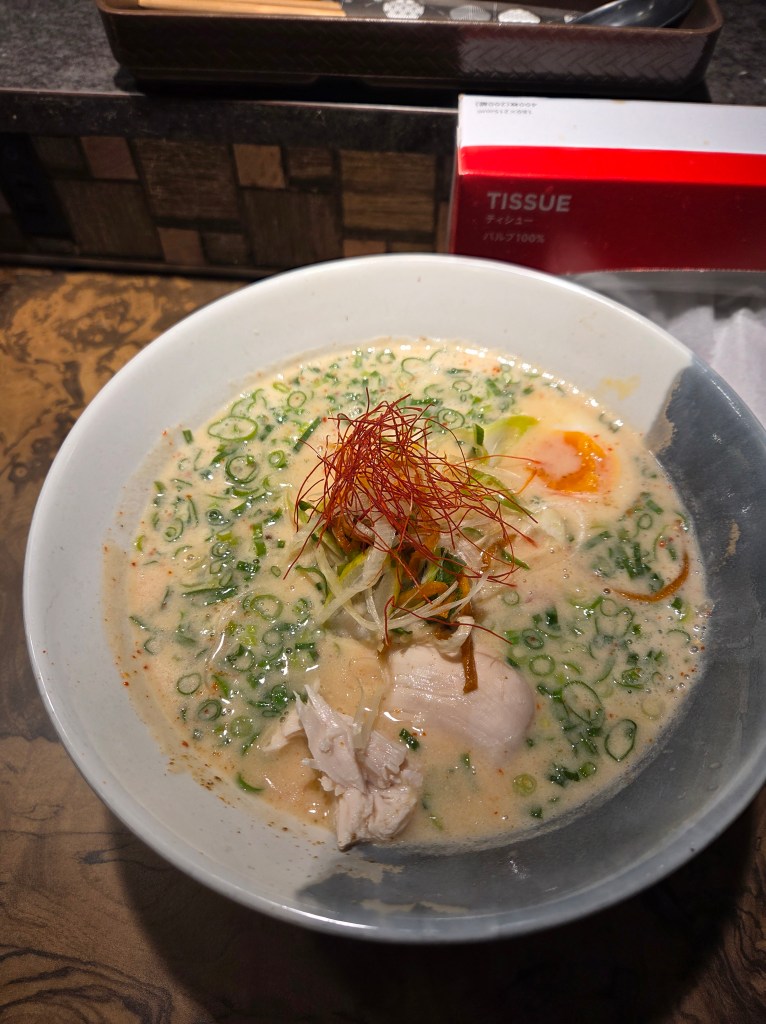
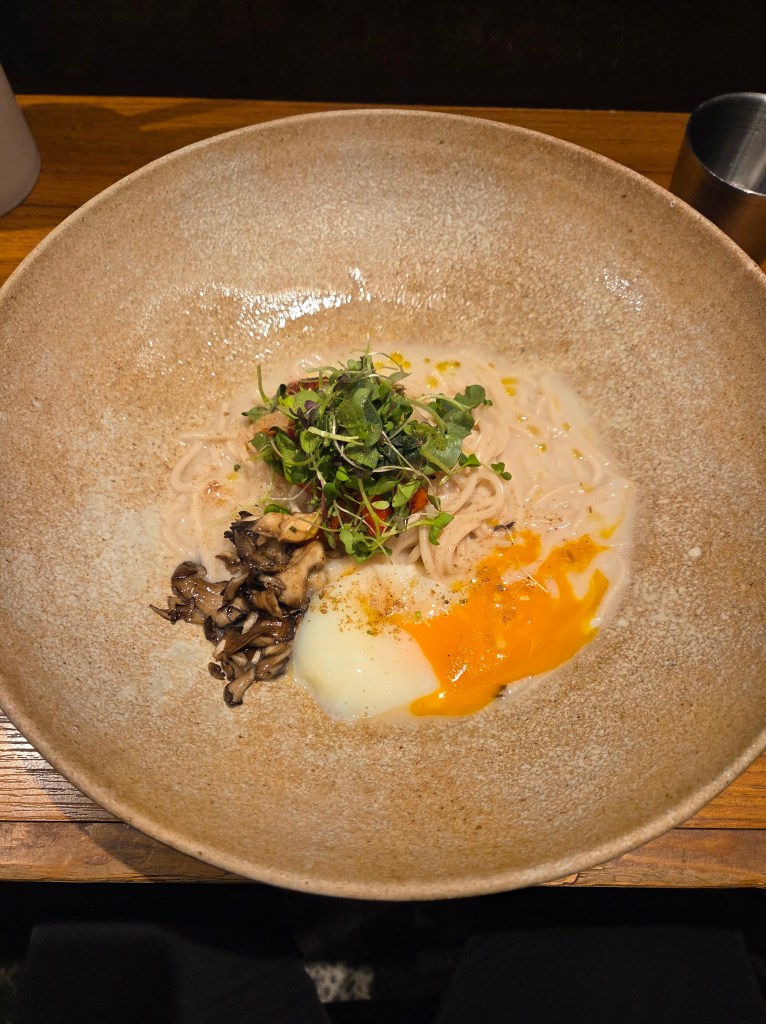
Japanese Mazemen Maruta: This place was down the street from my hotel and offered one gluten-free ramen. It was complex, gourmet miso ramen. I sat at the counter and watched the cooking process. They took great care to ensure that there was no cross contamination.

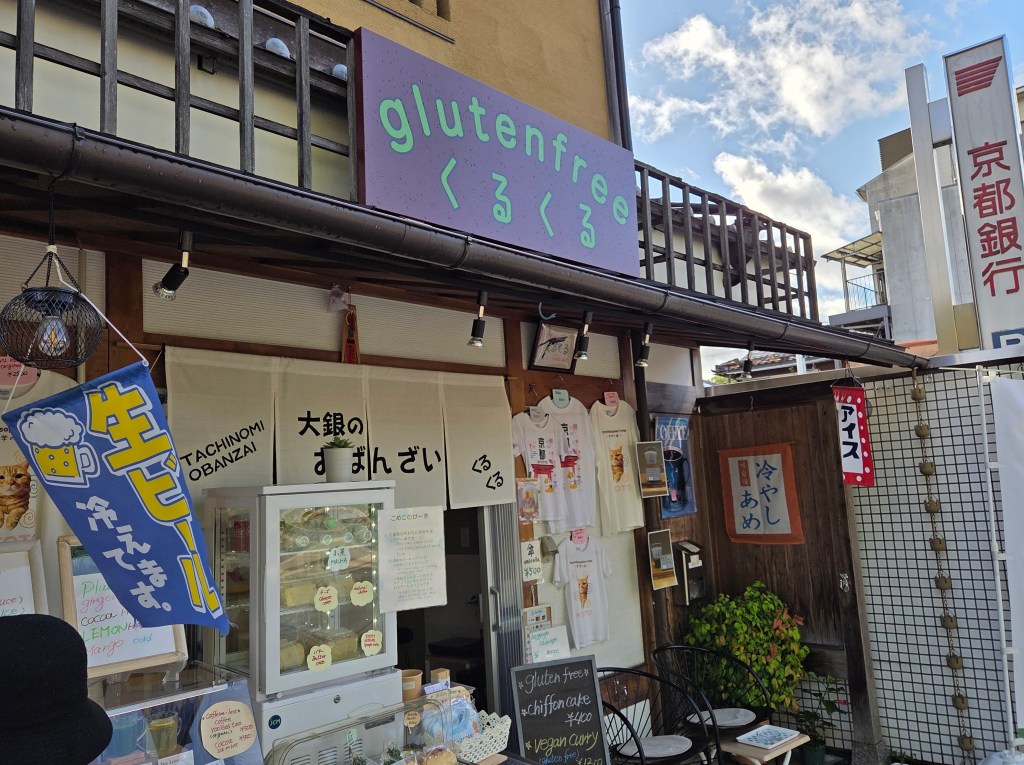
Kuru Kuru: This little café is located near the north end of Philosopher’s Path. I had the curry because I wasn’t in the mood for pizza that day. It was just okay. The highlight was the gluten-free chiffon cake. Oh my, was it delicious! I took some to go.

Ramen Kazu: A standard ramen place that offered two choices of gluten-free ramen. It was just down the street from Kinkaku-ji (The Golden Temple), and I was hungry. The ramen was simple and decent but nothing to go out of your way for.

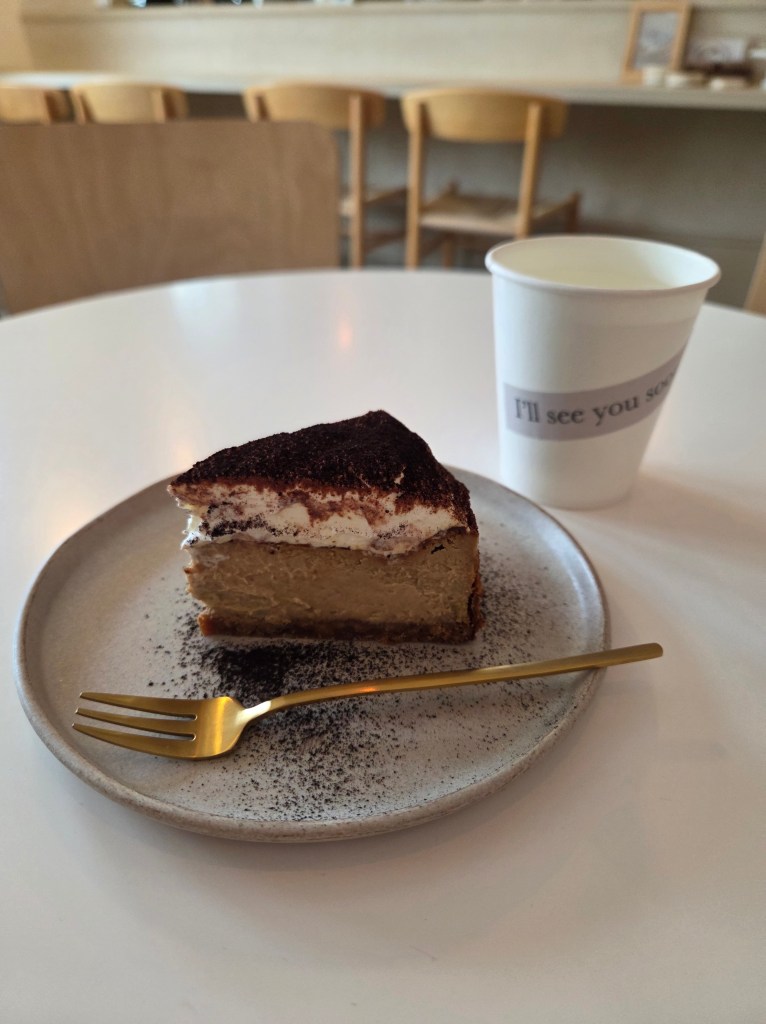
I’ll See you Soon: This cute little café caught my eye as I was walking between Kinkaku-ji and Ryoan-ji. The offerings include upscale coffee drinks and a few gluten-free desserts. I had the Tiramisu Basque Cheesecake and went to heaven. It was amazing! Be sure to stop there if you are in Kyoto!

Yes, you can be gluten free in Japan! Take some time to plan your itinerary, and please feel free to send me a message if you have any questions or comments. Happy travels!
Eighteen Days at Sea


October 23, 2024
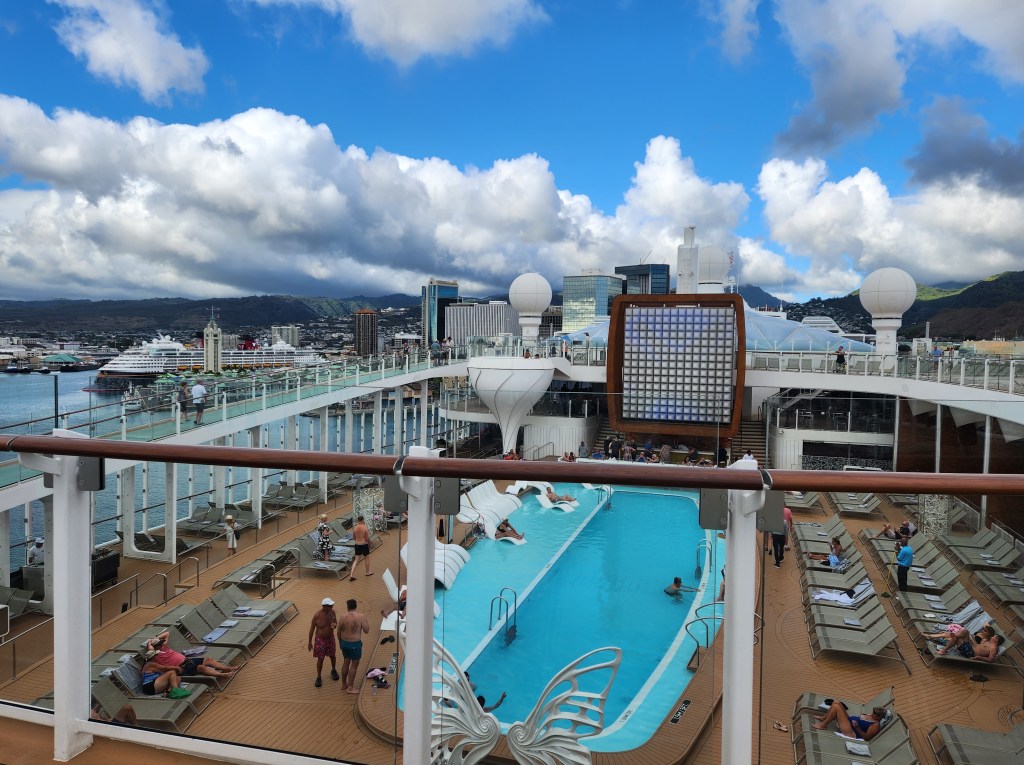
I just disembarked from my first long cruise. Previously, I had cruised for a week at a time. Many of my nomad-traveler friends take advantage of the bargain rates on repositioning cruises, so I decided to give it a try.
Nearly a year ago, an acquaintance contacted me to see if I could housesit for her for two weeks in September…in Hawaii. It was an easy yes, and I decided to check off a couple of items from the Bucket List: Australia and New Zealand.
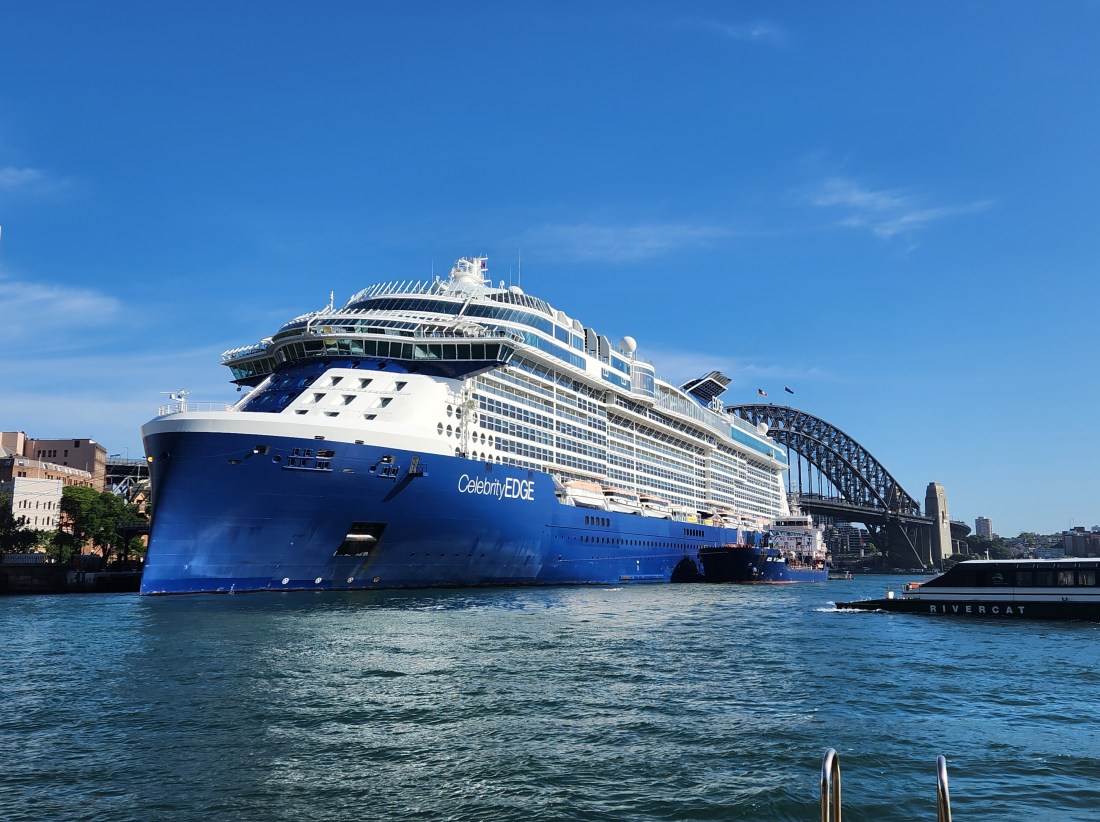
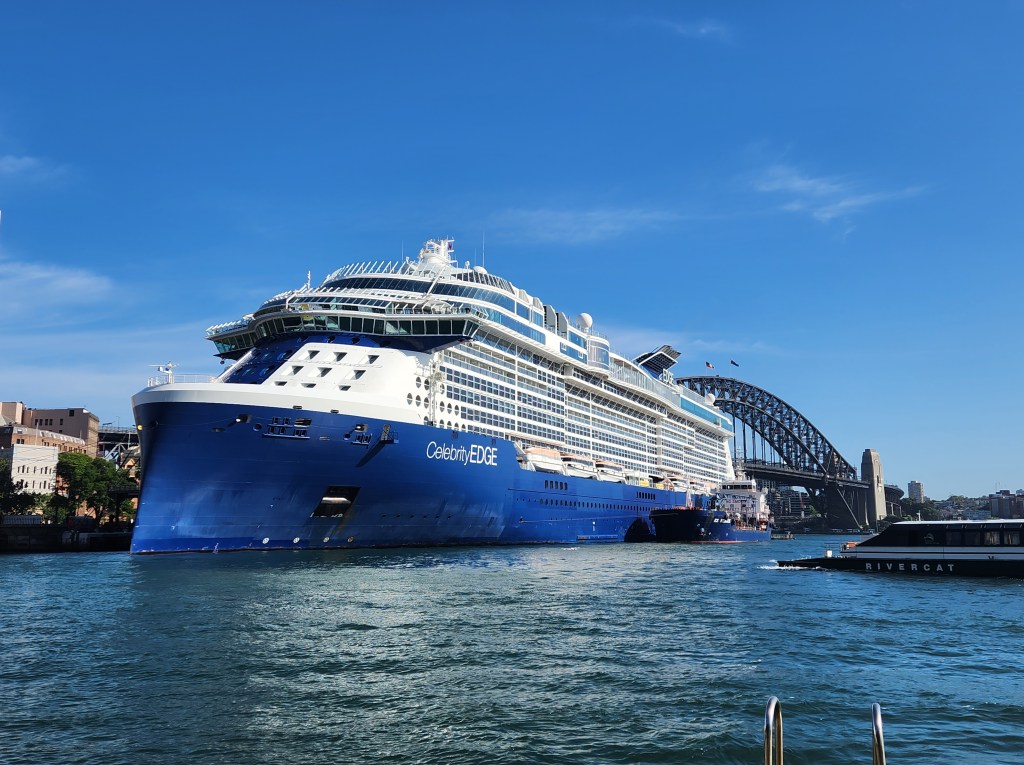
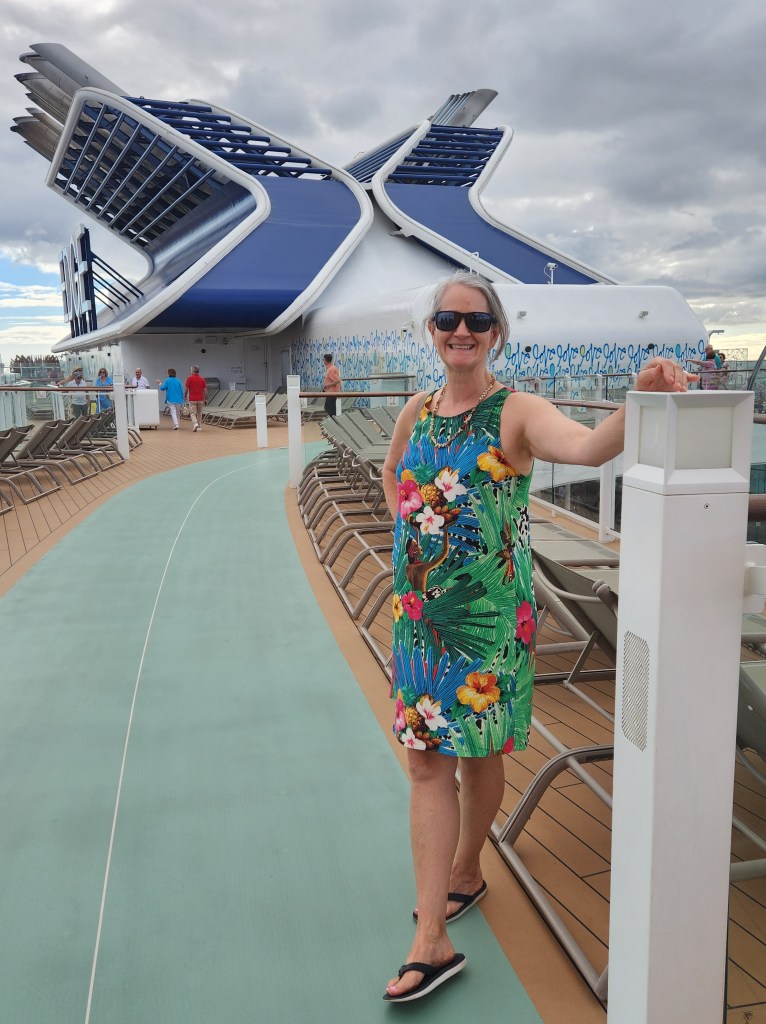
Thus began the search for the best cruise from Honolulu to Sydney. I chose Celebrity Edge for several reasons. I’ve always enjoyed the quality of the line, and Edge is in their newest class of ships. The dates fit well into my itinerary, too.


But 18 days at sea with only six port days? This would be a good test to see if I enjoyed the sea days.


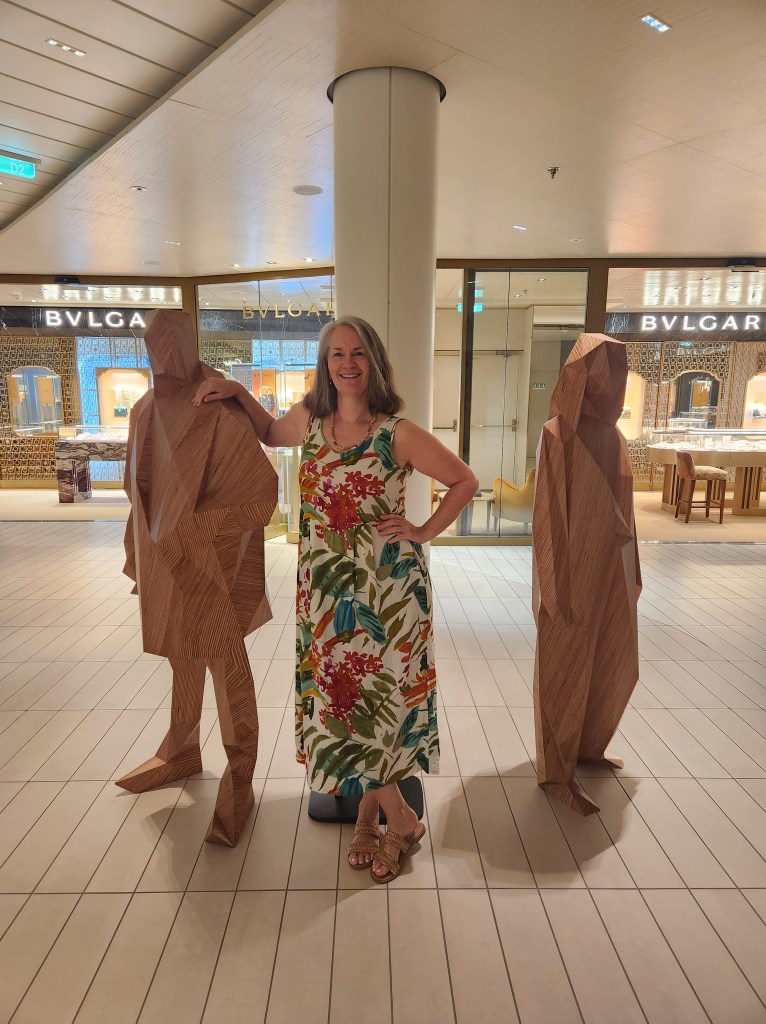
First, the ship is gorgeous. I’d say it’s a little classier and more understated than other Celebrity and Royal Caribbean ships I had previously experienced. There are sections dedicated to art displays, and the main atrium is a few stories high rather than a dozen.


The veranda rooms have an infinite veranda, which makes the room feel larger because the veranda is an extension of the room. The outside wall consists of two windows, and the top one can be retracted to form a glass balcony.
Storage in the room is abundant and carefully designed to use every inch of possible space.
Instead of one large dining room, there are four themed restaurants. Initially, I received a late dining time of 8:15, but on the first night, the hostess switched me to freestyle dining. I could then eat at any restaurant anytime between 5:30 and 8:30. Some nights, I joined new friends for dinner but mostly settled into a 6:30ish dinner time at Tuscan, the Italian-themed restaurant. I connected with one waiter, who was in tune with my dietary needs as a person with Celiac disease. Most nights, I preordered for the next evening.
I ate breakfast and lunch in Oceanview Café, the ship’s buffet restaurant. The offerings were extensive, with some sections consistently offering the same foods and others offering specialized dishes. All the dishes were labeled for allergies so I could safely find abundant gluten-free items. There was also a vegan section, and the Indian food quickly became a lunchtime favorite.
The only disappointment was the gluten-free mini-cakes. They tended to be dry and hard. Other than that, I ate well!
As far as extras are concerned, I splurged on a spa pass for the duration of the journey. On sea days, I worked out in the mornings doing yoga, weights, and the elliptical trainer. Then, I enjoyed the salt room, infrared sauna, steam rooms, and therapeutic showers. It was a great way to start each day!

I had a view of these golden penguins from the sauna!


Entertainment on the ship was abundant and mostly of high quality. There were educational lectures every morning about the environment, the ship’s destinations, and math and science. Ongoing classes included ukelele and drawing. There were game shows, trivia, and a featured show each night. Throughout the ship, various musicians and singers performed in the bars and lounges.

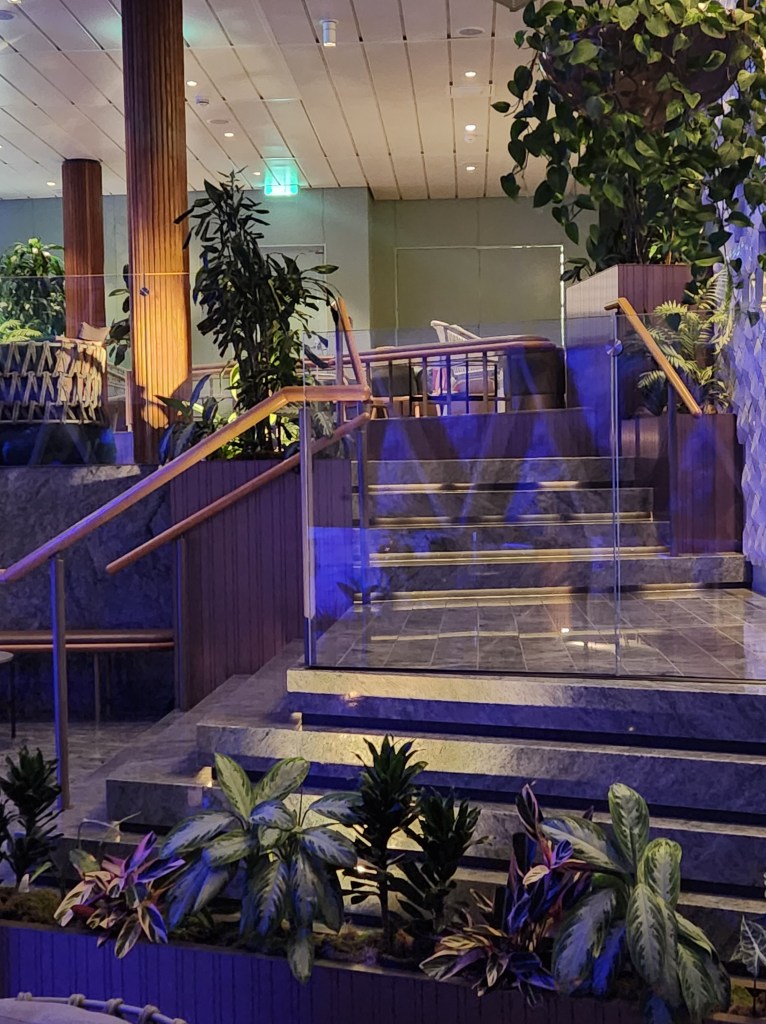
The Eden Bar was filled with plants.


So, would I go on a repositioning cruise again? Yes! I have already booked a transatlantic cruise from Florida to Barcelona for next April. This time, I will be traveling with some fellow nomads. Looking forward to more fun on the high seas!
So Easy to Fall in Love with Sydney

November 11, 2024

I recently spent twelve days in Sydney, Australia. Going Down Under has long been on my bucket list. In fact, my fascination with Sydney began in childhood, long before I caught the travel bug on my first European adventure as a university student.

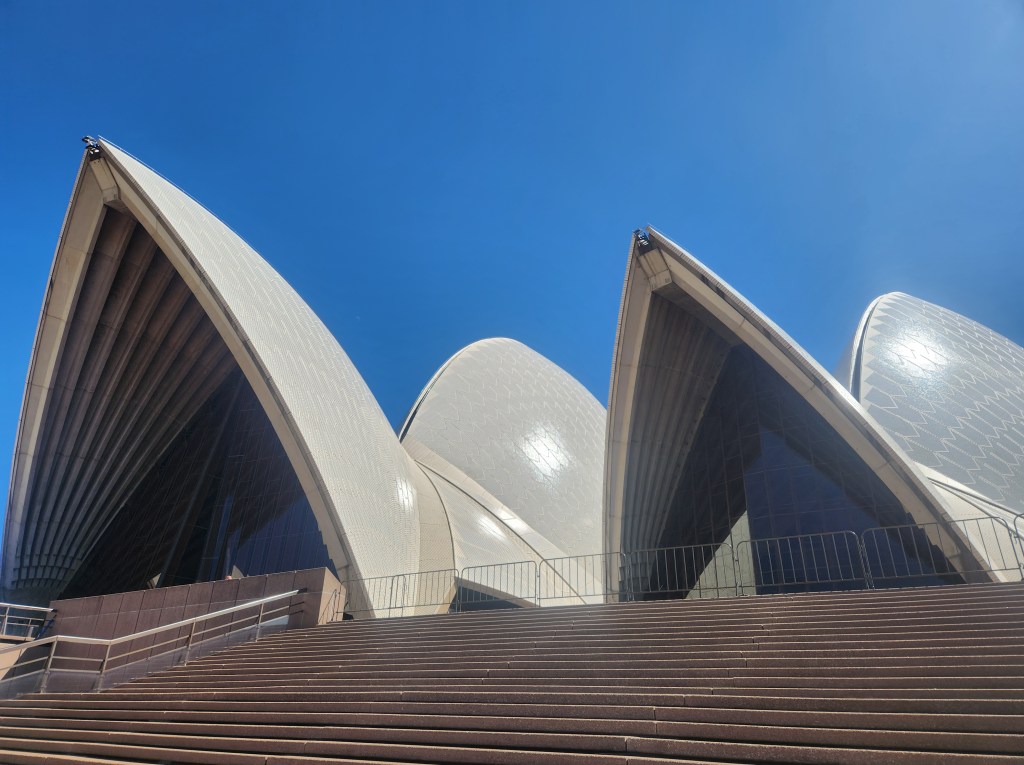
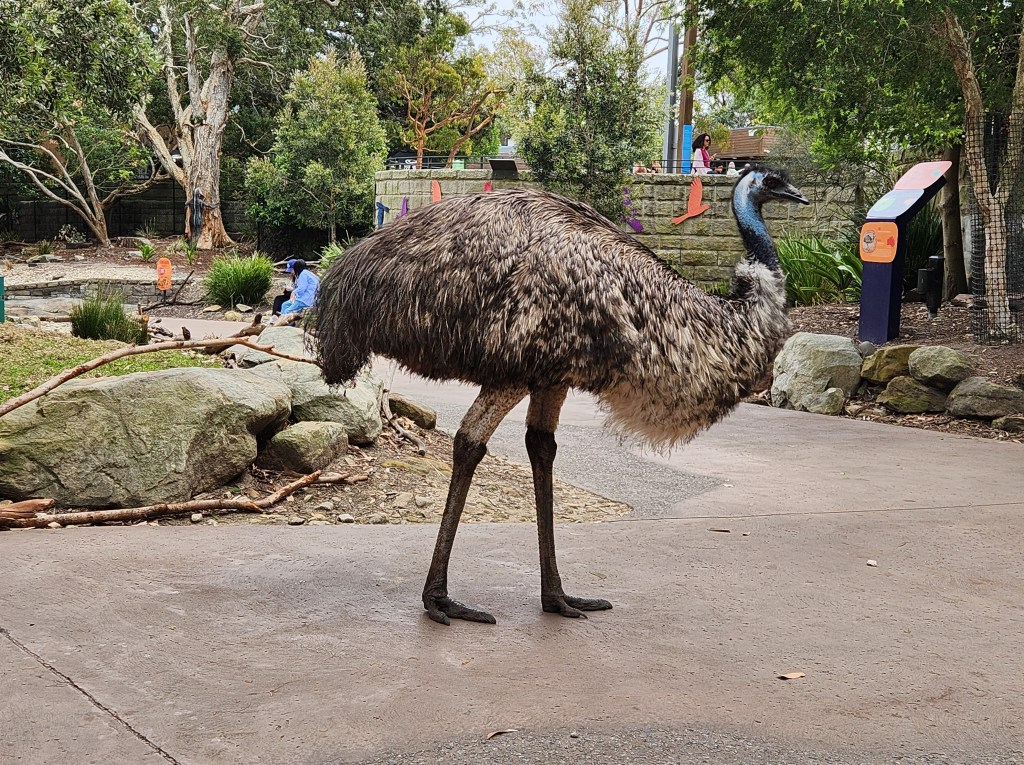
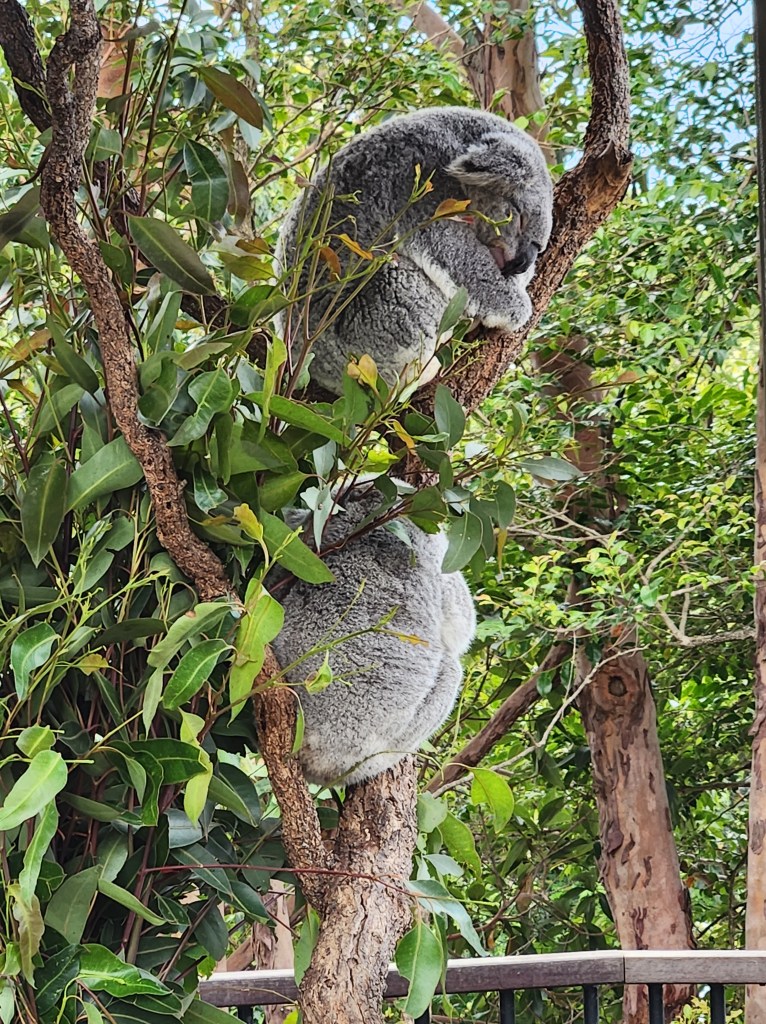
You see, the Sydney Opera House was completed in 1973 when I was in elementary school. I can’t remember the exact circumstances or where I first saw a picture of that iconic building. Still, I know I had waited over fifty years to see it. Add fascinating animals like kangaroos and koalas (I had a beloved stuffed koala bear as a child). Who wouldn’t want to visit Australia?

About a year ago, an acquaintance contacted me to see if I would be able to housesit in her Hawaiian home for two weeks. It only seemed logical to travel to Australia from there.

Many of my nomad friends enjoy traveling on repositioning cruises. Maybe I could get to Australia that way. I found one that left Honolulu for Sydney, and I commenced planning a great adventure from there.

After spending six weeks on four Hawaiian Islands, I boarded Celebrity Edge for an 18-day journey.

First, it was so very nice to arrive in a far-off country and not experience jetlag. The owner of my Airbnb said it had been vacant the night before, so I could head straight there after the morning departure from the ship.

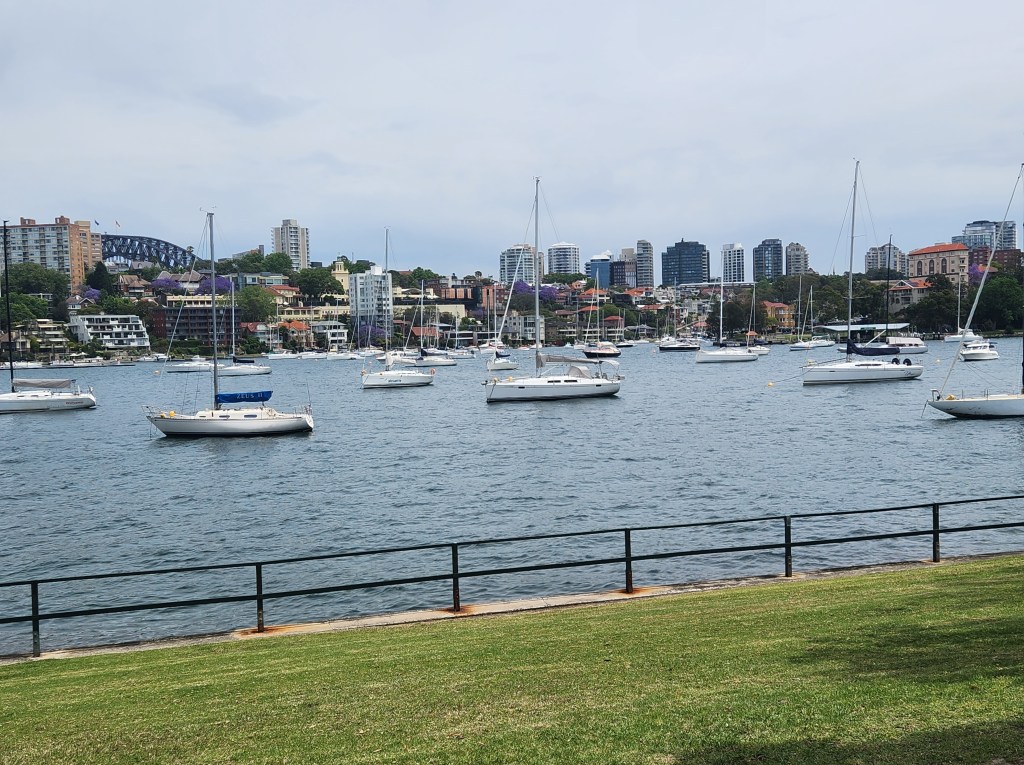
Getting to my accommodation was amazingly simple. Circular Quay, the downtown hub for the passenger ferries, was adjacent to the cruise ship berth. It took just a few minutes to walk over to the correct wharf, and in 15 minutes, I arrived at Kurraba Point, where my little studio apartment was waiting.

The funny thing (okay, not really funny) was that there were 88 stairs to climb from the wharf to the street. No small feat with my luggage!

After checking out part of Sydney’s expansive (and stunning) botanical gardens, I met up with a couple of friends from the cruise. We walked around the heart of the city and found a great hole-in-the-wall Thai restaurant for lunch.

From there, the next eleven days were filled with wonderful outings in one of the World’s greatest cities. I will admit that I still have much of the planet to see, but nothing in Europe or North America can compare.

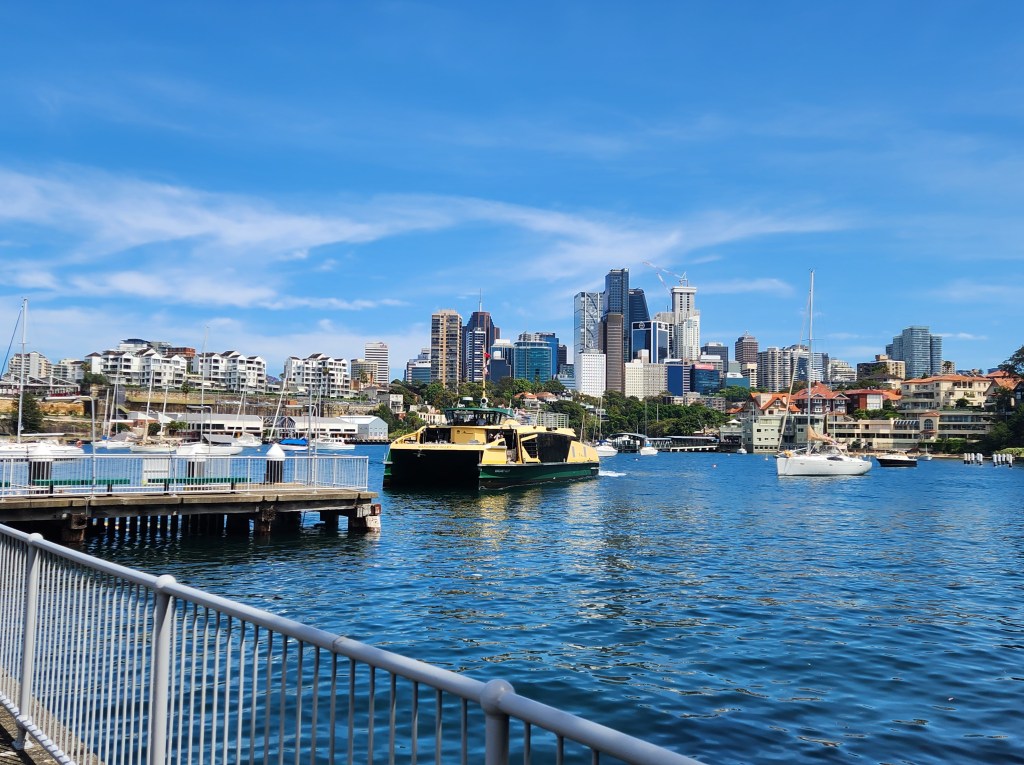
What makes Sydney special? The city is built around an expansive harbor. There’s a definite charm in traveling almost everywhere by ferry.

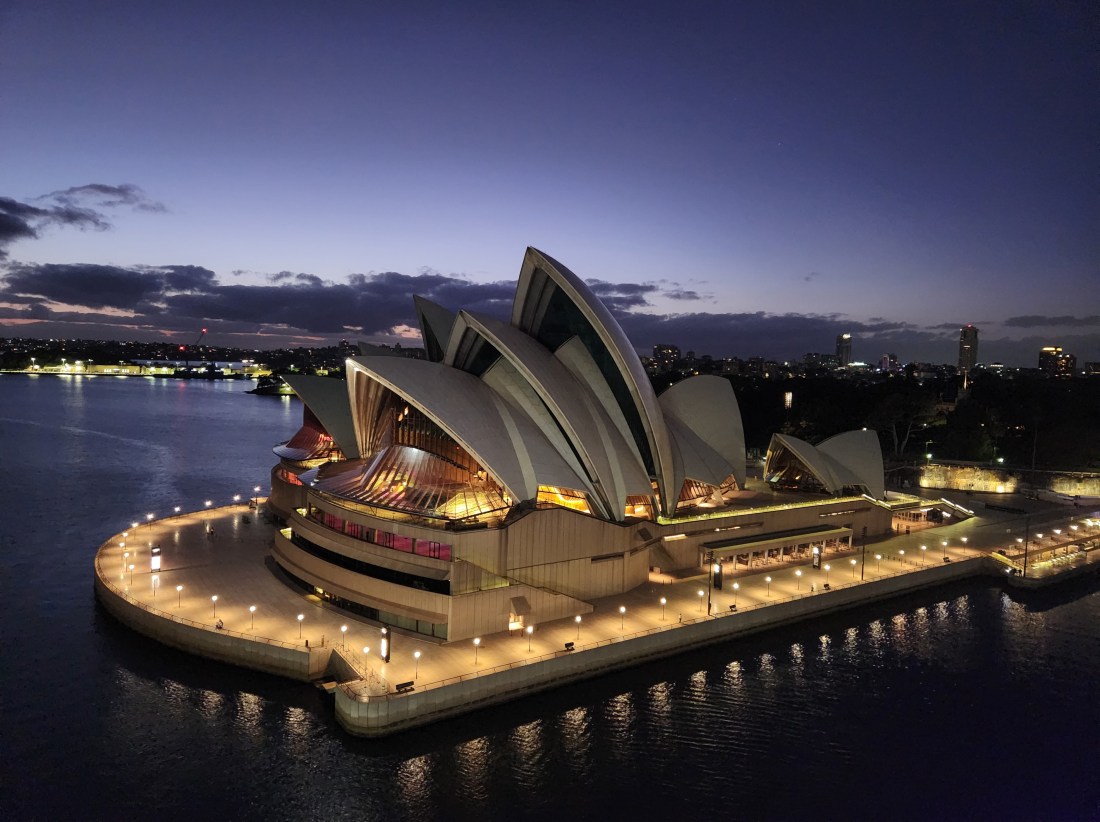
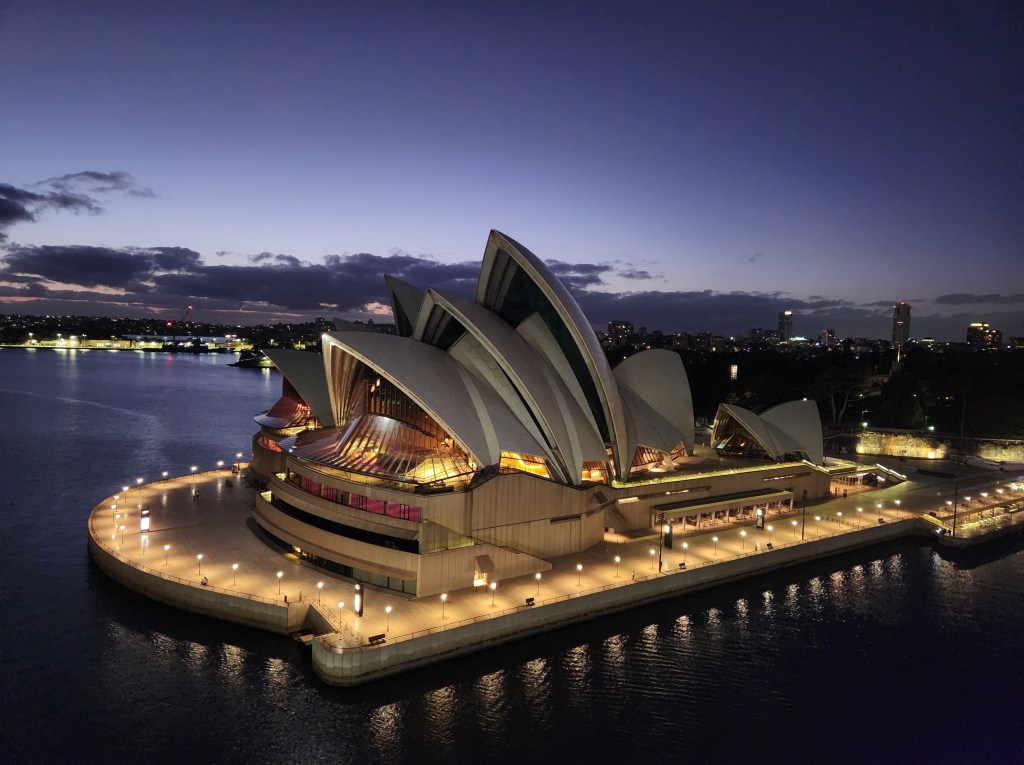
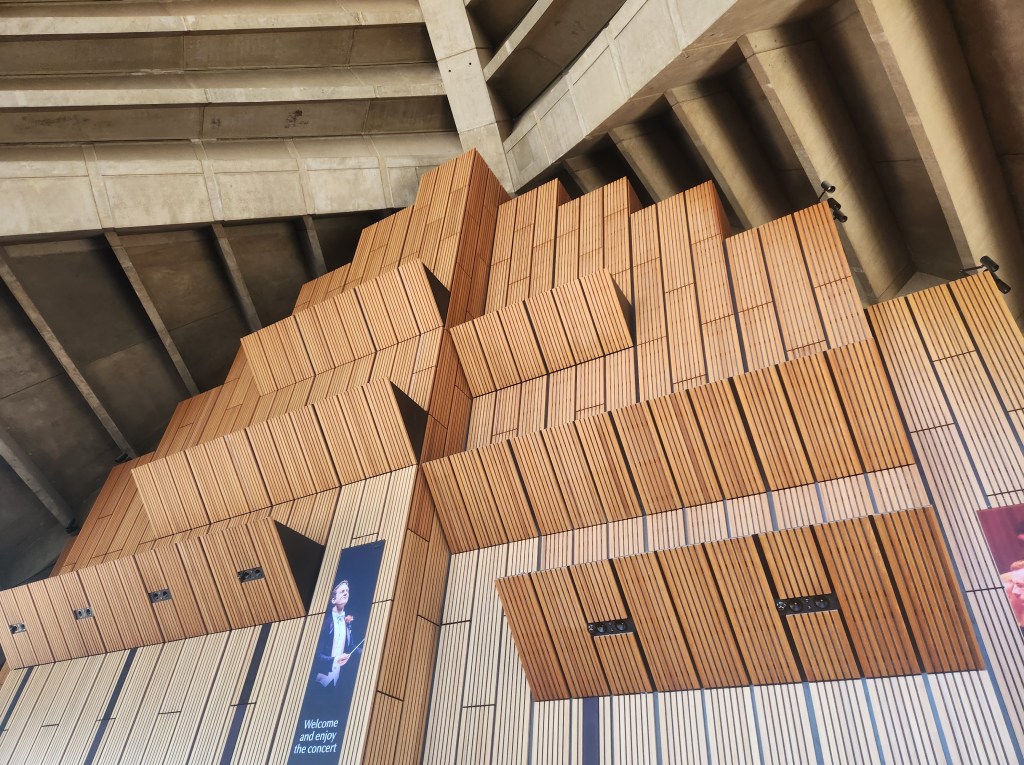
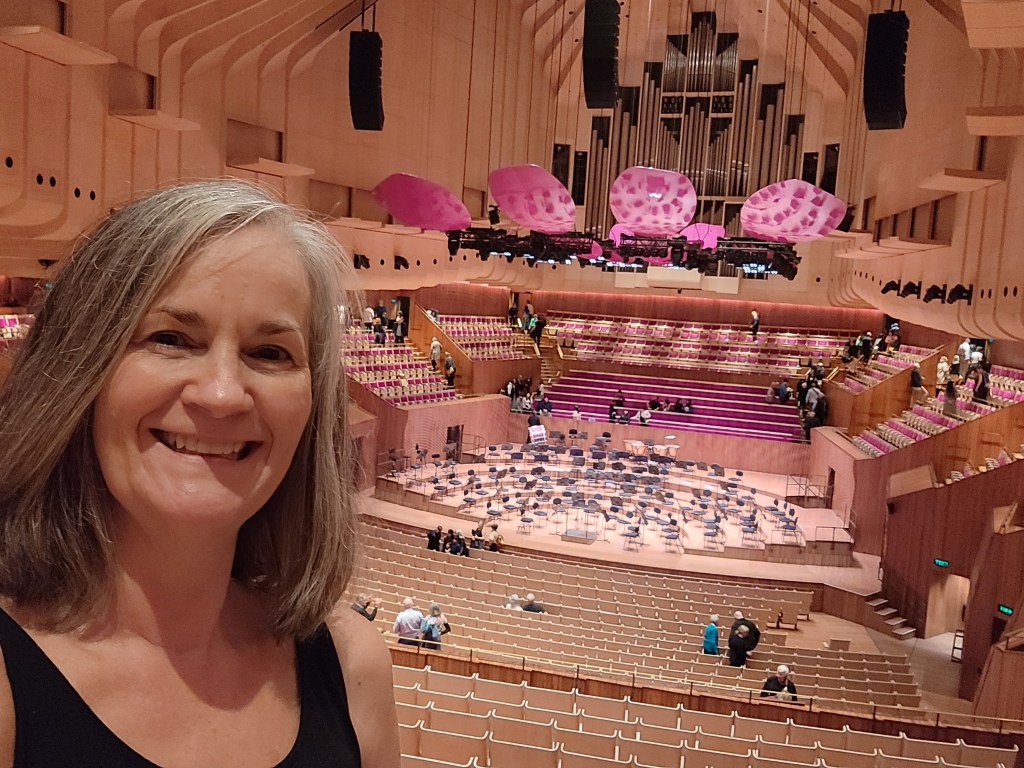
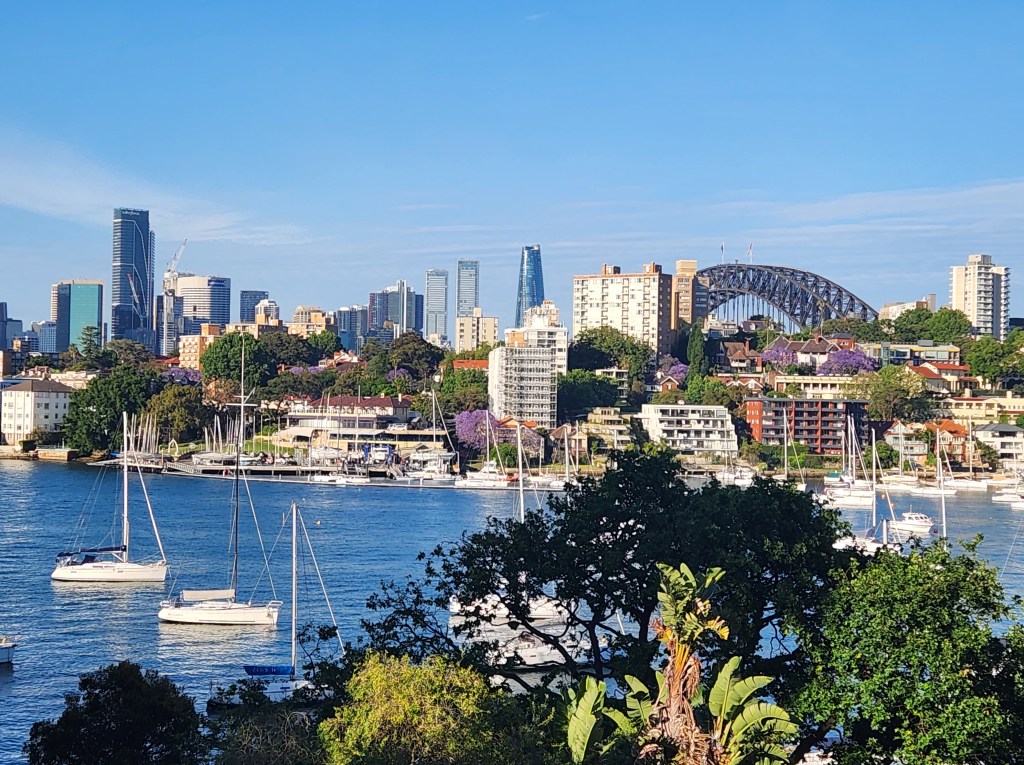
The Opera House and Harbor Bridge gloriously welcome visitors to the city center. I was fortunate to see it right before dawn from the ship! (opening photo) I also took an architectural tour a few days later and saw the Sydney Symphony perform that evening. Childhood dream fulfilled!

The Opera House is covered with more than one million tiles!
Photo taken after the performance

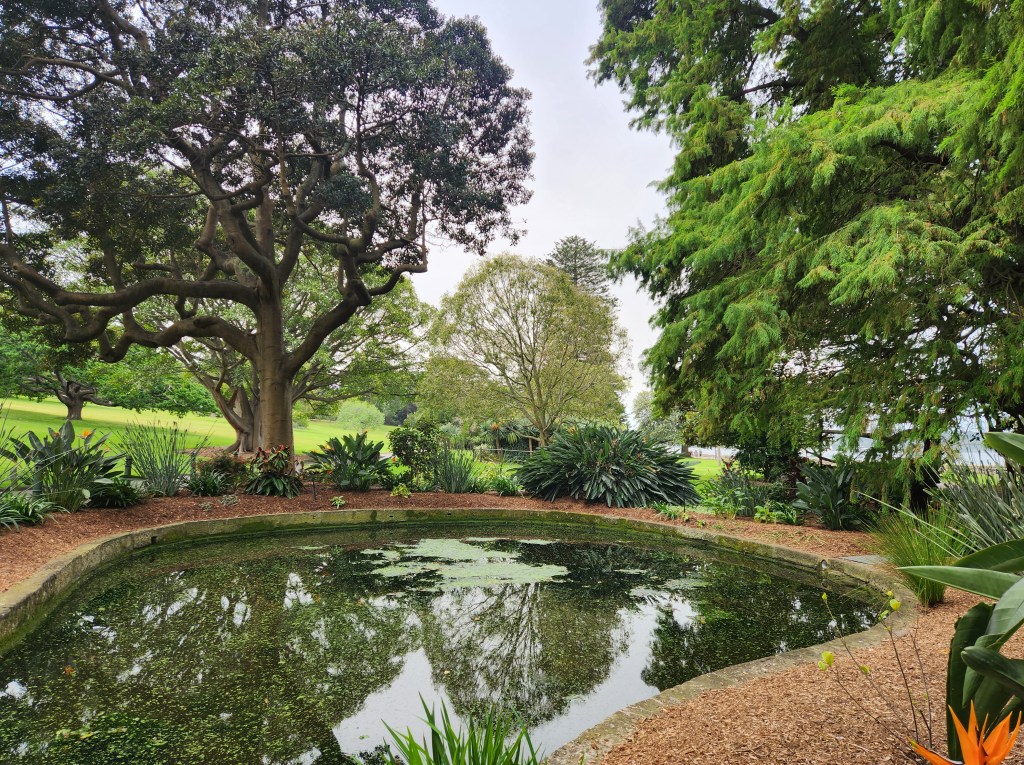
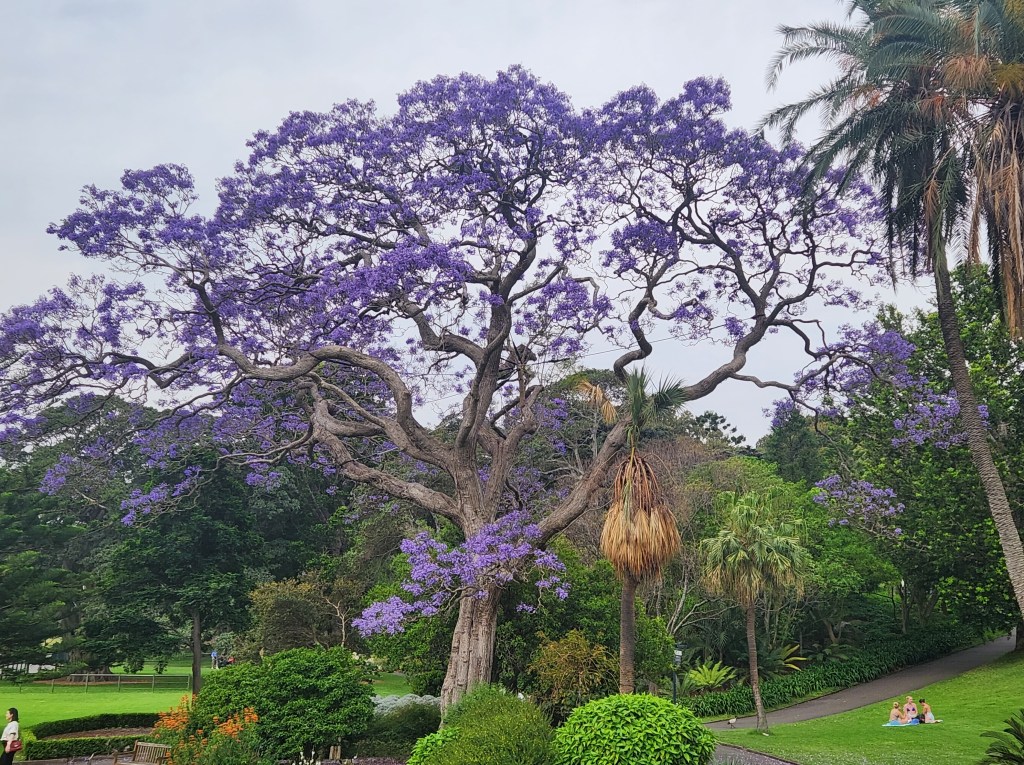
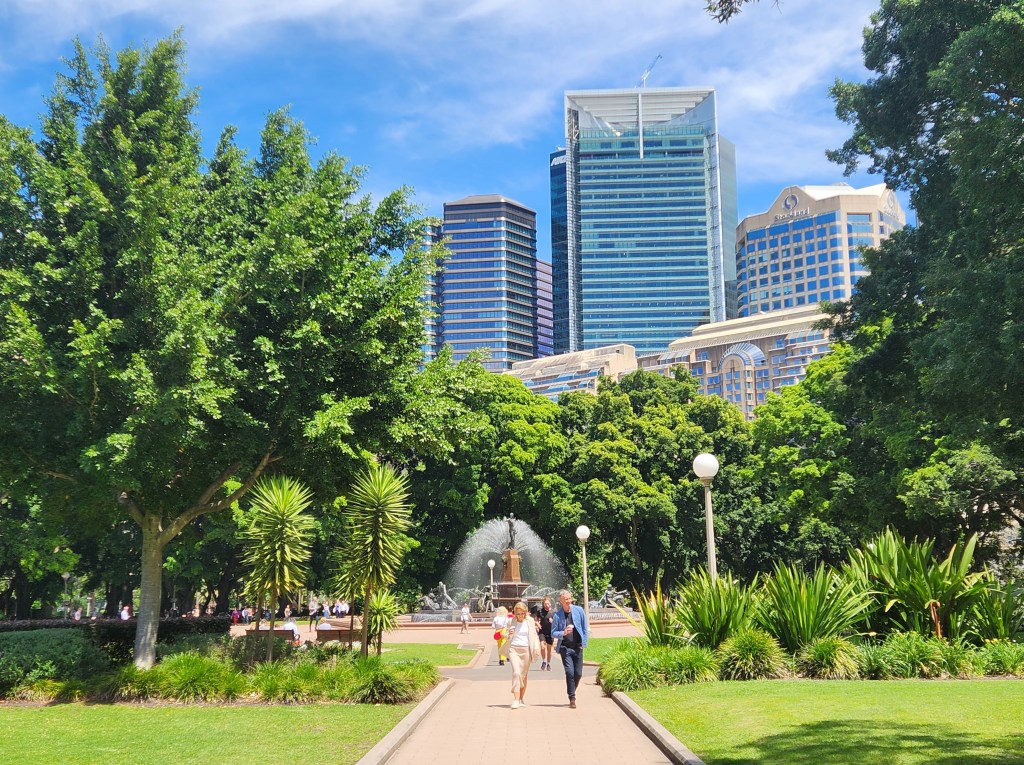
The botanical garden is immense and adjacent to the city center. The grounds are impeccably maintained. I visited several times during my stay.

The National Gallery has something for everyone, with two buildings, one housing the modern collection.

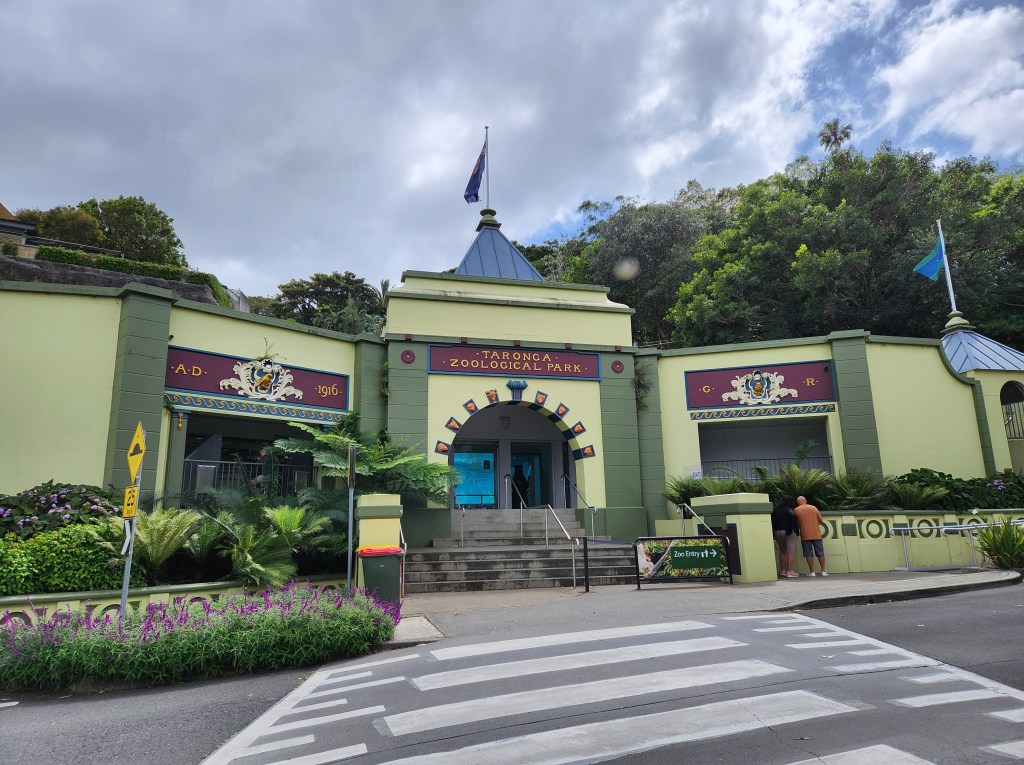
You can take a ferry to the zoo at Taronga Point.

There are National Parks within the city limits. Yes, you can walk/hike to your heart’s content, and the views are stunning.

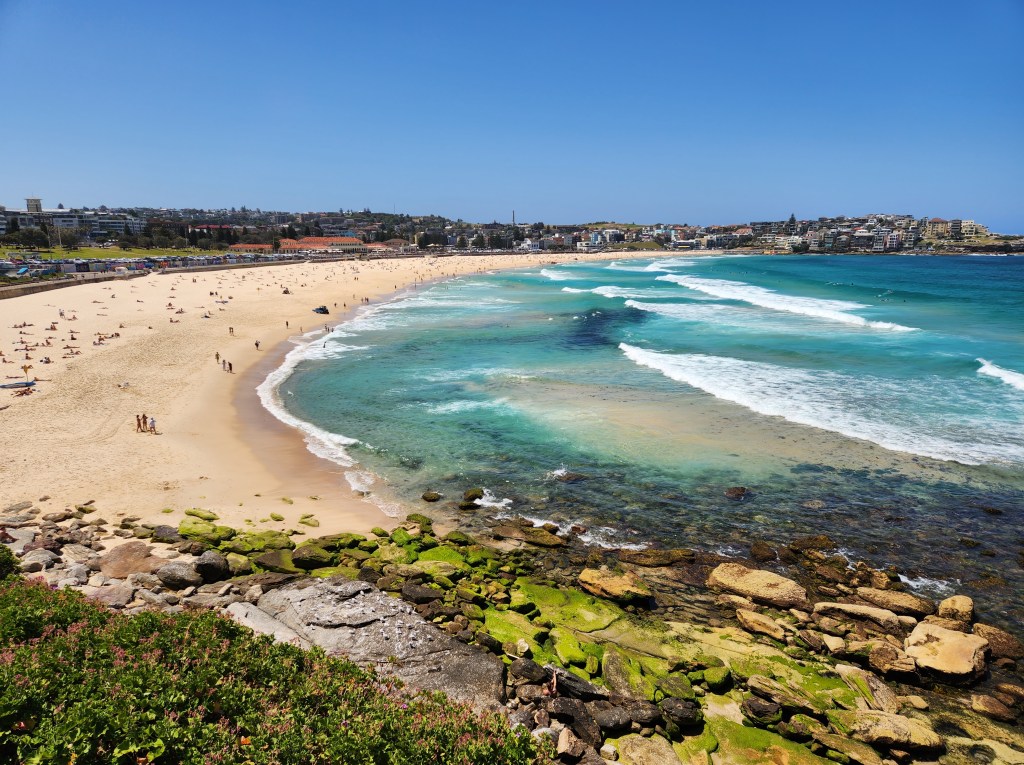
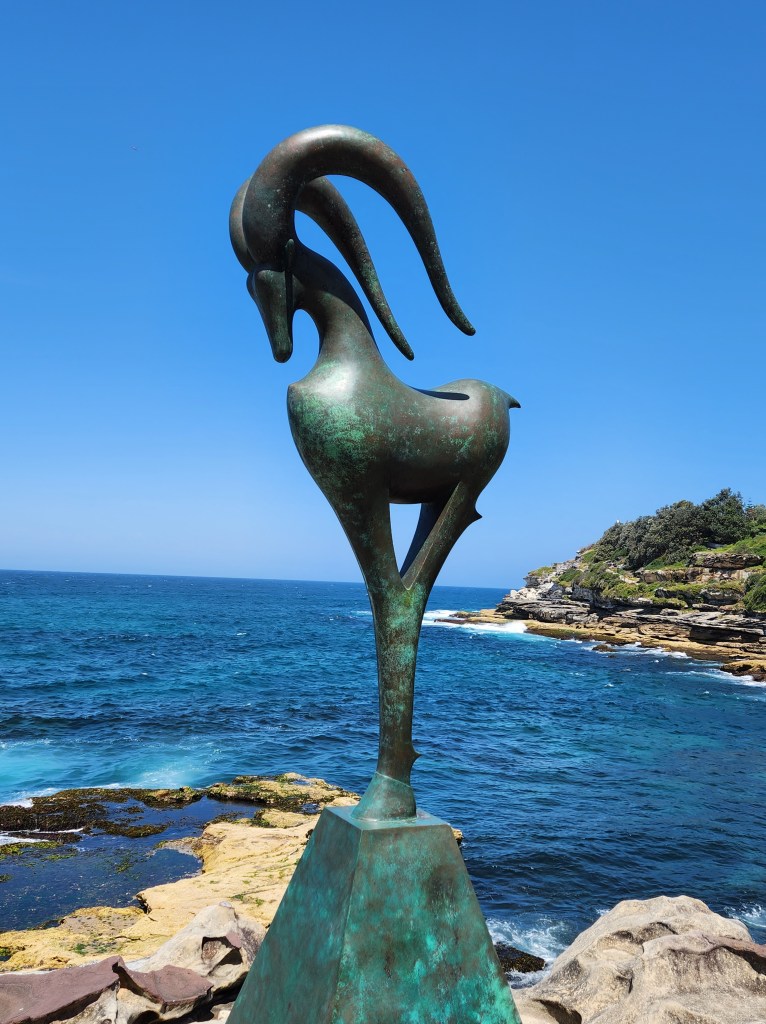
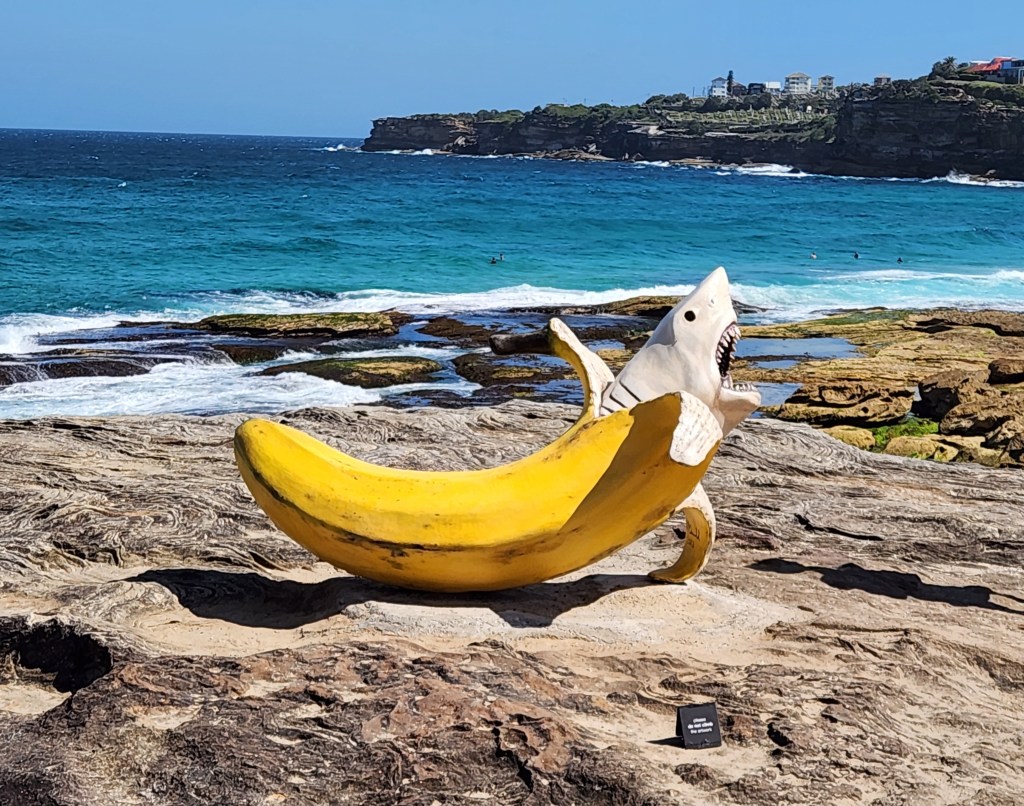
You can get from downtown to beautiful beaches in half an hour. Bondi and Manly are the most well-known. Be sure to take the scenic walk from Bondi to Tamarama Beach. I was fortunate to be there during the Sculpture by the Sea event!

The central business district is lively, clean, and feels safe.

Darling Harbor is modern, lively, and inviting.

You can easily hop on a train and arrive in the Blue Mountains in about two hours.

Incredible restaurants! I truly did not have one disappointing meal. Some recommendations: Sydney Café (Don’t let the name fool you. It is an elegant yet comfortable restaurant overlooking Sydney Harbor.) Yellow (Gourmet vegan that can’t be beat! I thoroughly enjoyed the seven-course meal. Even if you aren’t vegan, I strongly suggest you experience it!) Grana (Farm-to-table deliciousness in a lively and welcoming atmosphere.) Somehow, I don’t have any photos of all that delicious food. I guess I was too busy eating!

Bonus: Sydney is the place to go if you are gluten-free or Celiac. Every restaurant and café had options for me. I’m not sure if this is a good thing because I kept finding bakeries to try.

There are lots of little gems around the city if you keep your eyes open. Nutcote, the home of author May Gibbs, was a few blocks away from my accommodation. I happened to walk by just as a tour was beginning.

May had quite a view!

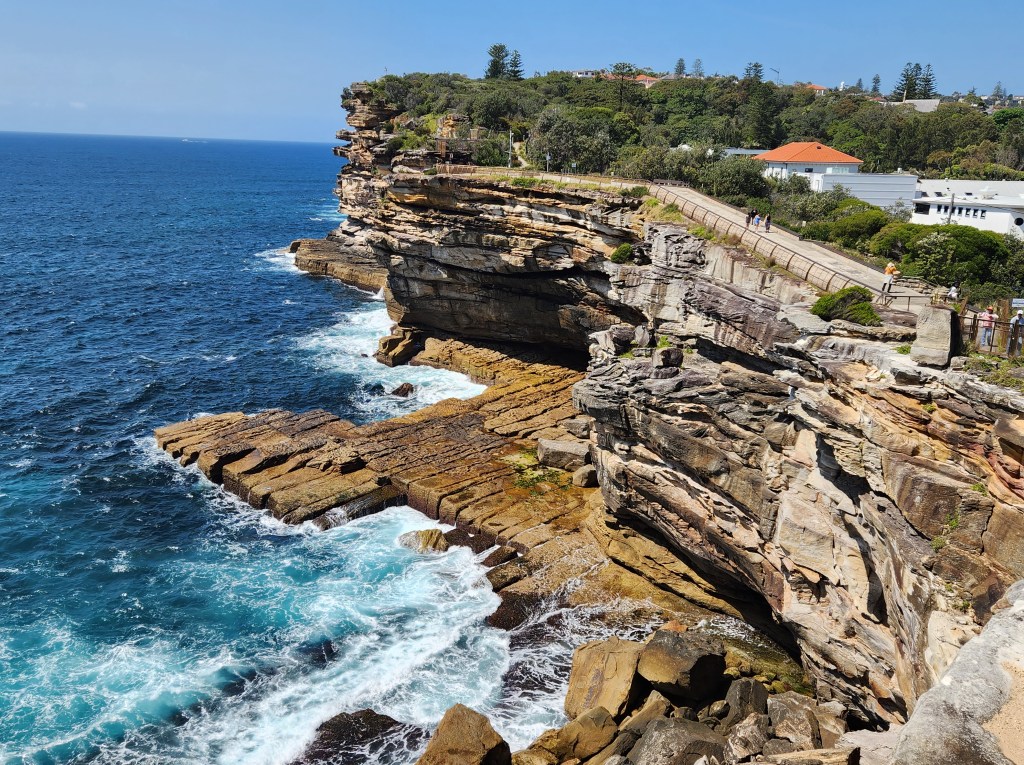
The views from the area around Watson’s Bay were my favorites.

I could go on and on as I have at least a thousand pictures of Sydney. If you’ve never been, I can’t recommend it highly enough!

Why Greymouth Should be on Your New Zealand Itinerary

November 28, 2024
If you have never been to New Zealand, you probably haven’t heard of Greymouth. It’s a small town on the west coast of the South Island with a history of gold mining, coal mining, forestry, and fishing. It’s also near the location where the Māori first arrived about a thousand years ago.
If that doesn’t sound exciting enough, I’m about to convince you to visit.


First, it is the western destination of the Tranzalpine Scenic Railway, which departs from Christchurch. It is one of the most scenic train rides in the World! Some people make the return trip in one day, but I advise against it.

Why would you turn around in less than an hour, making for a very long day on the train, when there is so much to see and do in the area?
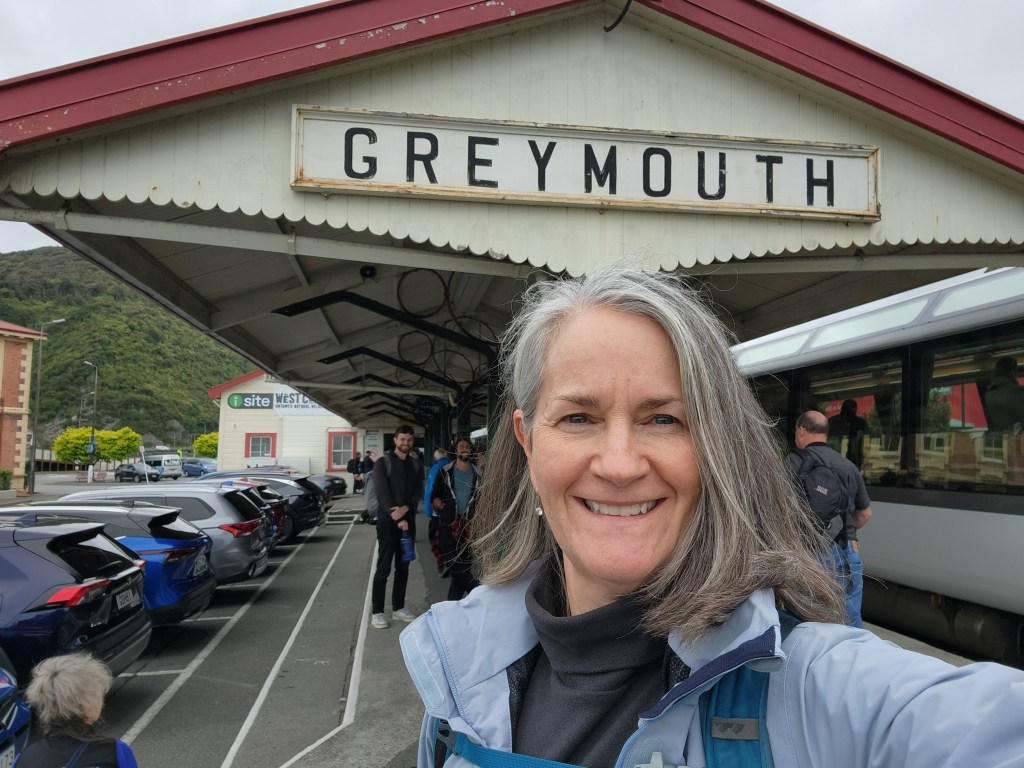
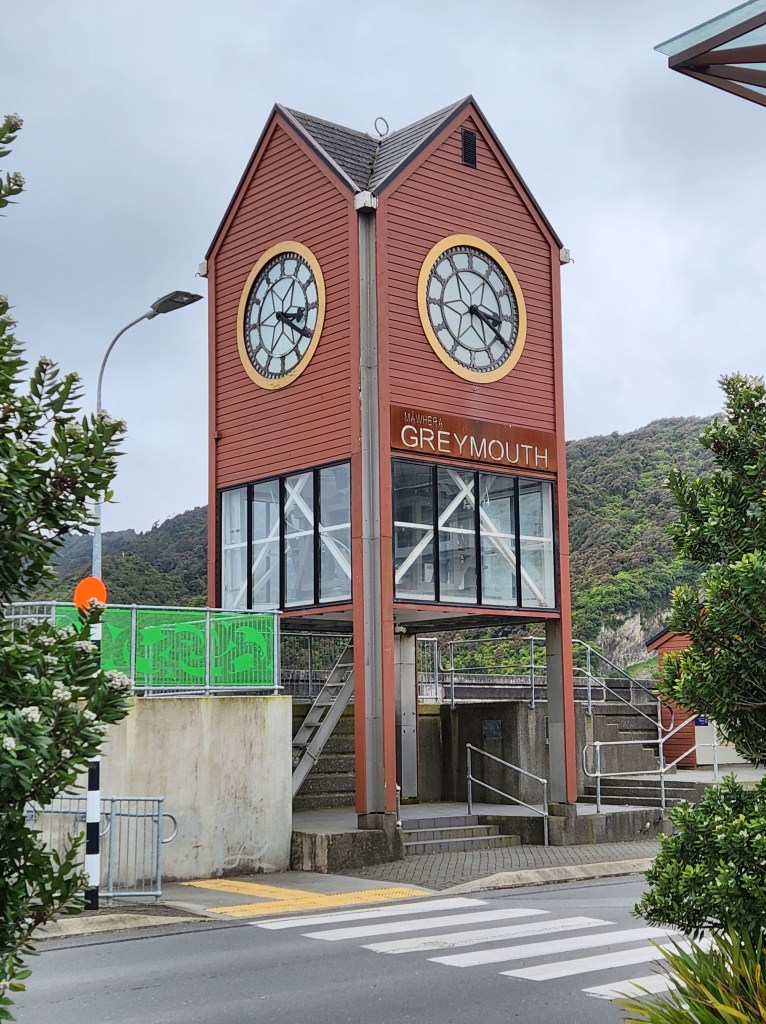
I must admit that when I first arrived in Greymouth, I thought I may have made a mistake. Why had I booked three nights in this rather sad-looking town?

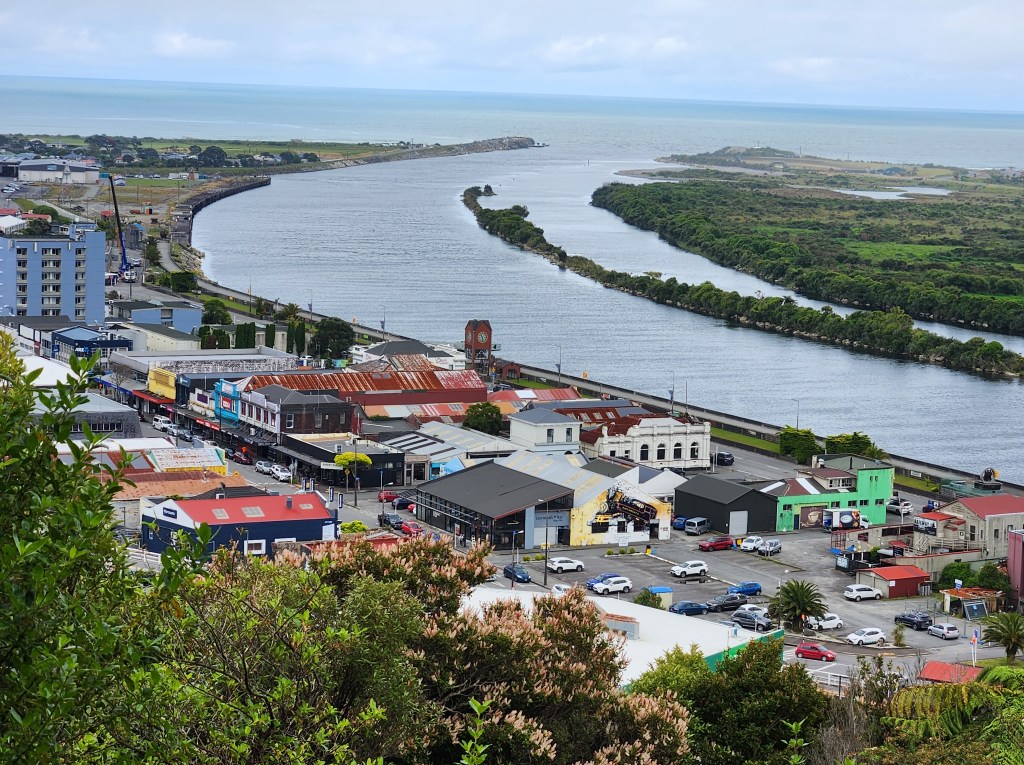
View of Greymouth from the King Domain hiking trail

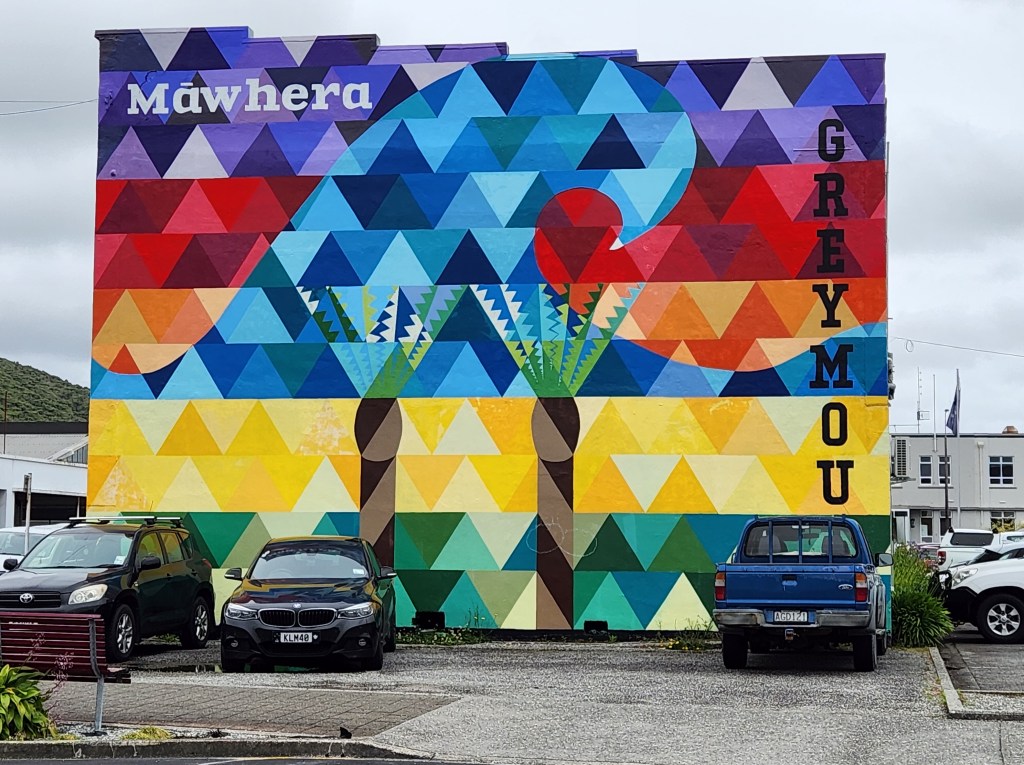
I could see that they were trying to attract visitors, but it’s a bit of a work in progress. There are some nice-looking restaurants and shops as well as some beautiful murals in town, but many of the buildings could use some work.


I knew I would be walking and hiking. There were several possibilities, but I needed to book an excursion to see more of the surrounding area. You see, I had been traveling for over three months at this point and somehow neglected to make solid plans for Greymouth.
Then I got lucky. My host had left a folder of things to do and see. I noticed that there was a locally run day tour up the coast and around several locations.
When I went to book online. It looked like I may be the only one signed up for tomorrow’s tour. Would I be getting a call or email message to cancel?


The next morning, I met Jackie, my guide for the day. She greeted me enthusiastically and confirmed that I was her only guest for the day. She asked about my dietary needs (I’m celiac/gluten-free), and I informed her that I wasn’t much of a drinker. (A stop at a local brewery and distillery were part of the tour.) Not a problem! Jackie adapted the tour to suit me.


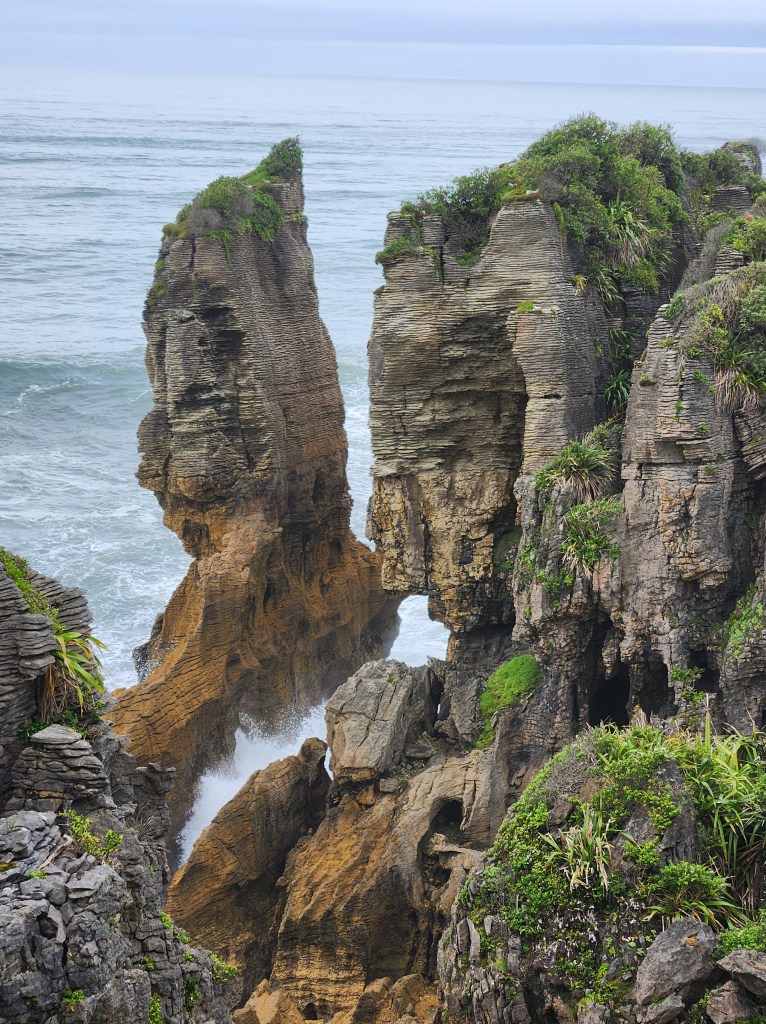
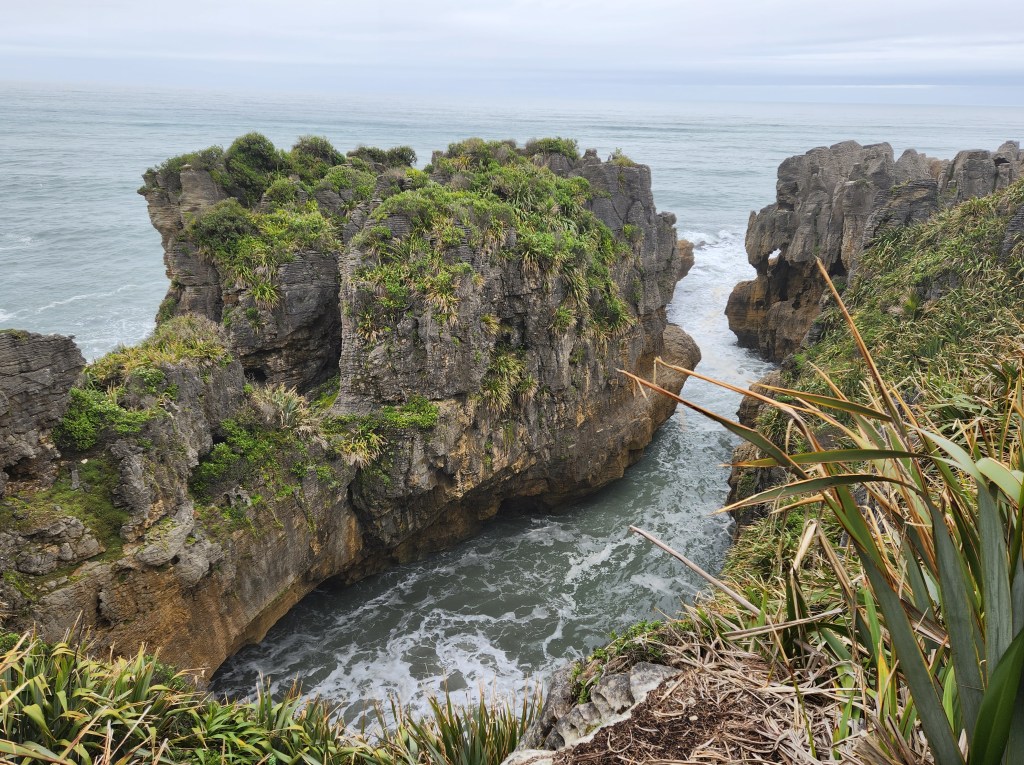
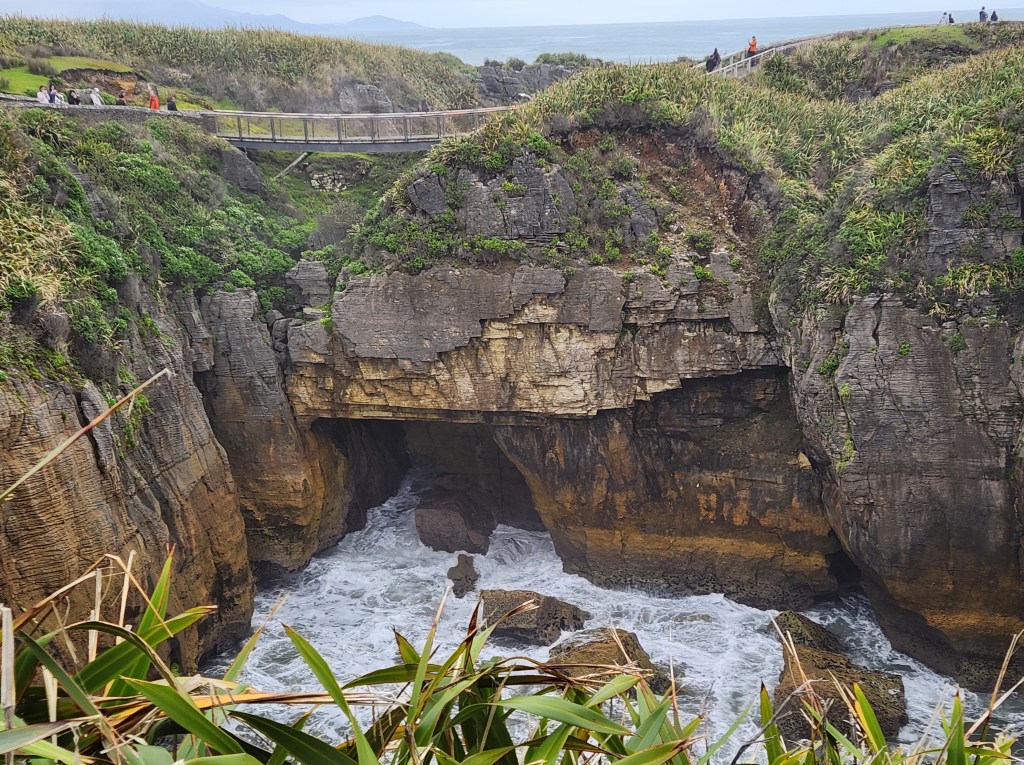
After a stop at a viewpoint, our first main stop was at Punakaiki for the National Park Visitors Center and Pancake Rock and Blowholes. During our walk through the Pancake Rocks and Blowholes, Jackie shared her knowledge of plants and birds. I learned all about the Kea, and we saw the Weka close-up.


The walk was incredible; one of the most beautiful coastal areas I’ve ever seen!
The water was relatively calm, so the blowholes weren’t very active. I wasn’t complaining about the lack of wind, though.
The Visitor’s Center was new and sparkling, with a newly opened Ponamu Pathways experience. These interactive experiences were created in cooperation with Weta World, the folks who made the Lord of the Rings movies.


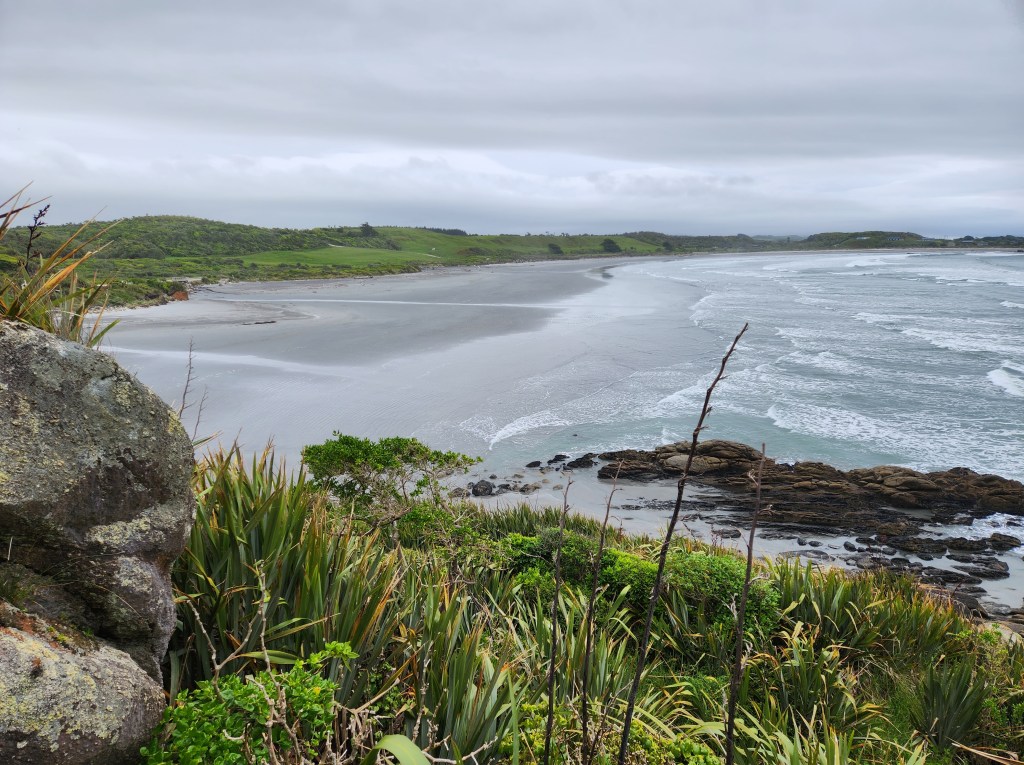
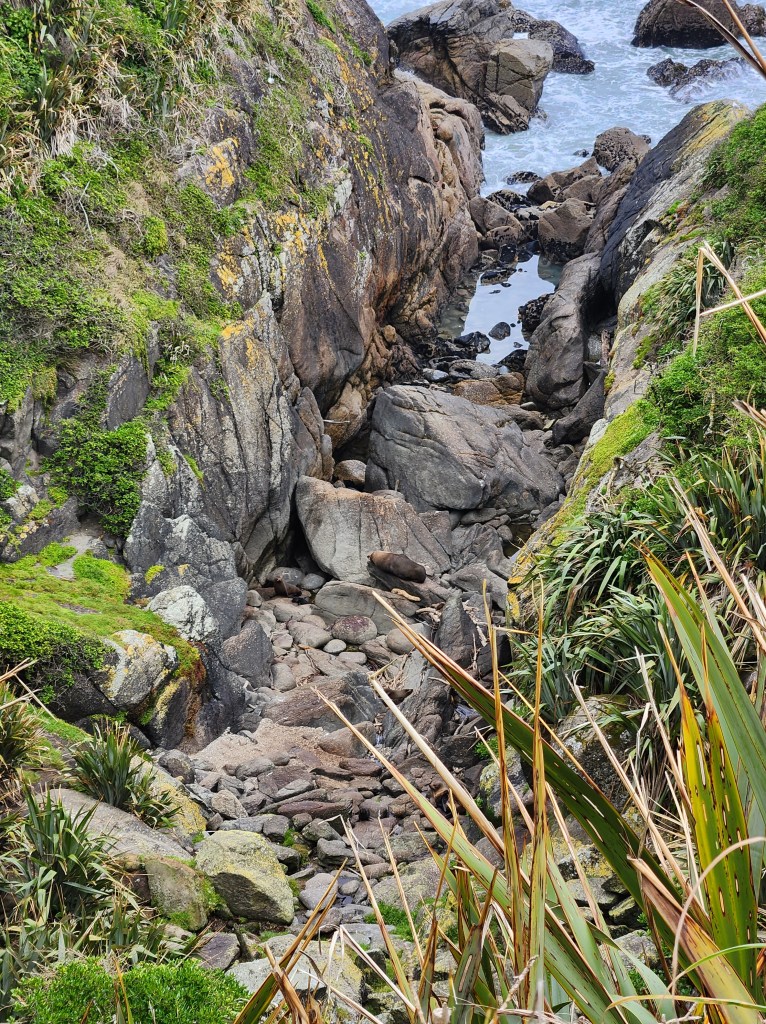
After that, we made our way to Tauranga Bay to see the stunning beach and seal colony. The first of this year’s new pups had just been born and were making some noise down below. Jackie had names for the male seals and told me many more females would arrive soon to give birth.


The next stop was lunch—yes! I have yet to eat a bad meal, and PR’s Cafe didn’t disappoint. I had pumpkin-orange soup and bread. It truly hit the spot.


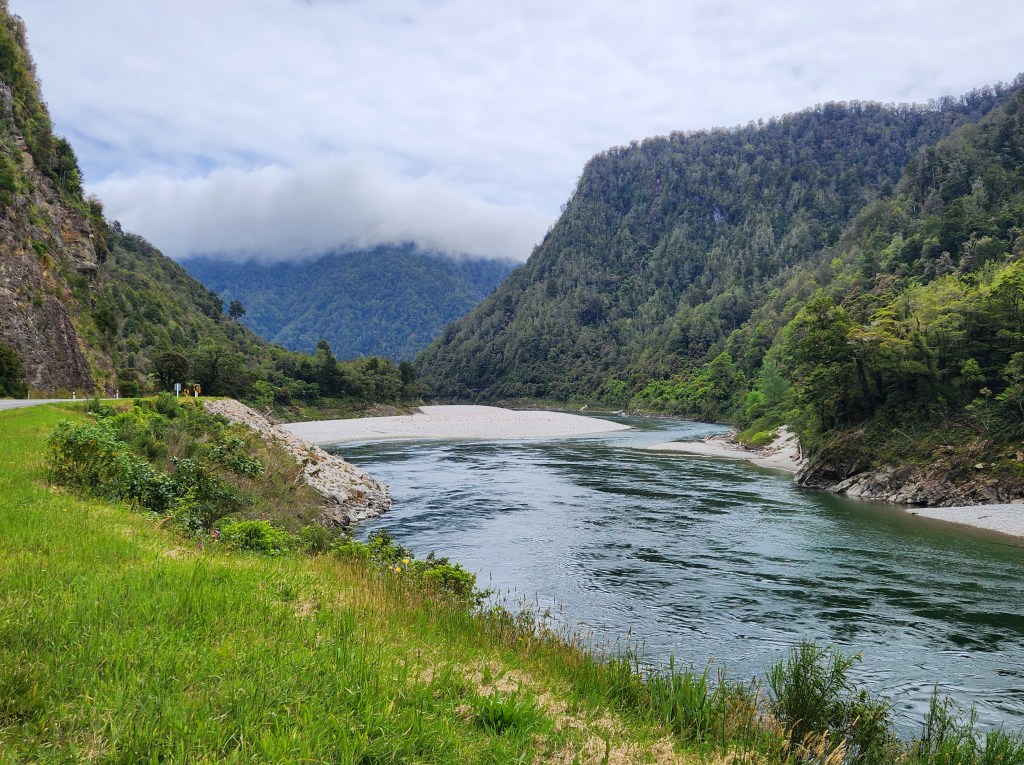
From there, we drove through Buller Gorge, essentially running between two national parks.


We stopped in Reefton to see the site where community members are recreating the country’s first power plant. (Yes, little Reefton on the sparsely populated West Coast was the site of New Zealand’s first power plant.) When complete, it will power the streetlights in town.
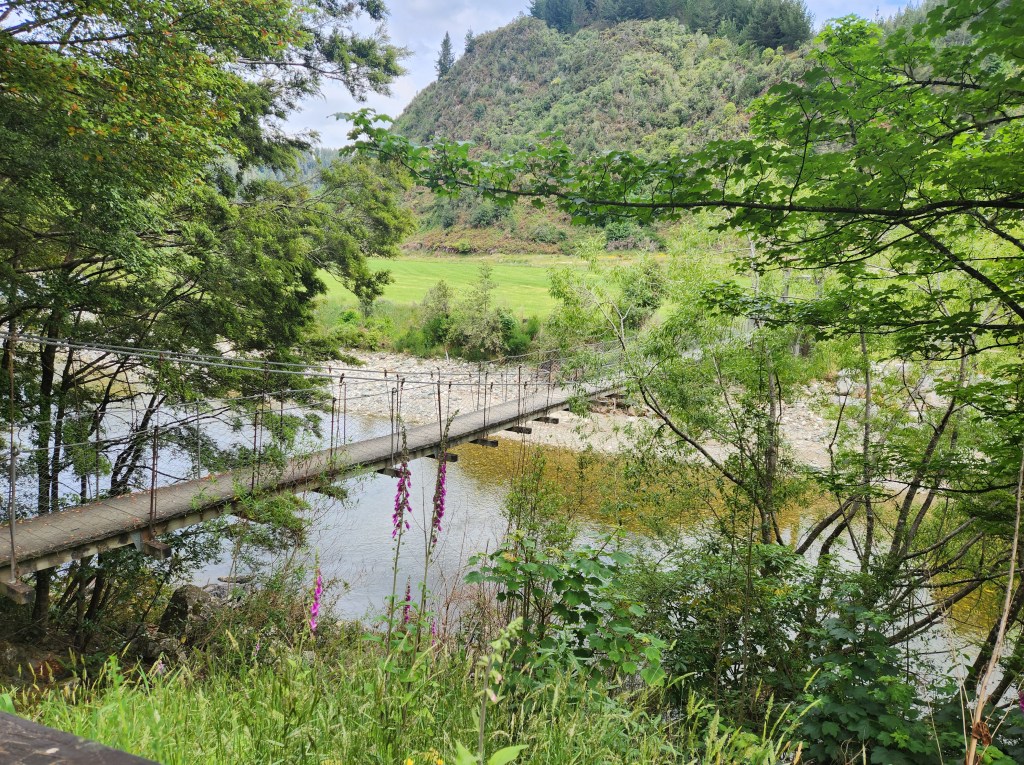
The walk included a river crossing on an old-style swing bridge.


Reefton is a recreational hub with oodles of hiking trails near town.
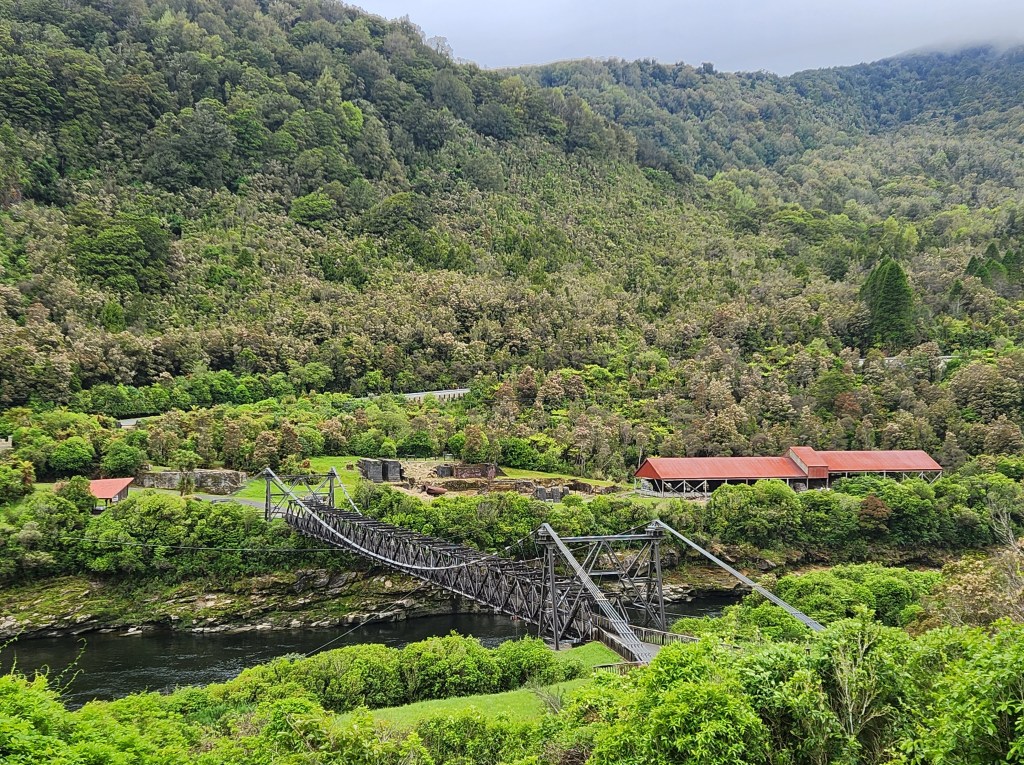
Our last main stop was the Brunner Mine site. Sadly, it is the site of New Zealand’s biggest mining tragedy, where 65 men lost their lives in an explosion back in 1896. The mining operation was shut down and the land was left to regenerate to its natural state.


I can’t speak highly enough about Jackie and the West Coast Scenic Taste Tour. www.wcscenicstastetour.co.nz

She was knowledgeable and remained enthusiastic throughout the day. I could tell she loves her job.
I hope I’ve convinced you to visit Greymouth and the West Coast. Say hello to Jackie for me!

Gothenburg: Our Little Secret


July 28, 2024


I recently spent three weeks in Scandinavia. It was a sampler trip, my first visit to explore the region.
I have to say, I loved it! Beautiful scenery, water, islands, and history-filled cities—my kind of stuff. My time included a cruise from Copenhagen up the Norwegian coast and through the Geiranger Fjord. The scenery was stunning, and the town of Geiranger was charming. I also visited Oslo and Copenhagen.


But the highlight of my visit was Gothenburg, Sweden. I chose it over Stockholm, partly because it was in a more accessible location and partly because it was smaller.
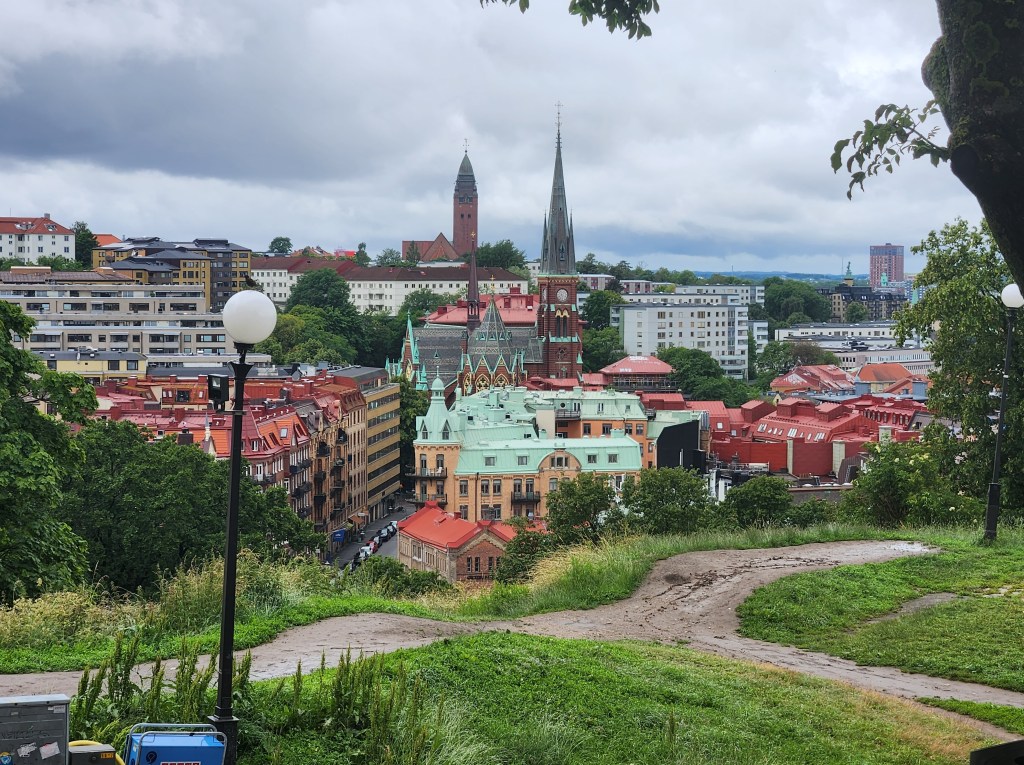
Gothenburg is one of those “just right” European cities. It’s not too big, but there’s plenty to see and do. It’s mostly walkable, and you can also get around using the charming trams throughout the city.
I arrived from Copenhagen by train. Just steps away, I found the tram station, hopped on, and rode to my accommodation for the next few nights.


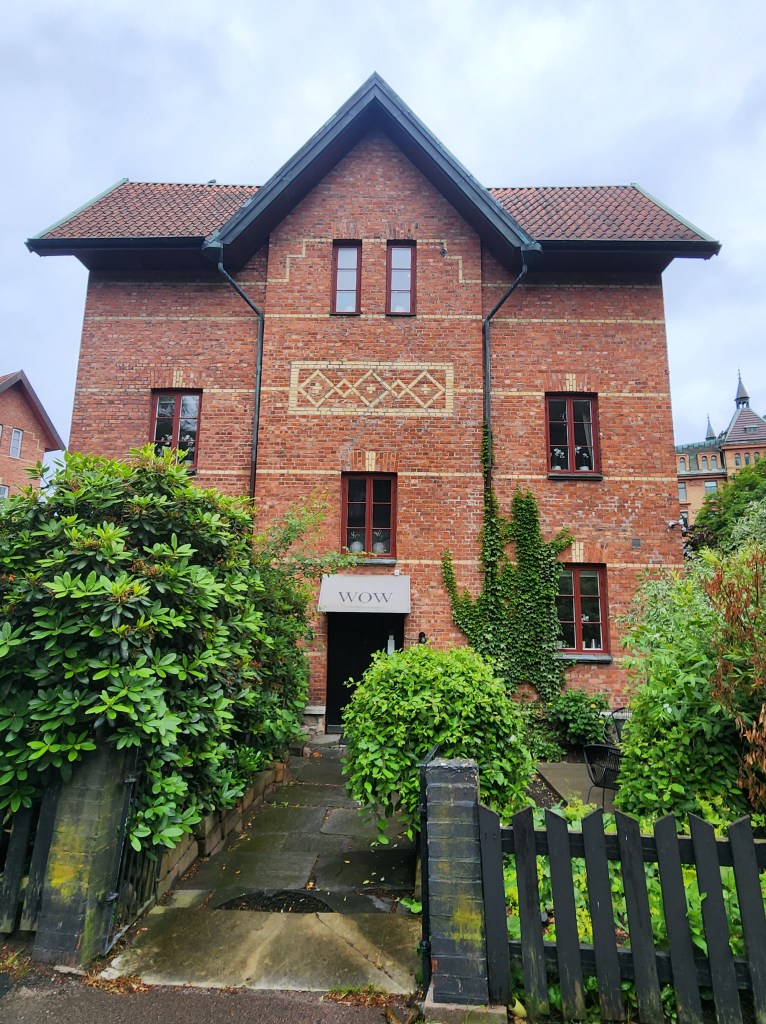
It was a change from the studio apartments I typically rent. I had a private room and bathroom, but the building had a shared kitchen. I figured it must have been student housing before the large, modern dorms were built.

My corner room had a high cozy factor; the bed was amazingly comfortable, and look at that cute vintage-style refrigerator! I didn’t mind walking down one flight of stairs to use the kitchen since the room had a full tea and coffee service.


The brick building was charming, with well-kept grounds. I had a corner room with views in two directions.


Gothenburg’s city center is walkable and has everything you could want. The public market is upscale, with shops and restaurants. Gluten-free people like myself will be happy to find several baked good options at Steinbrenner & Nyberg.
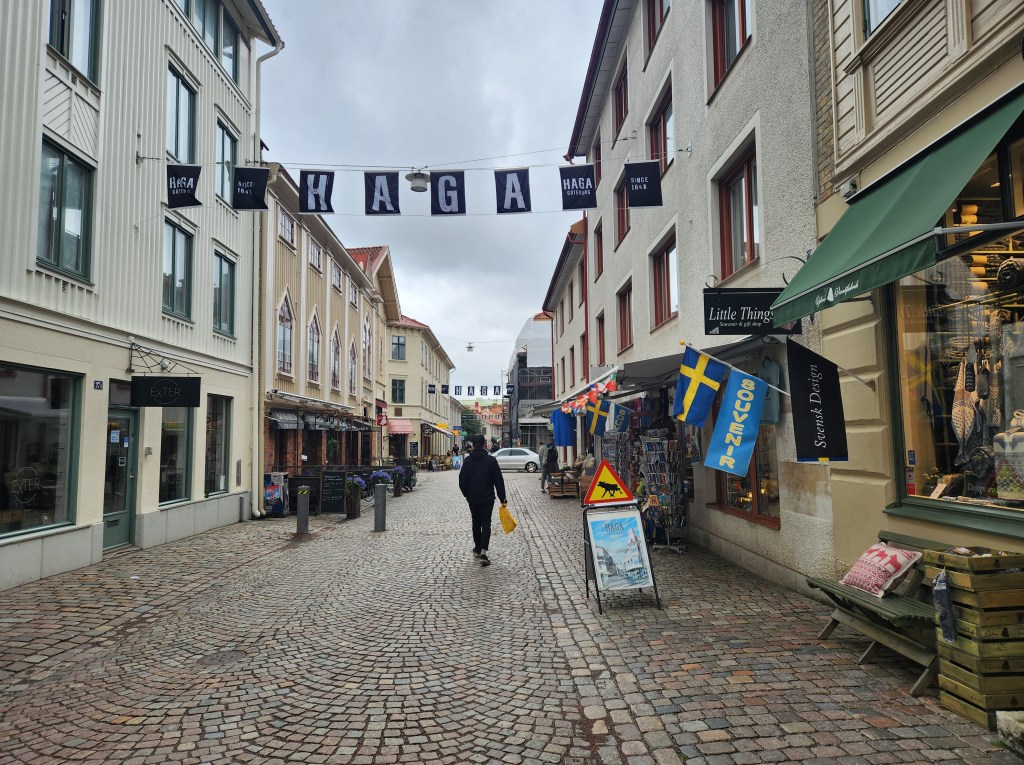
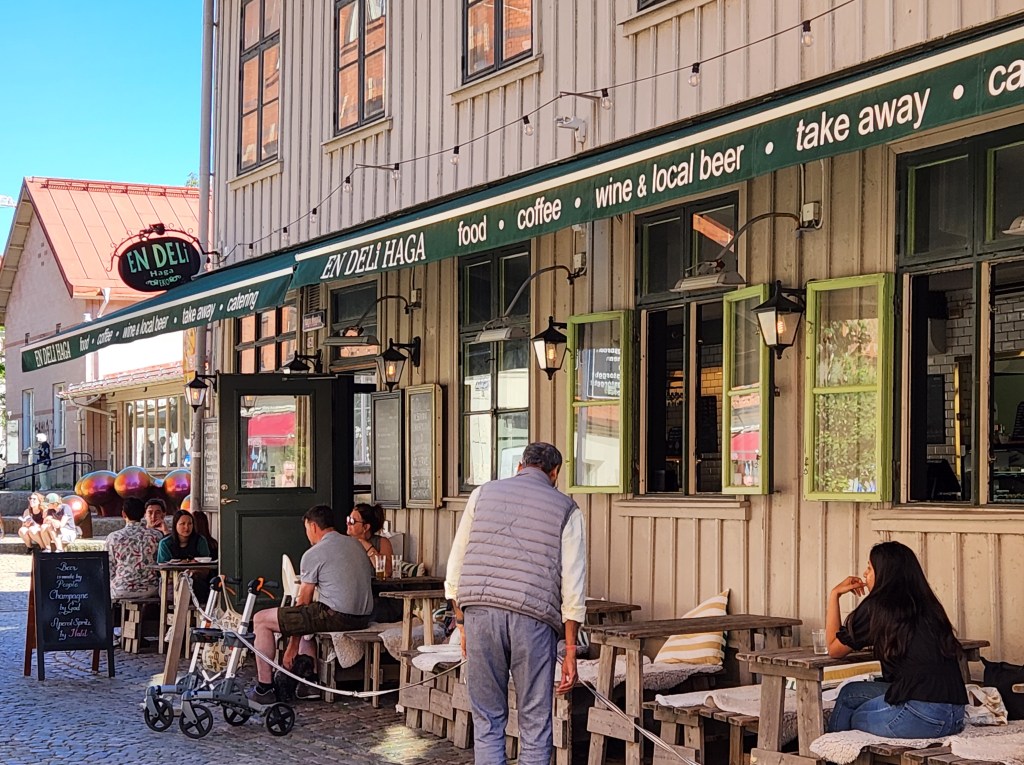
A walk through the historic Haga neighborhood is a must. There are cute shops selling Swedish products and cafés everywhere. Again, I found some yummy gluten-free treats at Café Husaren and enjoyed a gluten-free and vegan lunch at En Deli Haga.


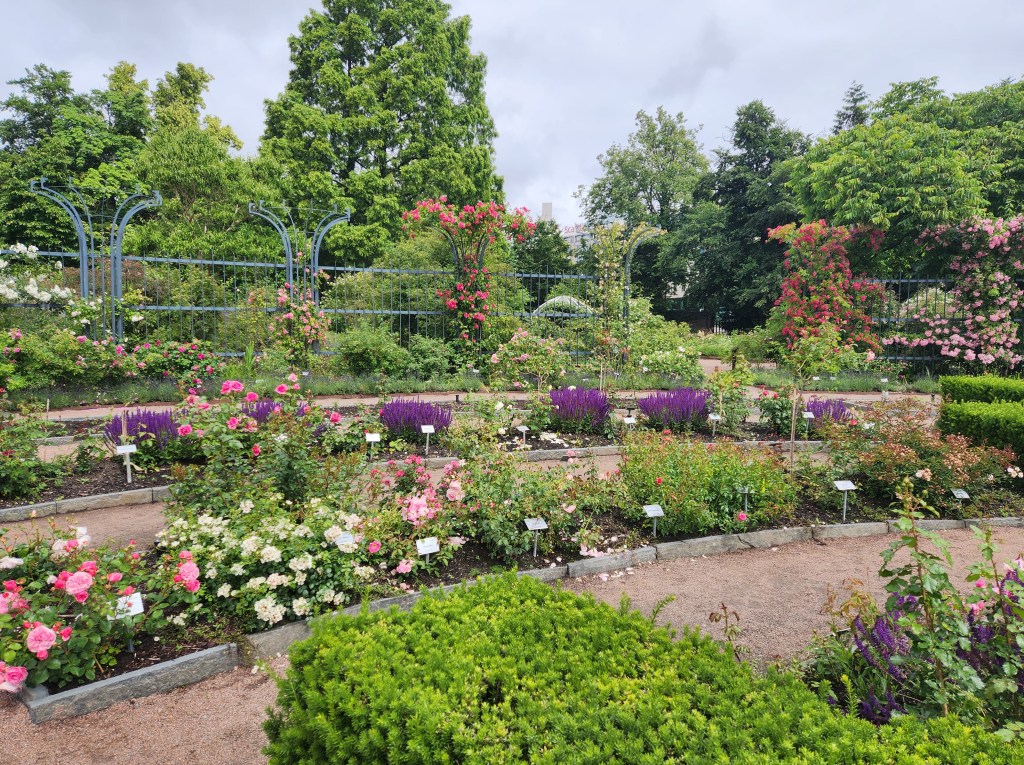
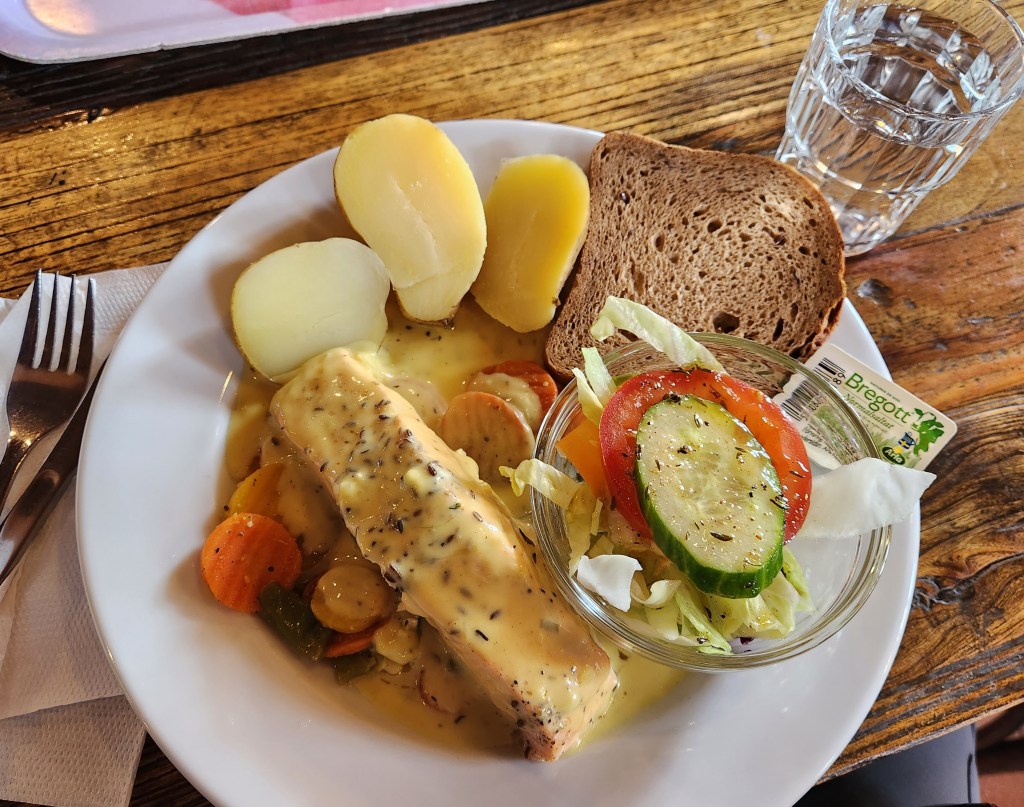
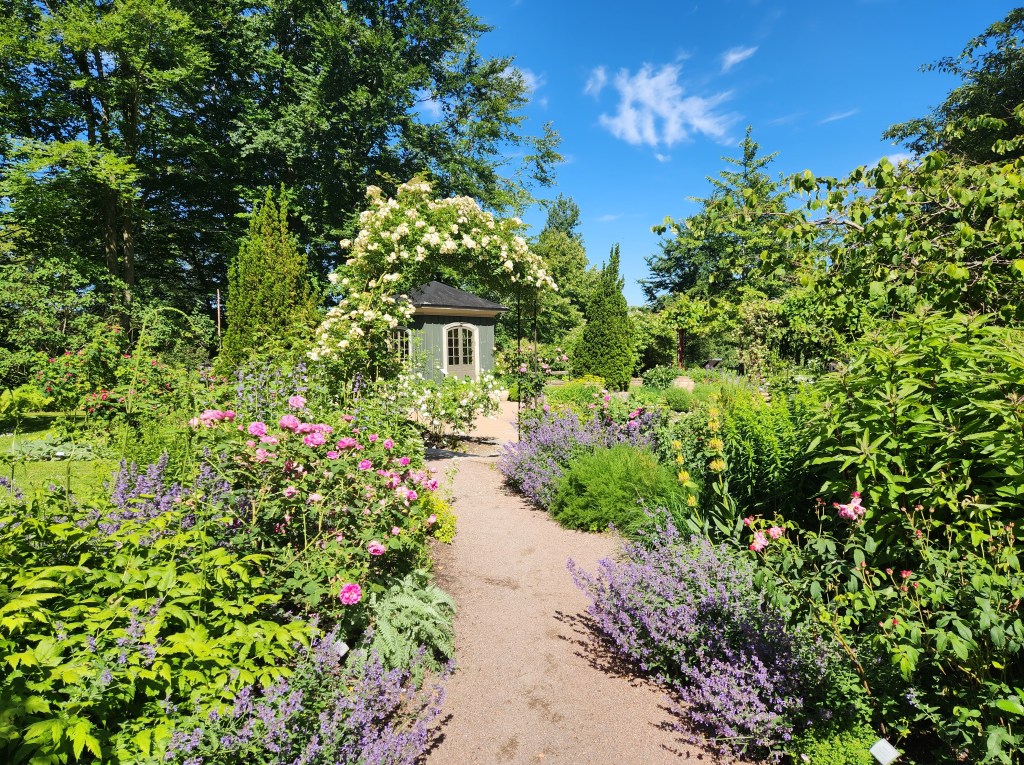
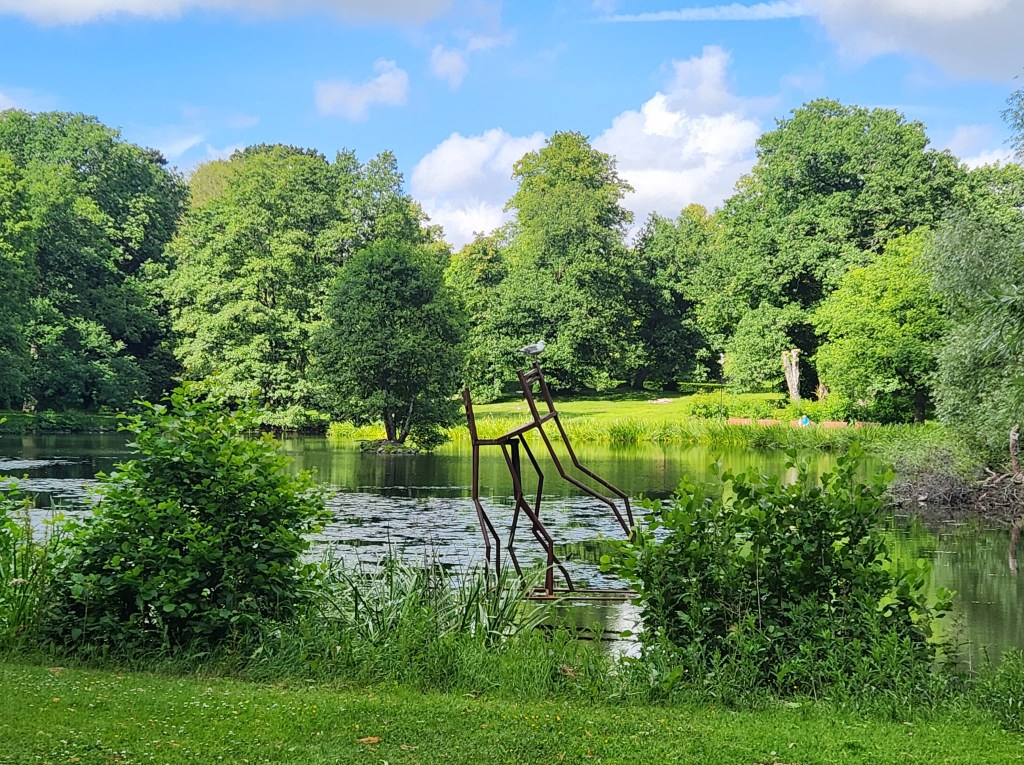
If you love public gardens like I do, you’ll love Gothenburg. Tradgardsforeningen, or The Garden Society, is near the heart of the city. One thing I love is that it was created in the 1800s by the citizens (which also makes it one of the oldest public gardens in Europe). They sold memberships to create beautiful grounds for all to enjoy. I also visited the garden café and had an exquisite salmon lunch.


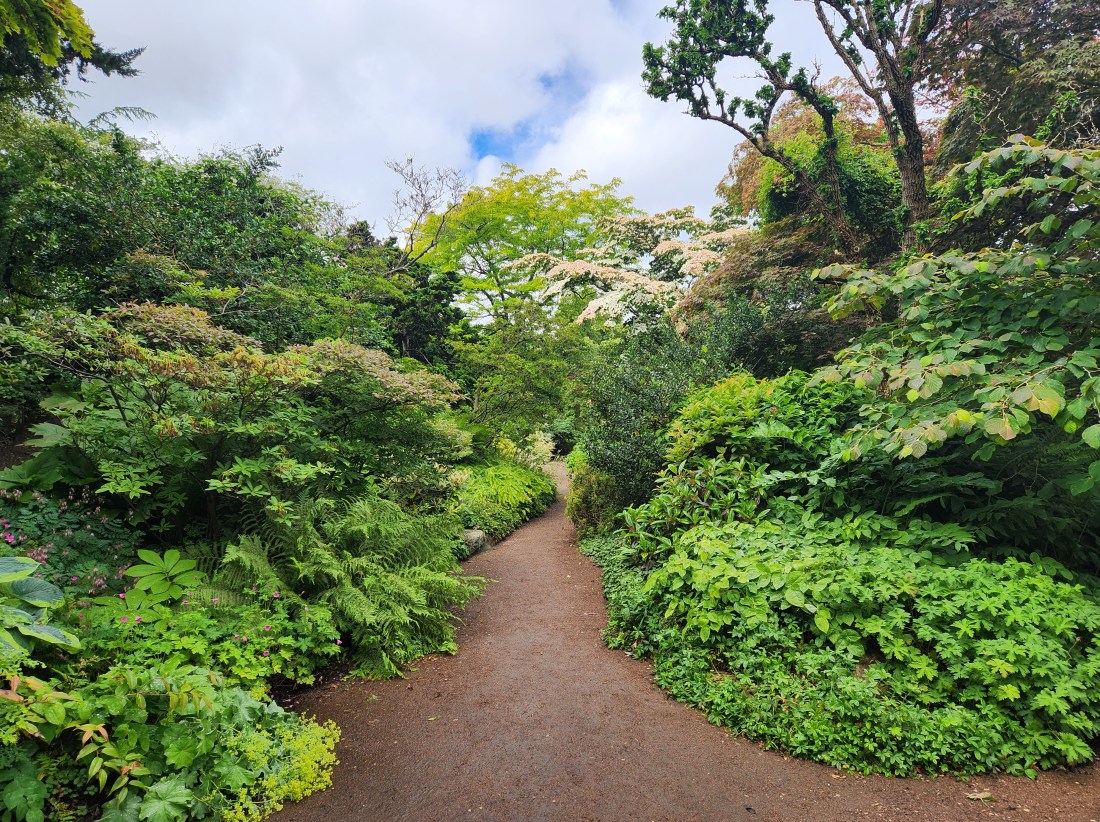
The Botanical Garden is a short distance from the city center, but you can easily reach it by tram. It is expansive, and you will get your steps in for the day. If you visit, take the short hike up to the viewpoint. You could spend a good part of a day wandering the grounds. It is one of the most exquisite botanical gardens I have ever visited.


You won’t pay an admission fee for either garden, but you can leave a donation.
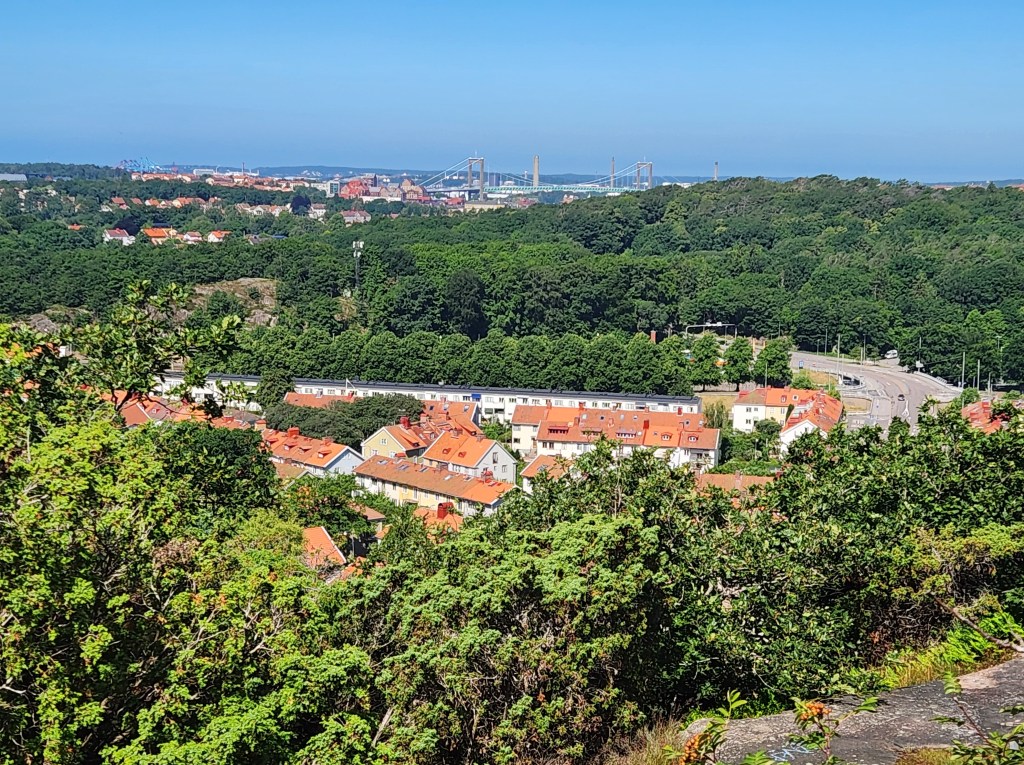
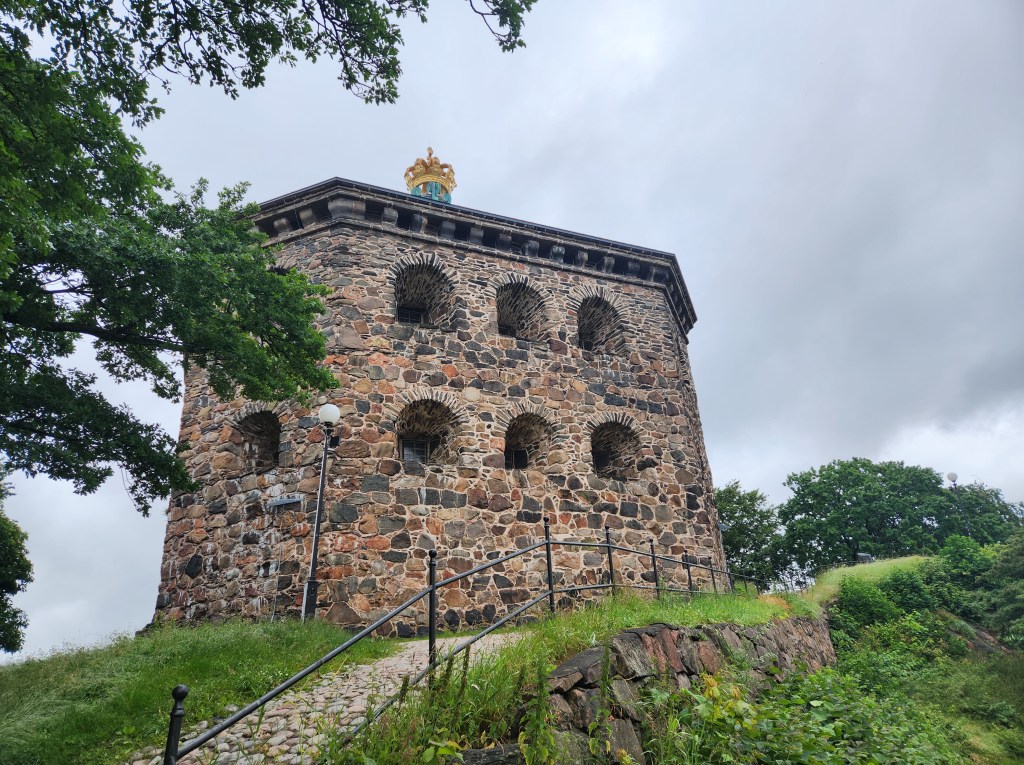
In addition to the gardens, you will find numerous parks throughout the city, some with fantastic viewpoints. My favorite was Skansen Kronan, where you will see a historic fortress and enjoy a nice view of the city.

Then, there’s Slottsskogen, the massive park at the edge of the city near the Botanical Garden.


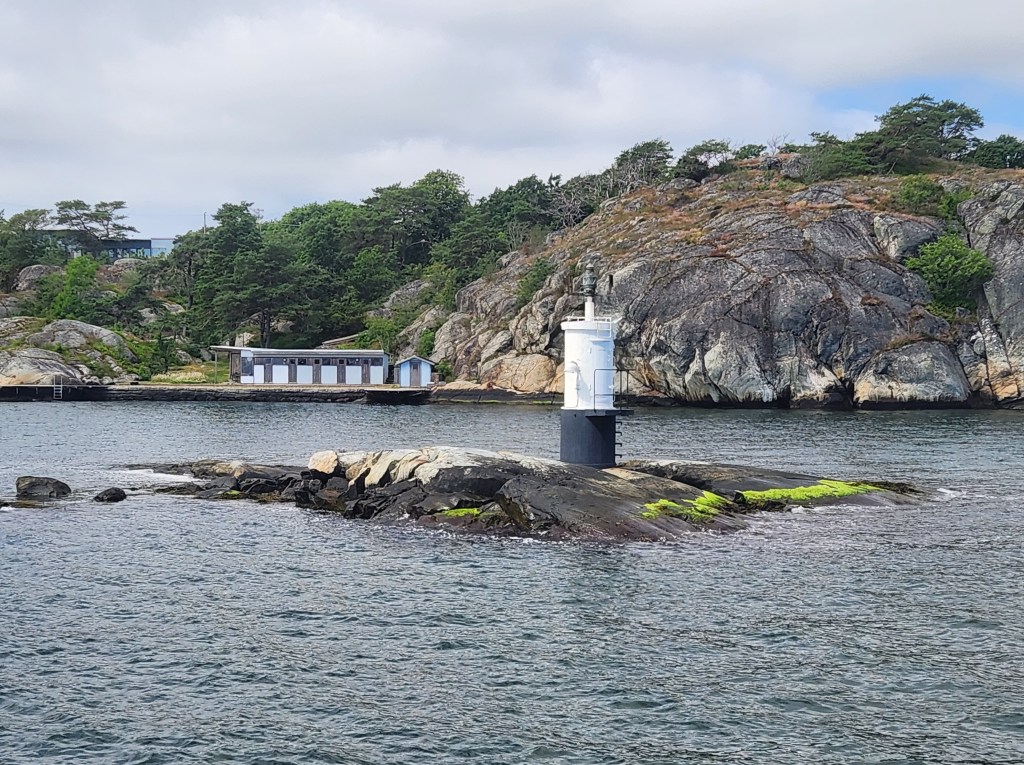
One day, I took tram #11 to the end of the line to catch a passenger ferry to Styrso Island. The islands in the archipelago generally don’t have cars. Most people get around on bicycles and golf carts. I enjoyed a wander around the island. If I were to return, I would definitely spend more time on the islands.


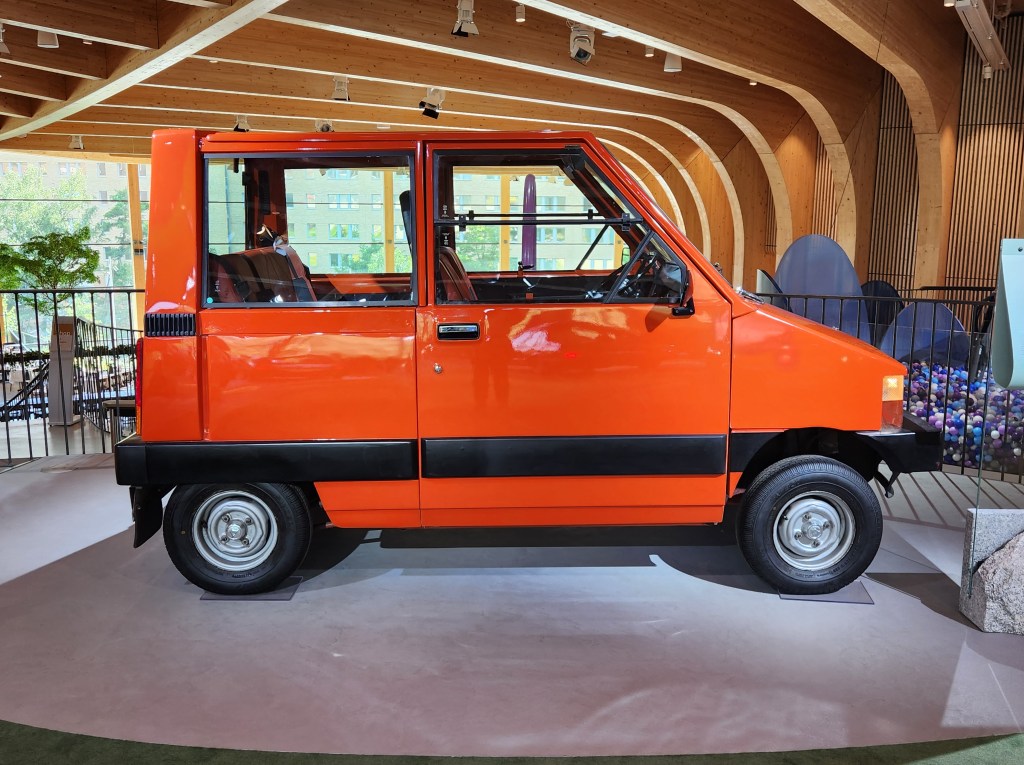
Another highlight was the newly constructed World of Volvo. I’m not generally a car museum person, but my family has a particular affinity for them. If you’re into architecture, it’s worth a visit to step inside the gorgeous five-story structure. The museum is on the third floor, but be sure to wander around the rest of the building. It is truly an architectural marvel!

Volvo’s 1976 electric car!


Amusement park fans will find Liseberg just a couple of blocks from the World of Volvo. It’s not my thing, but the hundred-year-old park is a favorite destination for many.
So, I say, let everyone else visit Oslo and Copenhagen, and we’ll keep Gothenburg our little secret.

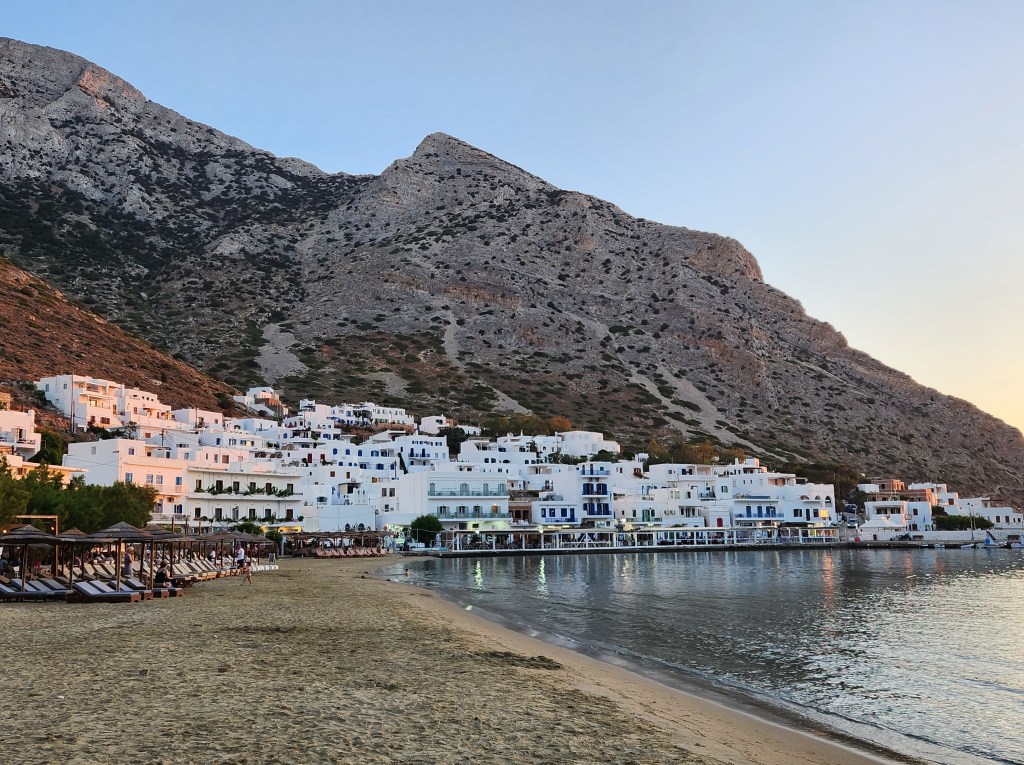
Sifnos: Cute Little Greek Island


June 11, 2024


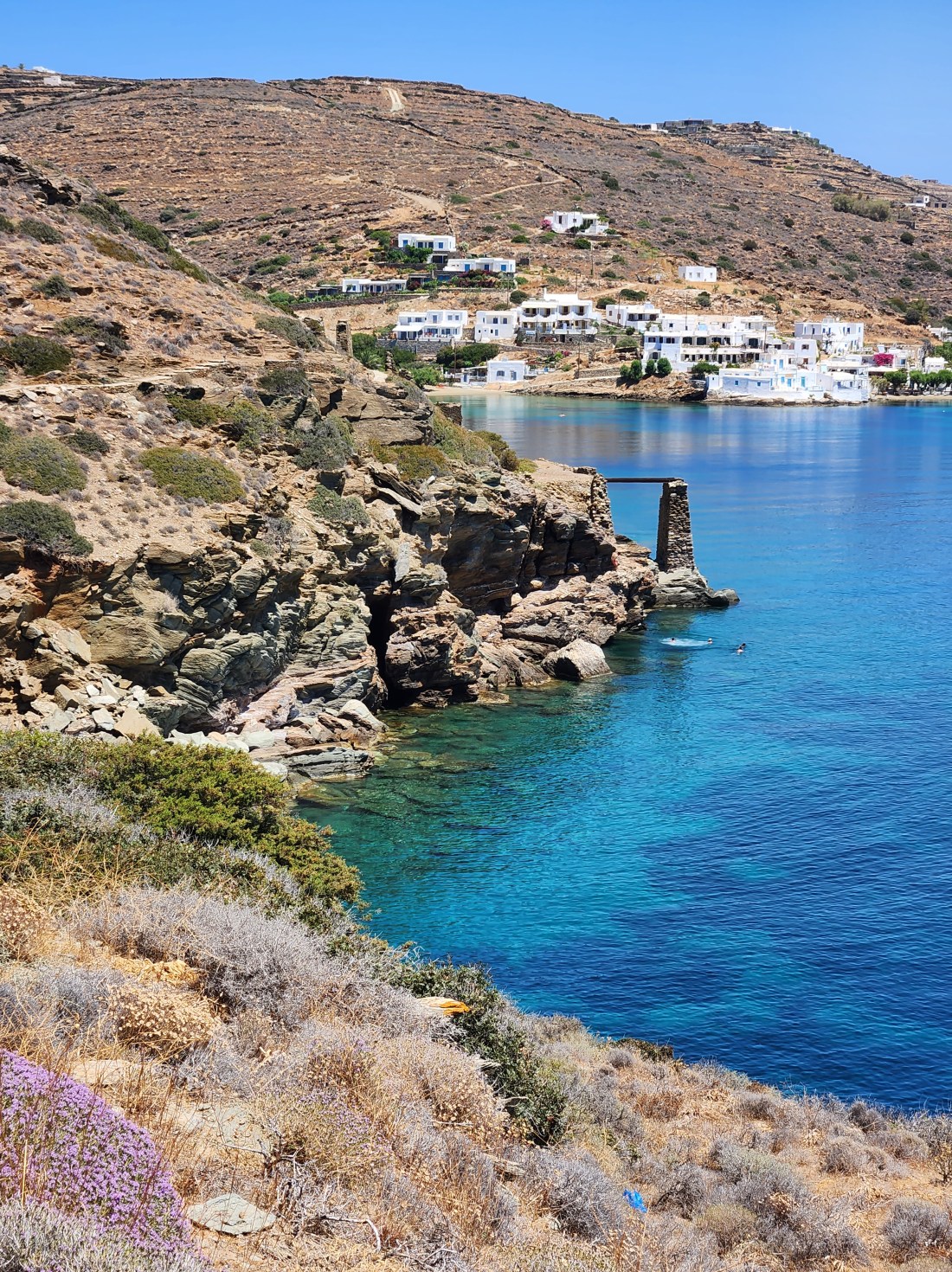
I’ve spent the past three weeks in the Cyclades, a circle of Greek islands south of Athens.
My original plans did not include Sifnos, but sometimes, Greek ferry schedules cause itinerary changes. I could not go directly from Serifos to Naxos, but I could get a ferry to Sifnos and travel to Naxos from there. Rather than just stopping on Sifnos, I decided to book two nights and cut short my stay on Naxos.


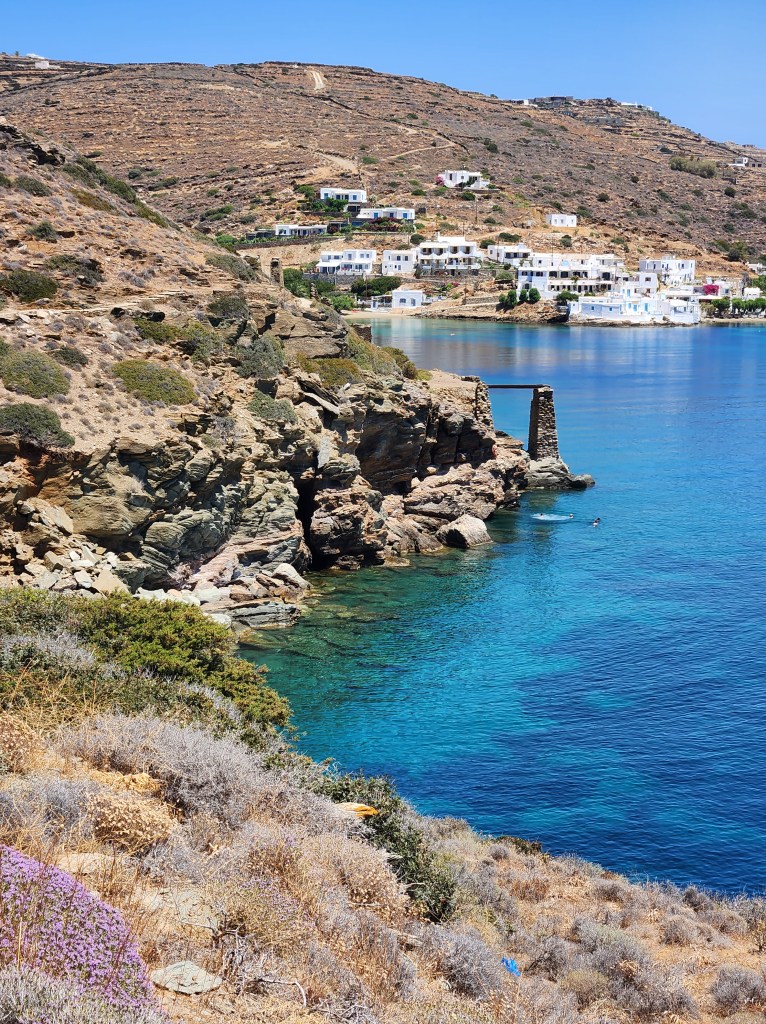
So glad I did! Sifnos is a day hiker’s dream. From the moment I arrived, I knew that I would want to stay longer.
I had just spent a week at a yoga and meditation retreat on Serifos, and one of my fellow participants was on the ferry with me. She had plans to meet a friend who was arriving later in the day, so we stopped at the tourist information office before getting lunch.
The gentleman working there was cordial and helpful. I immediately spotted the hiking trail map and knew I needed no further information. He showed us some of the most popular sights on the island. My new friend had some questions, so I excused myself and checked in at the office where I would get my apartment key. They said I’d be able to check in by 2:00 PM, so I went back to the tourist office to find my friend.


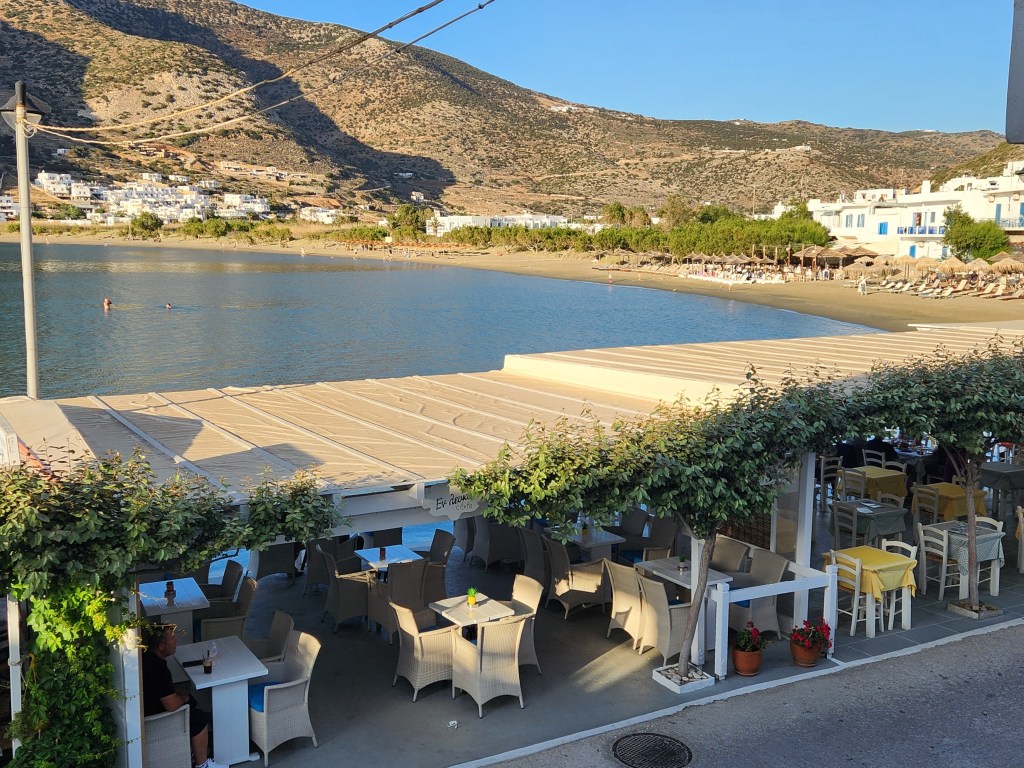
She and I enjoyed a lunch of Greek salad and chickpea soup. The soup is an island specialty; you must try it if you visit! Then she was off to explore the ceramics shops, and I went to get settled in my new place.
There wasn’t time for a hike that afternoon. Well, I could have hiked, but I wanted to rest. And the beach was calling me out for an afternoon swim! I had my plan set for the morning, though.
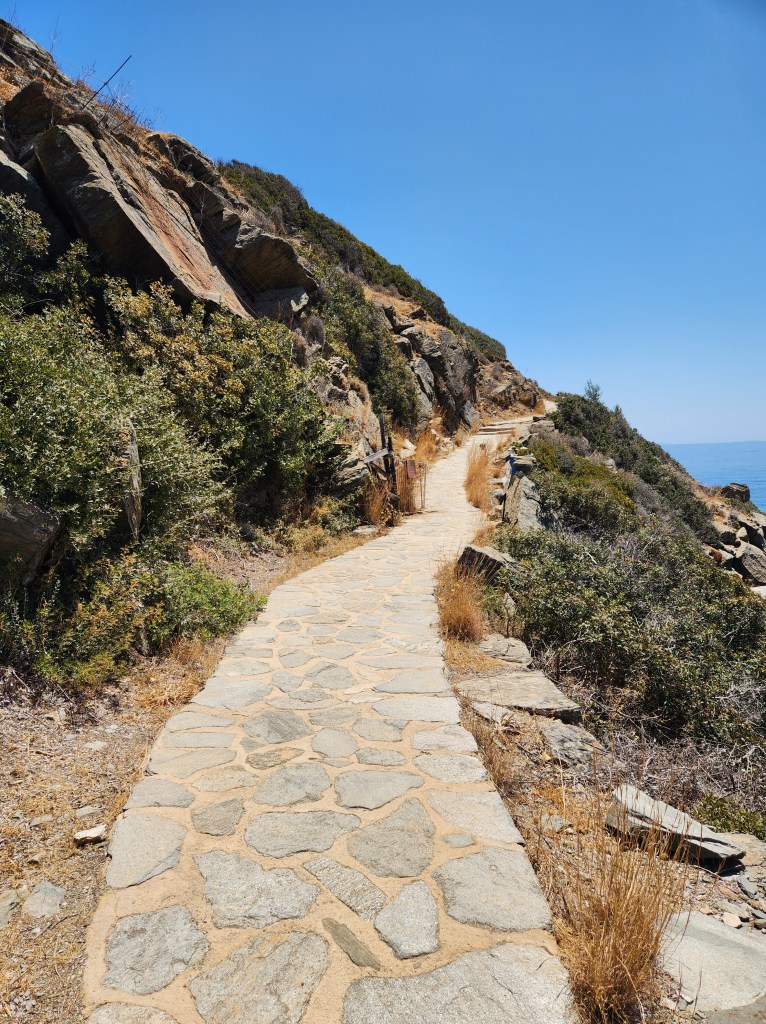
At 7:15, I took the first bus of the day up to Apollonia. Upon arrival, I spotted the display just for hikers. I was pretty excited, my kind of island! I took the #3 trail through town and onto an ancient path. It was well-marked most of the way.

I stopped at the Panagia Vrsis Monastery. No one was around except for a dog, barking on my arrival.


I noticed the ancient door was open a crack and walked in. Still, I saw no one. A little eerie but quite beautiful. I took a quick tour and got back on my route.


I eventually arrived in Platis Yialos on the beach. I took a snack break at a little park where a local man was getting his workout. I had to contain my giggles as he grunted his way through. Then, he broke out in song. Quite entertaining!
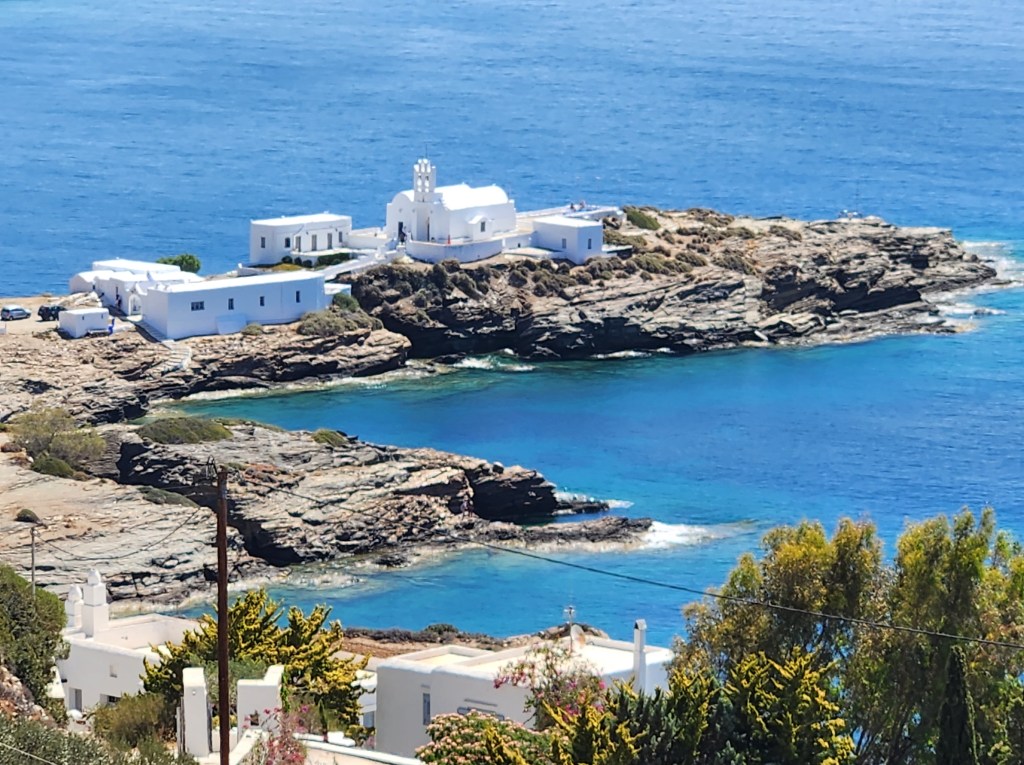
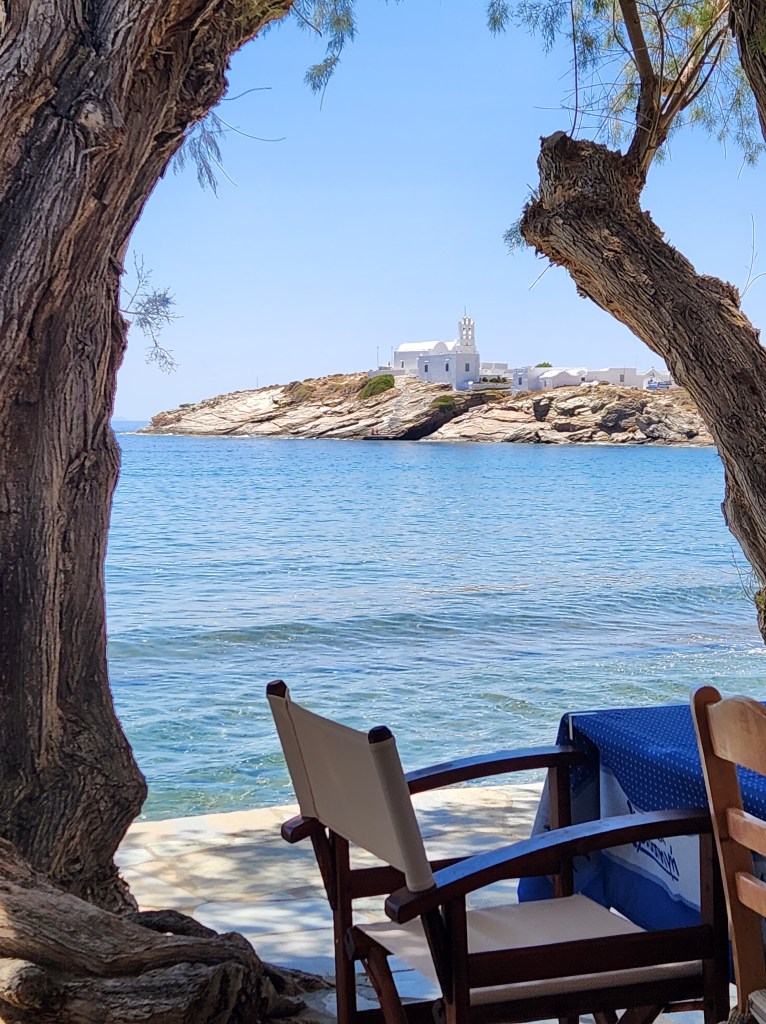
I continued walking up the beach road toward Chrisopigi Monastery. Its location on a rock in the Aegean is one of the island’s highlights.


Around the bend from the monastery lies an inviting beach. It was nearly noon, and I stopped at the beachside taverna for something to eat. Yes! The chickpea soup was on the menu. This version was more like stew and made good fuel to continue the journey. It came with a quarter of a lemon. I have to say, the flavor is magical. (Sorry, I deleted the soup photo!)


I didn’t walk much further, though. I took the #2 trail along the beach and up to another little church before heading to Faros. At that point, I would have had to put in some significant distance to get to a bus stop. I opted for a taxi back to Kamares instead.


My driver was entertaining, playing Greek music for me. We took a side trip to Apollonia so he could pick up some luggage to bring to the ferry port. He pointed me to the local sweets shop to get a treat while he got the suitcases. I had already decided to return, but he confirmed that I must see more of the island someday.
I returned to my little apartment in time for an evening swim before dinner. Such a lovely beach!
Even though I only spent one day hiking on Sifnos, I’m grateful for the experience. When I return, I will stay in Apollonia, as I can start several different hikes from there.

My Meteora Experience

June 4, 2024

When planning extended trips abroad, I make a somewhat detailed plan and reserve accommodations a few months ahead of time. But I have learned to make reservations that can be canceled because plans change.

A couple of weeks ago, I made such a change. I decided to leave the island of Kos early and head to mainland Greece before a week-long retreat. I won’t go into detail about why I left Kos early—Kos has a lot to offer, and I recommend a visit.

A friend of mine raves about Meteora and was perhaps a little disappointed that I hadn’t planned to go there on my second Greek adventure. Well, change of plans; time to see Meteora!

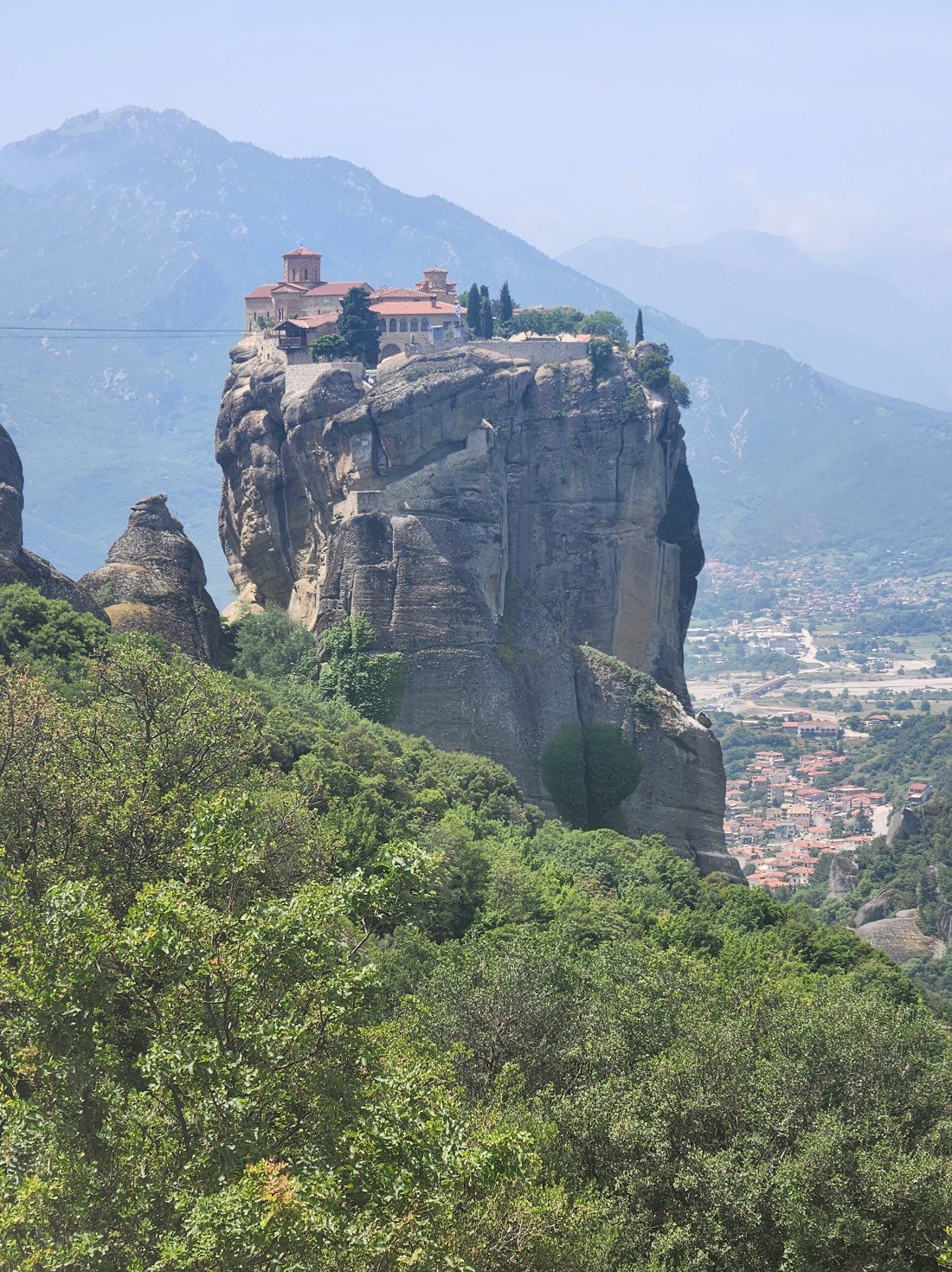
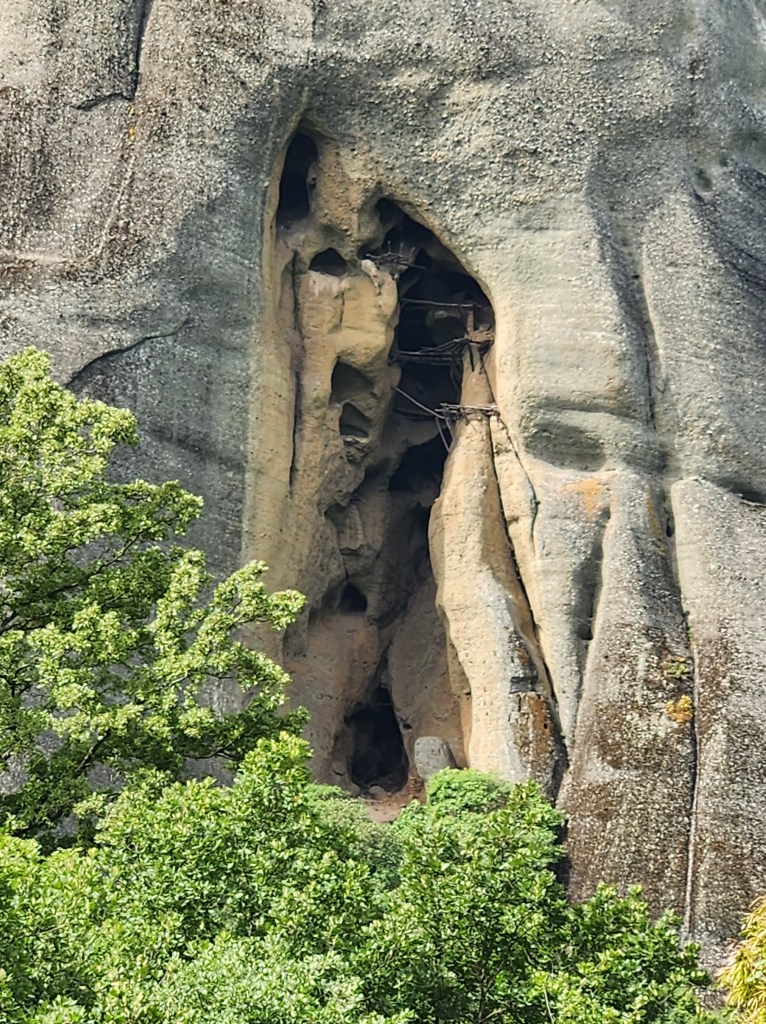
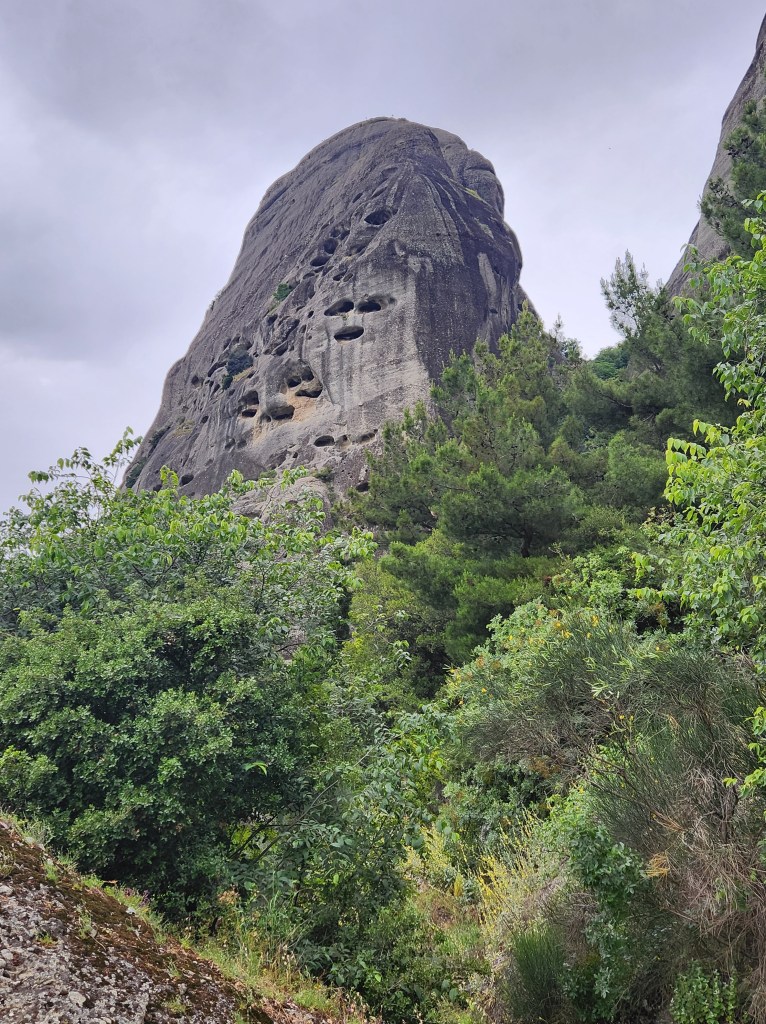
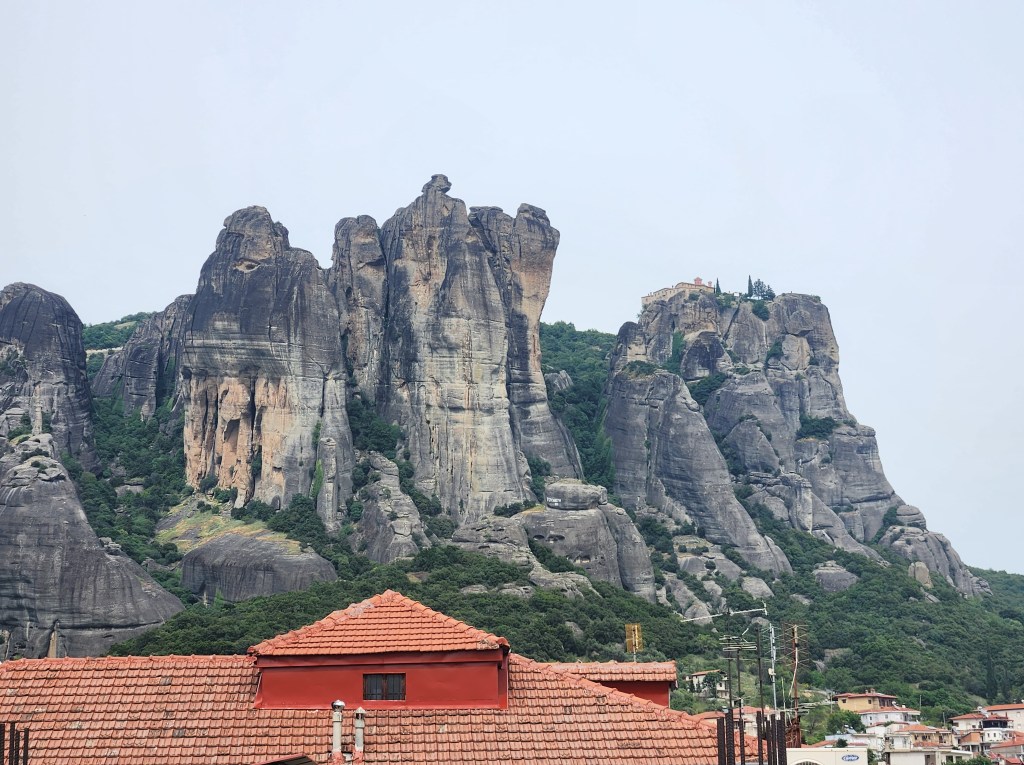
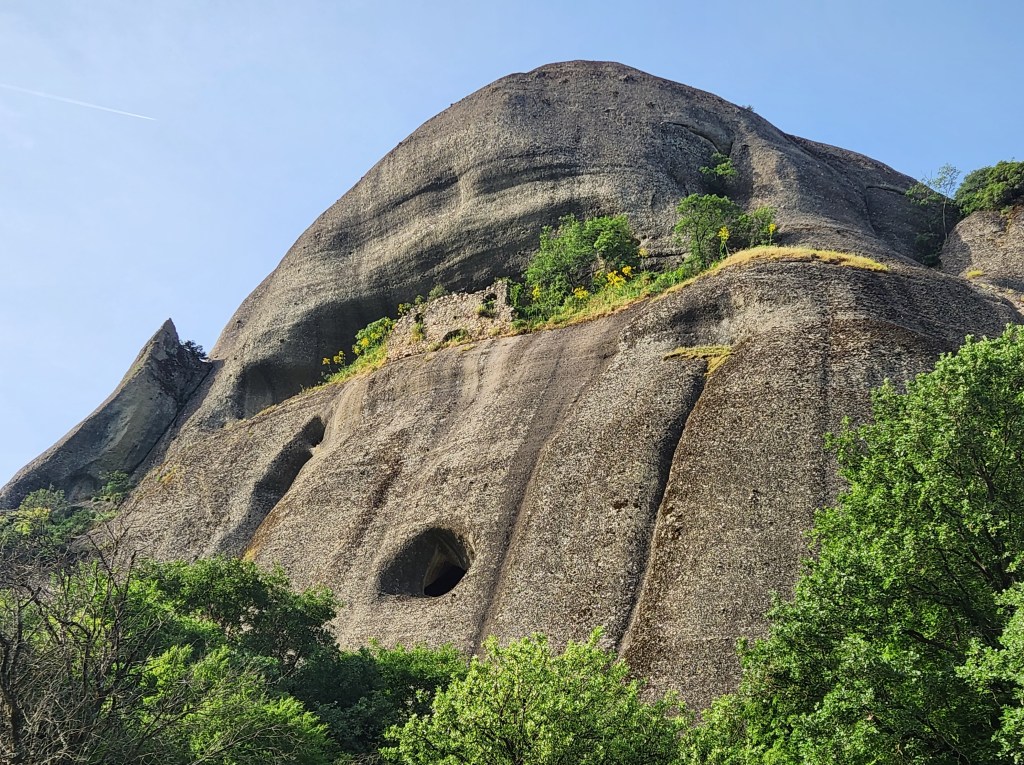
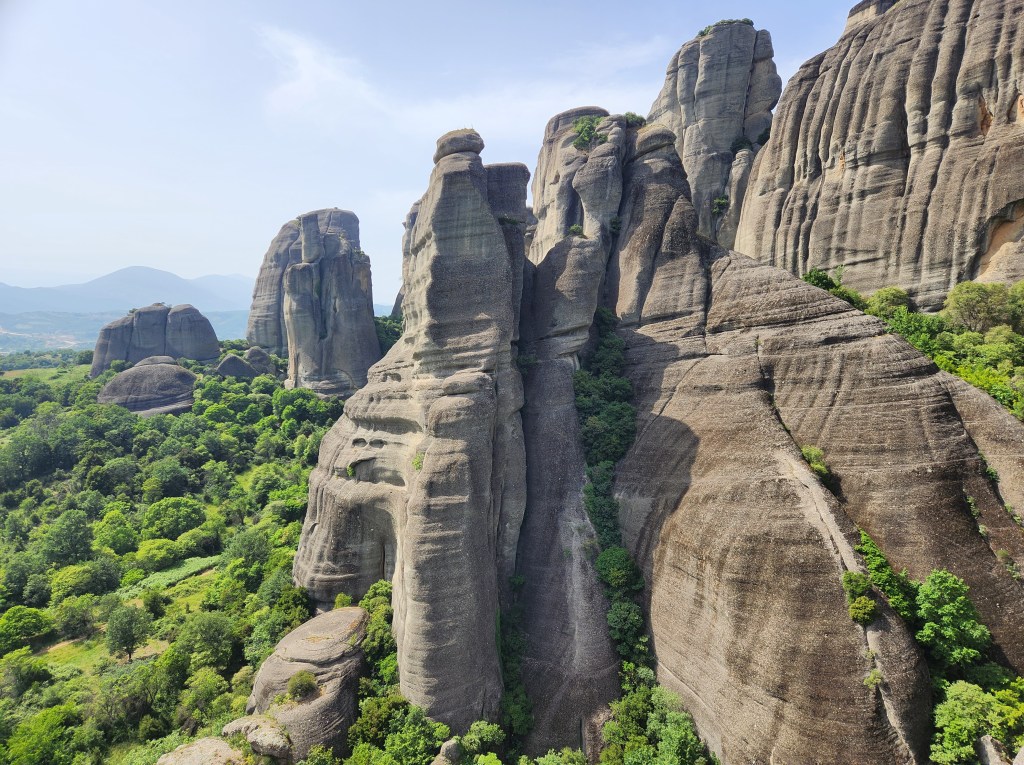
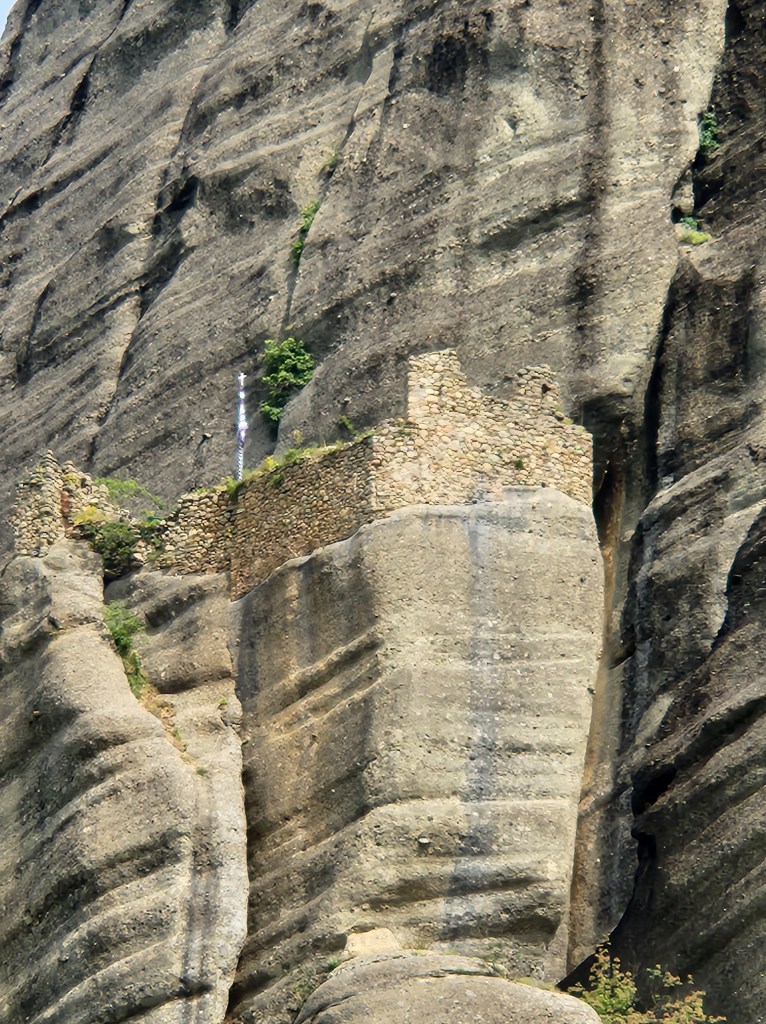
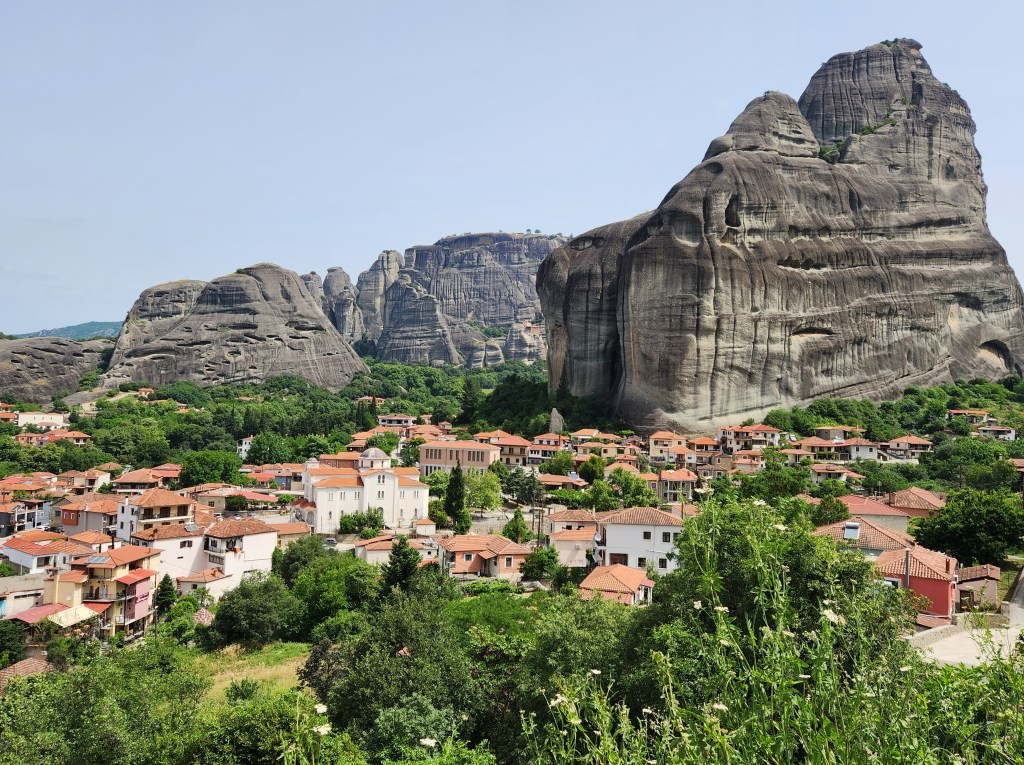
If you’ve never been or never seen pictures, Meteora is out-of-this world! Dating back at least 1000 years, religious folks have been inclined to dwell there. Hermits have lived in the caves on the towering rocks, and Greek Orthodox monks have built beautiful monasteries on top of the rocks. At one time, there were 24 monasteries. There are now only 6 active monasteries remaining.

Fair warning: even if you take a tour bus, you need to be ready to walk some slopes and climb some stairs. St. Stephens is the only one with easy access.

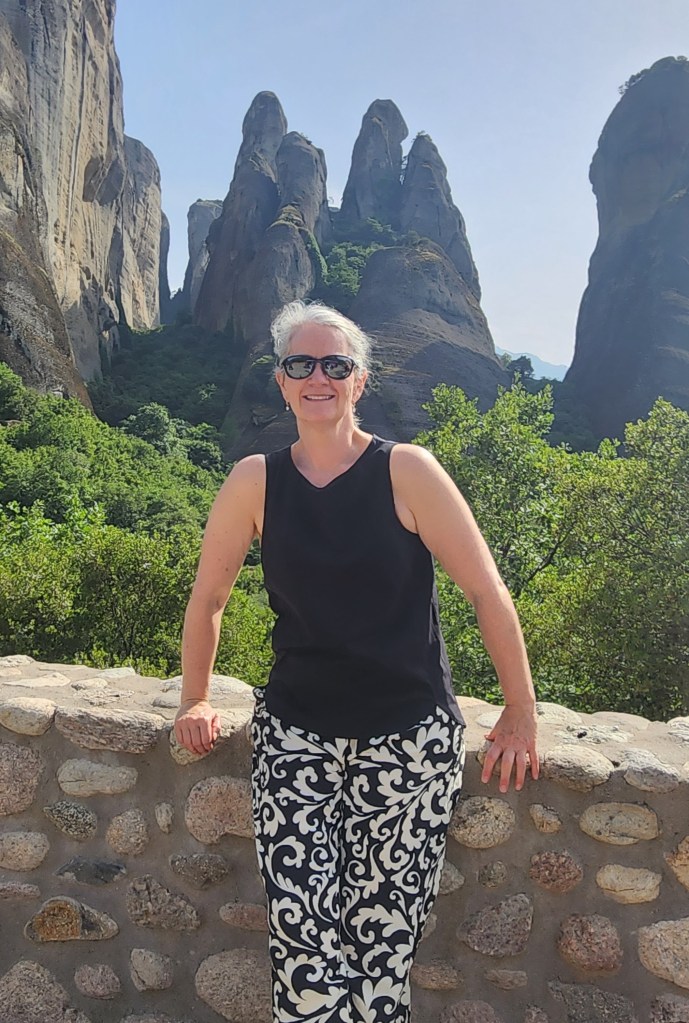
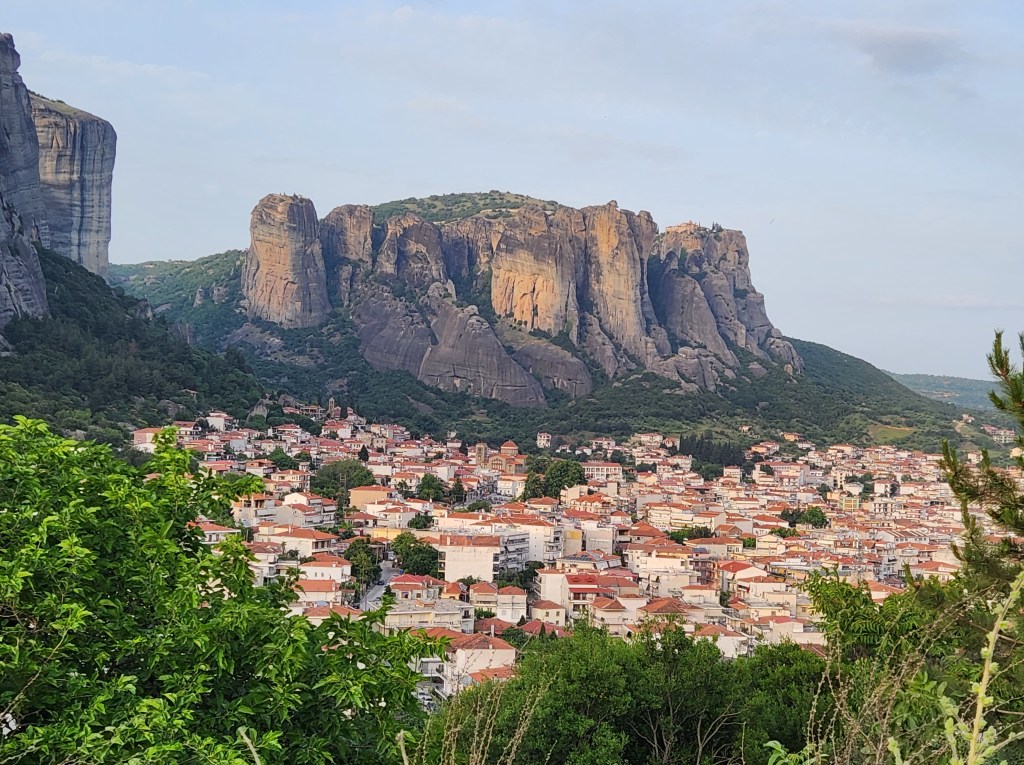
I stayed in Kalabaka with the intention of hiking to the monasteries. I ended up cheating a bit but was very happy with my experience.

First, I got lucky with a last-minute booking. If you know me, you know that I mostly stay in studio apartments so I can cook my own food. With Celiac disease, it’s easier, and I save time and money. I then have the freedom to eat out when I choose.

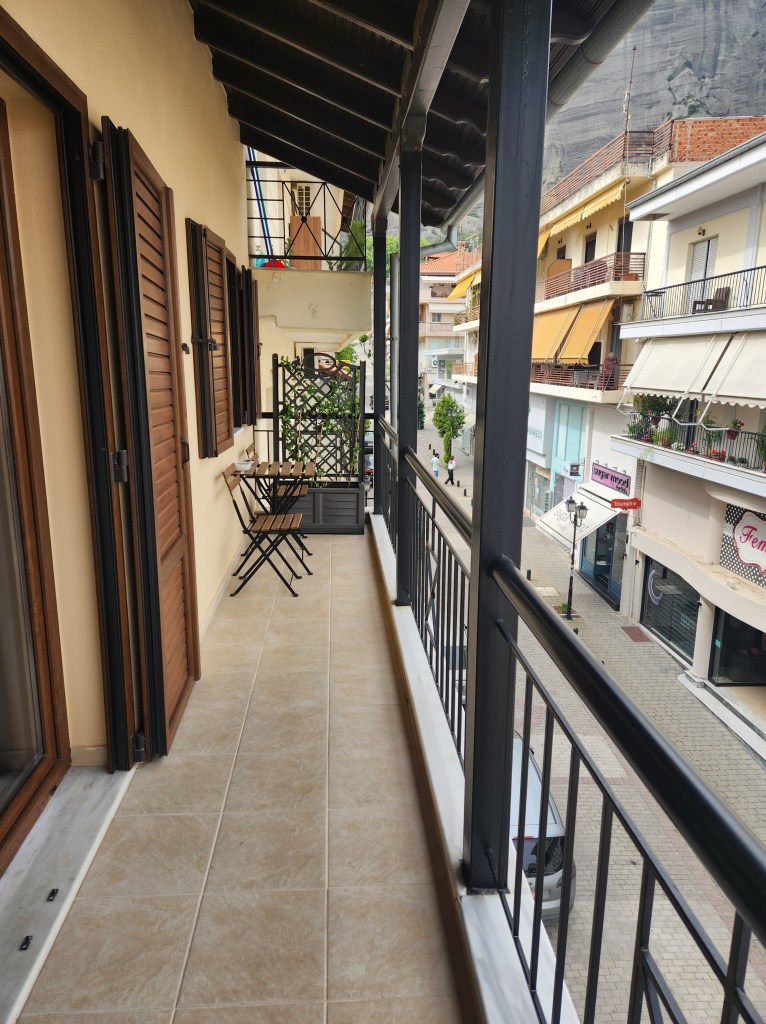
My apartment was quite spacious with a view of St. Stephens, one of the two nunneries. The long balcony was shaded all afternoon, allowing me the perfect place to rest.

Hiking Day One

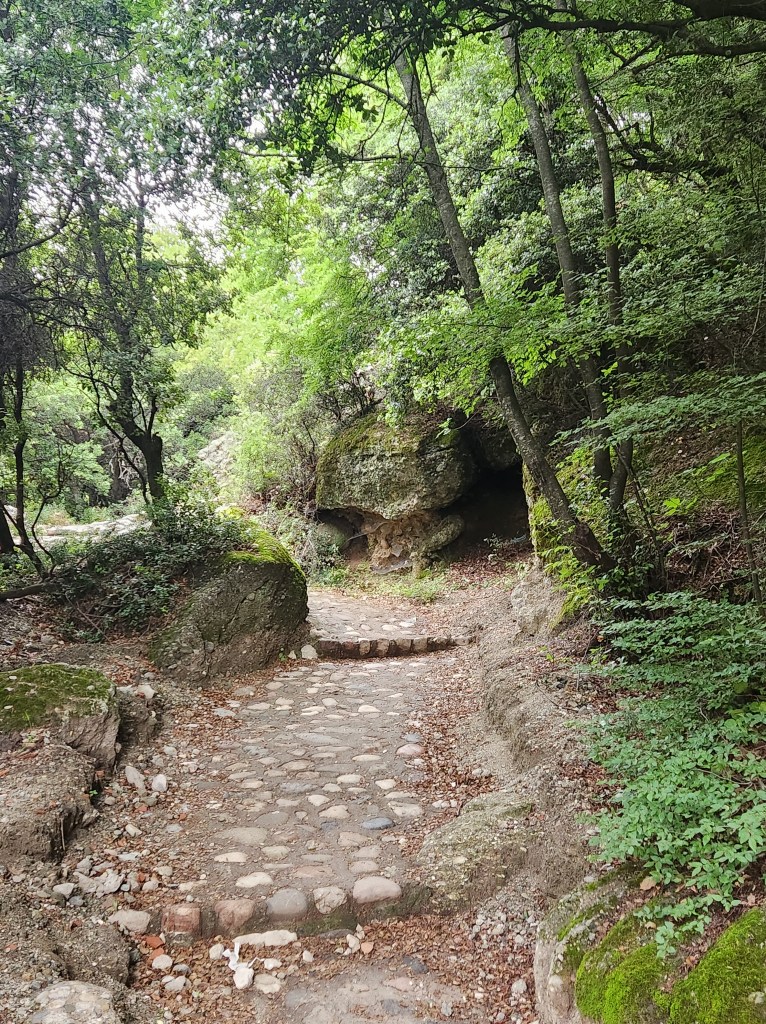
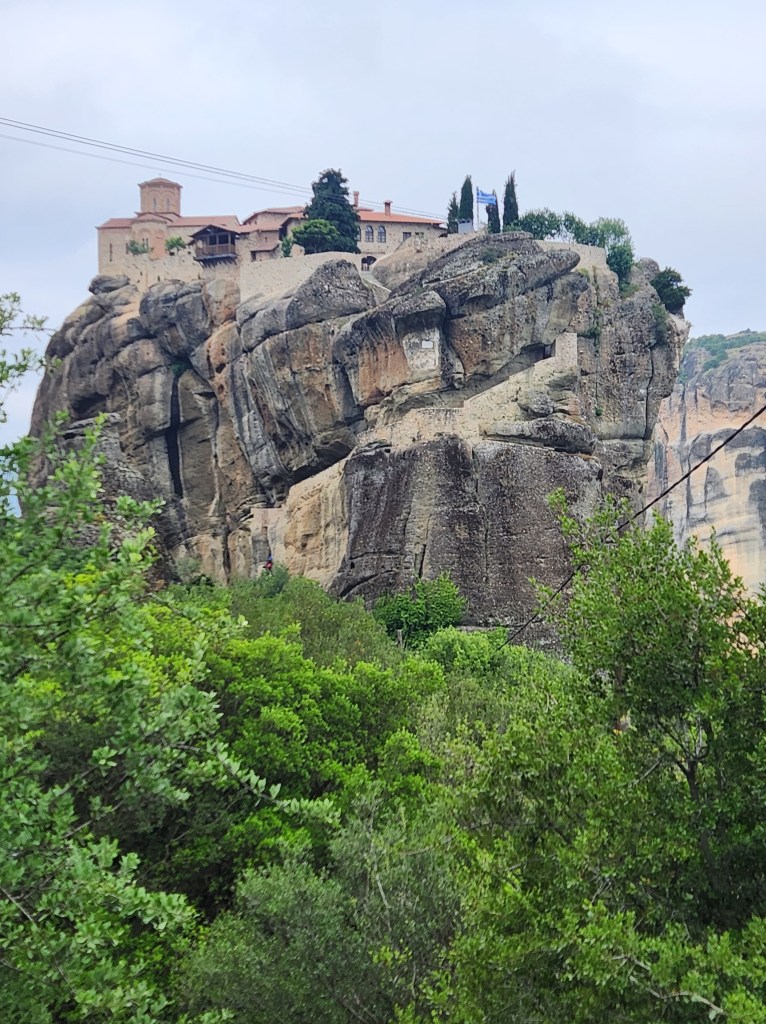
I started from my apartment at about 8:00 AM and took the trail up to Holy Trinity Monastery. It’s a pleasant path, shady most of the way, which is helpful as you gain altitude.

On my way up, I encountered first an older Greek man and then a younger Greek man, both on their way down. Then a young American man passed me going up. I told him that I was preserving my energy for the day, and he said, “You look great!” Nice to get some motivation from a stranger.

When you get to the top of the trail, there are still over 100 stairs to conquer before reaching the monastery. Even though the sign said that it opened at 10:00, a few of us were entering before 9:30.

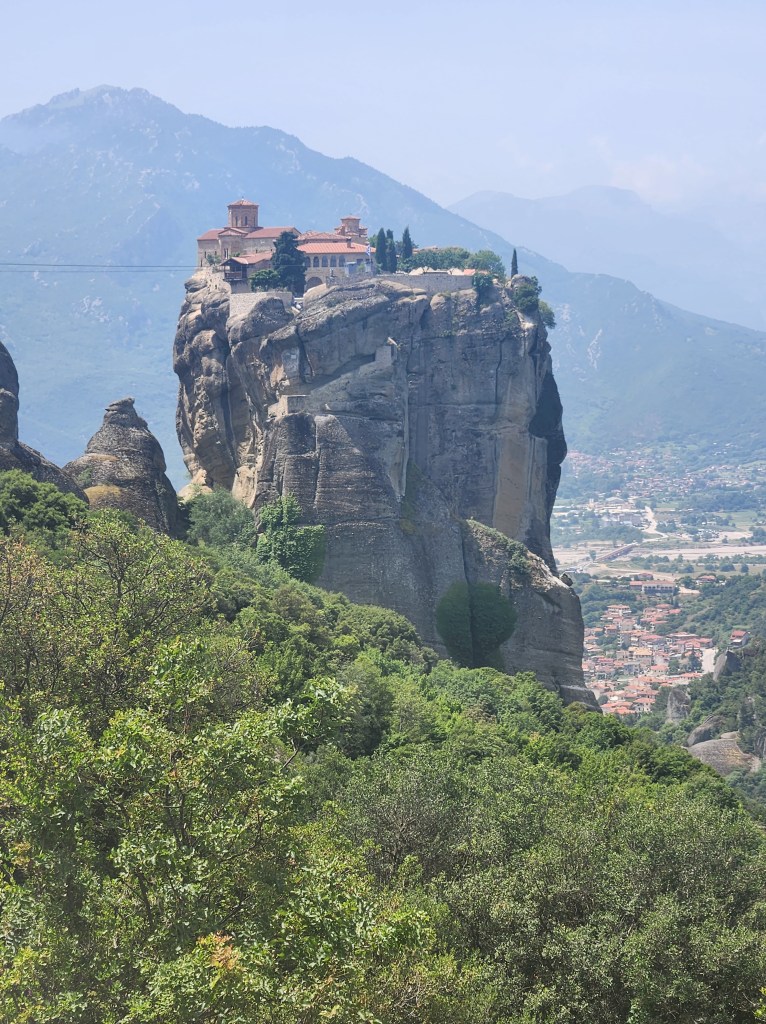
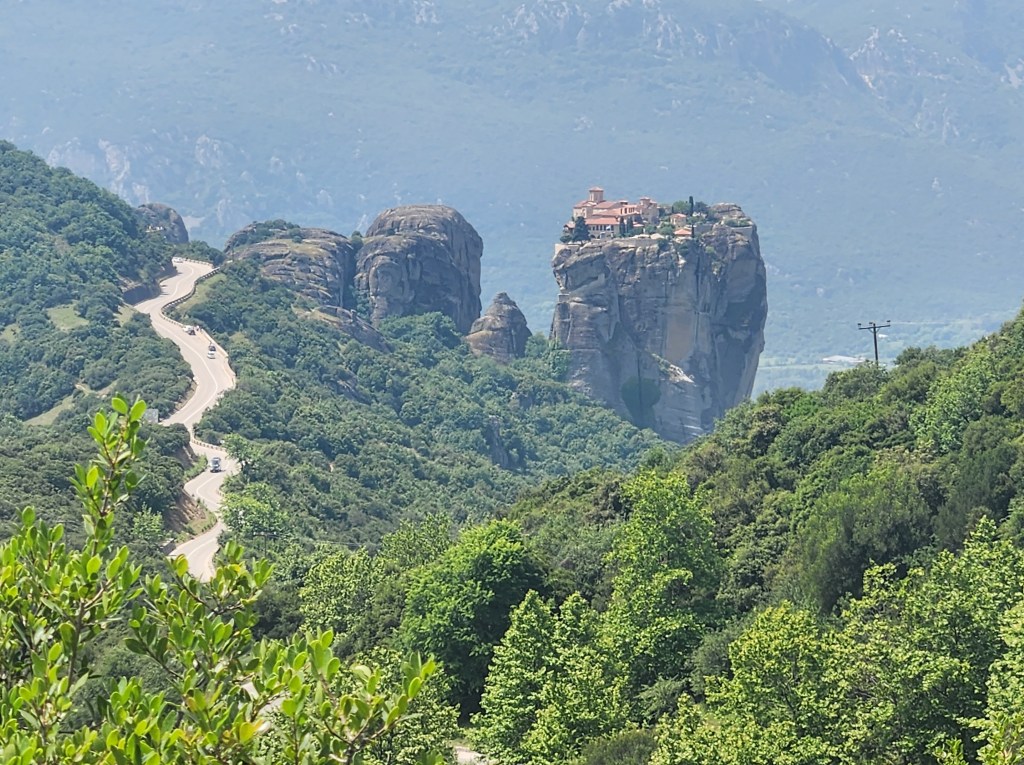
Holy Trinity is probably the most photographed of Meteora’s monasteries. It sits rather perfectly on top of its rock. (I took this photo the next day from a different angle.)

In the garden area, I saw the young American man again. We sat and conversed for about half an hour. It was a much-needed break. He said he was heading to St. Stephens next. I didn’t walk with him but had the same plan.

So, down the stairs and up the long, paved walkway I went. I saw a path to the right and figured it was a way to avoid walking the road. Thankfully, it was, and I reached St. Stephens about 40 minutes later.

By then, the tour buses had arrived. I was grateful to have had the quiet, uncrowded experience at Holy Trinity. I briefly encountered the young American man and exchanged a few words.

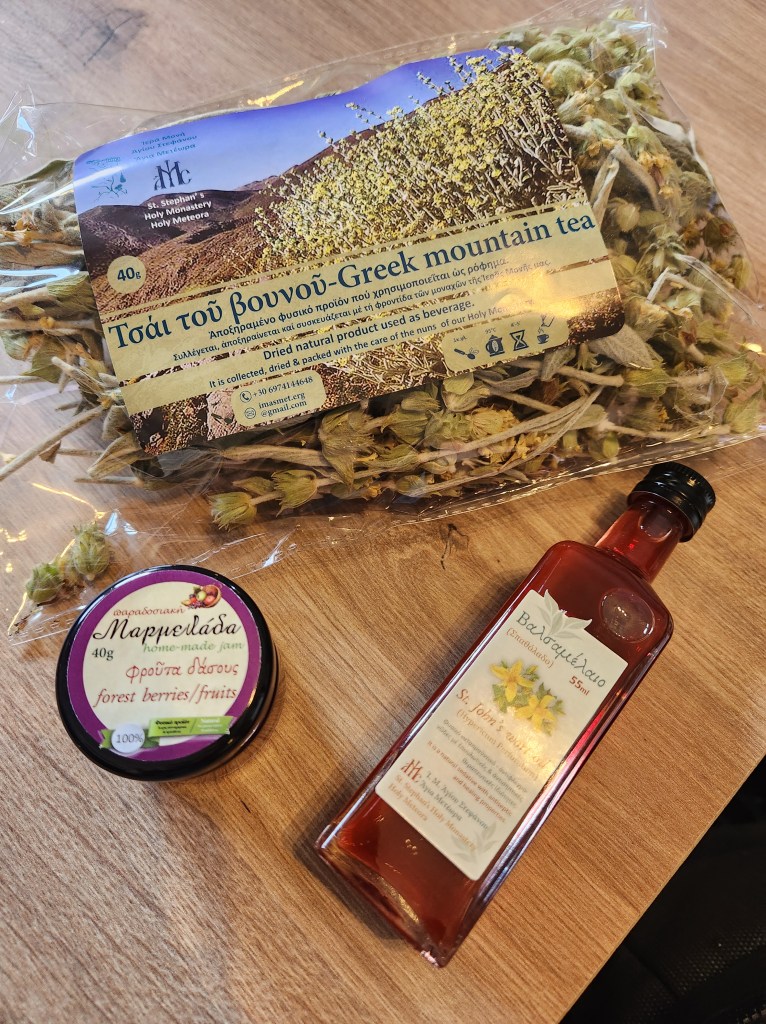
Even though it was crowded, St. Stephens is beautiful, and all the monasteries have wonderful views. St. Stephens also had an interesting gift shop that included some items made by the nuns. I asked questions about the products, and the nun seemed pleased by my interest. The St. John’s Wort oil that I bought does seem to work well for massaging sore muscles!

I started walking toward the other monasteries and realized that I needed to save some energy for the next two days. I ended up taking the trail back to town and my apartment.

Hiking Day Two

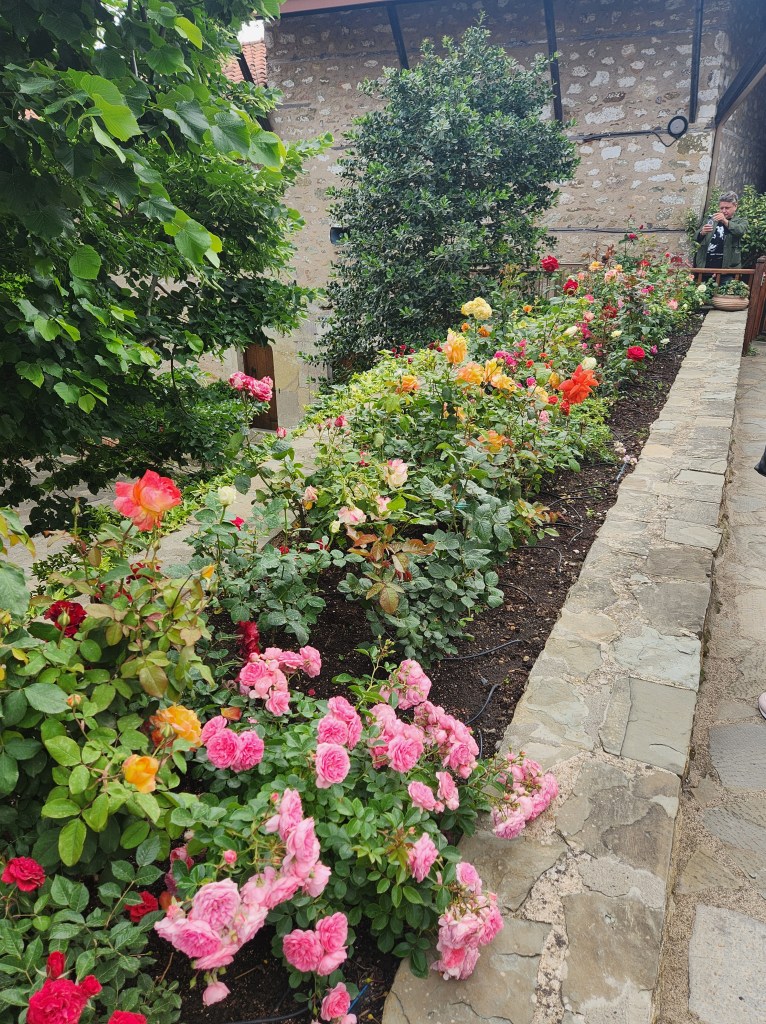
I decided to walk through the smaller town, Kastraki, to reach some of the other monasteries. As I walked through, I decided that if I returned, I would stay in Kastraki. It’s smaller than Kalabaka and has a calmer vibe. The homes are well-kept, and there are oodles of flowers.

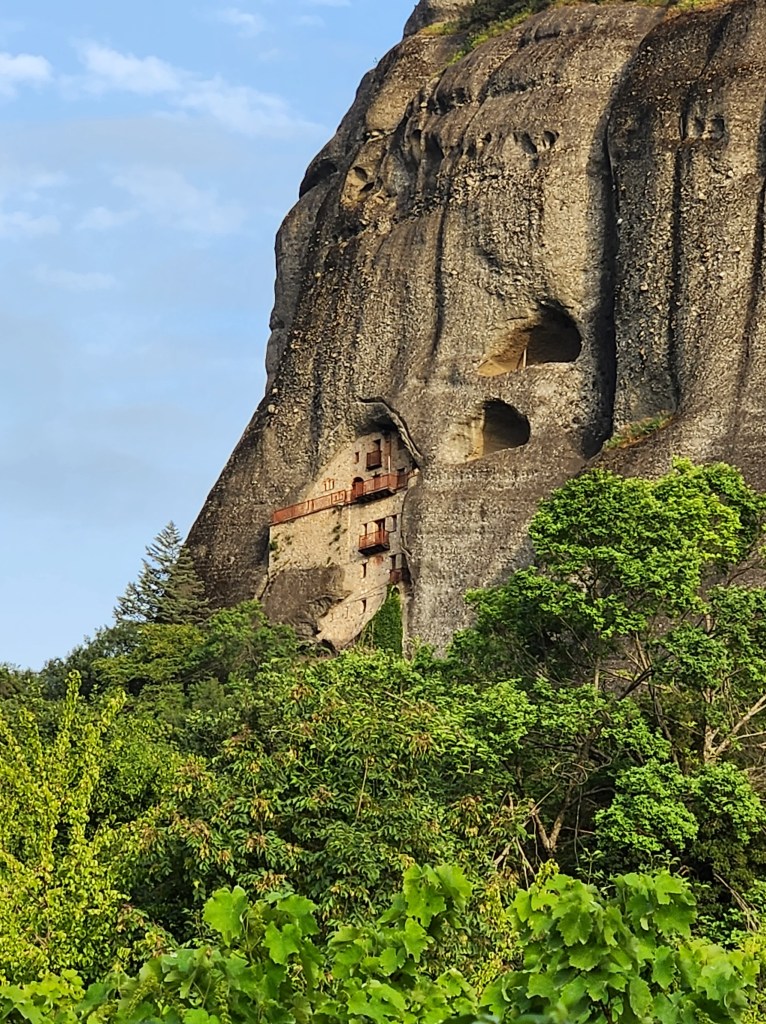
I got distracted by some ruins of a monastery on the side of a rock and decided to take that smaller, less-traveled road. Looking at Google Maps, I figured I could take a trail to cut back through. I was ready for an adventure anyway.

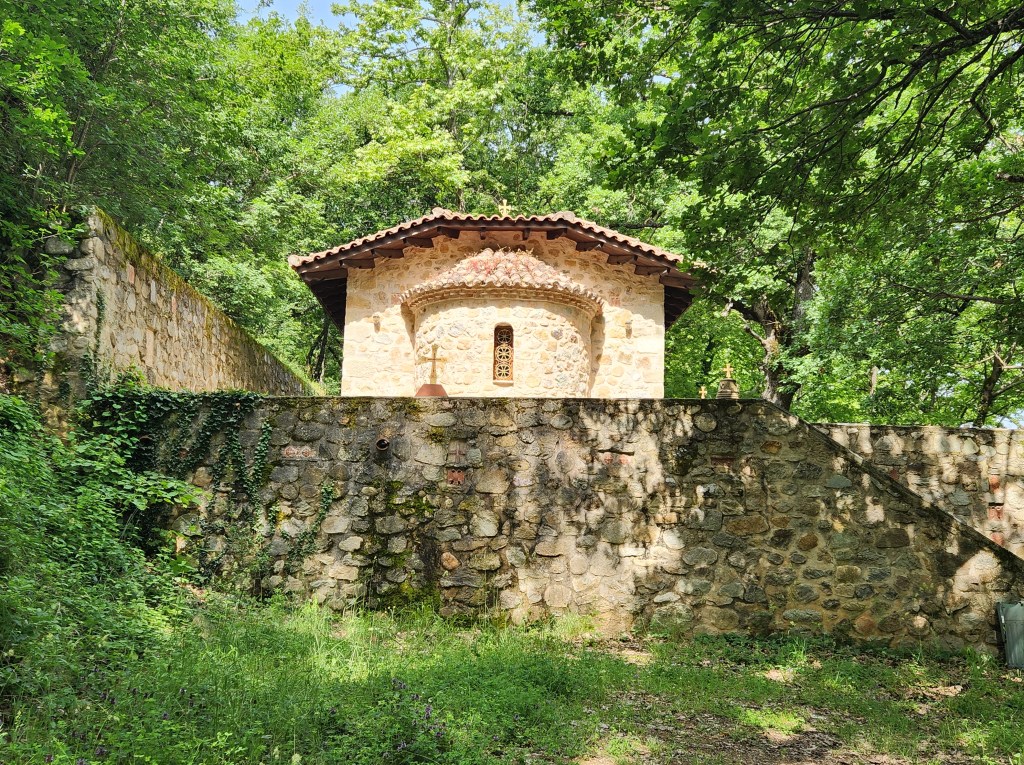
I ended up visiting a monastery that was out in the country and not built on top of a rock. The monk was very welcoming, and I had a unique experience where I sat down and chatted with him in limited English. He offered me cookies and coffee. I tried to explain my celiac disease, and at first, he thought I was diabetic. Google translator helped a bit! I was grateful for the experience as he said they only get a few visitors a day at most. (On Google Maps, the name of the monastery was only in Greek; so, I can’t add it here. Sorry.)

I then continued, trying to make a loop. I stopped at a tiny church that was locked. Bummer. A well-marked bike trail eventually got me back to a main road.

I survived with just one blister on my big toe. My best estimate is that I hiked about 12 miles.

By the time I arrived back at the apartment, I had about 90 minutes to eat, rest, and shower before my sunset tour. (It began at 3:45.) I got to see Saint Nicholas Monastery (more stairs to climb) and saw the exterior of the other monasteries. The sunset wasn’t exactly spectacular, but our bus driver and tour guide were! It was a minibus with only 18 passengers, so we had a personalized experience. We also saw some things that I wouldn’t have been looking for on my own.

St. Nicholas from the parking area

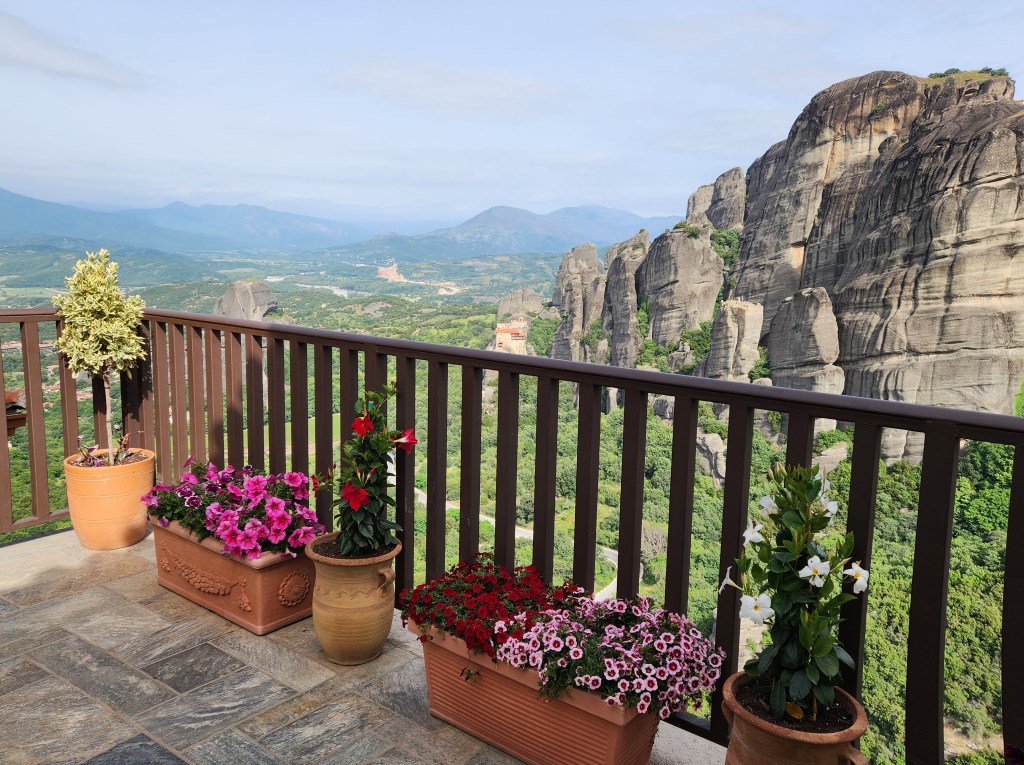
Views from St. Nicholas

11th Century Byzantine church in Kalapaka

Abandoned monastery

Hiking Day Three

I figured out a plan to go for a walk while preserving my blistered toe and visit the last must-see monastery on my list.

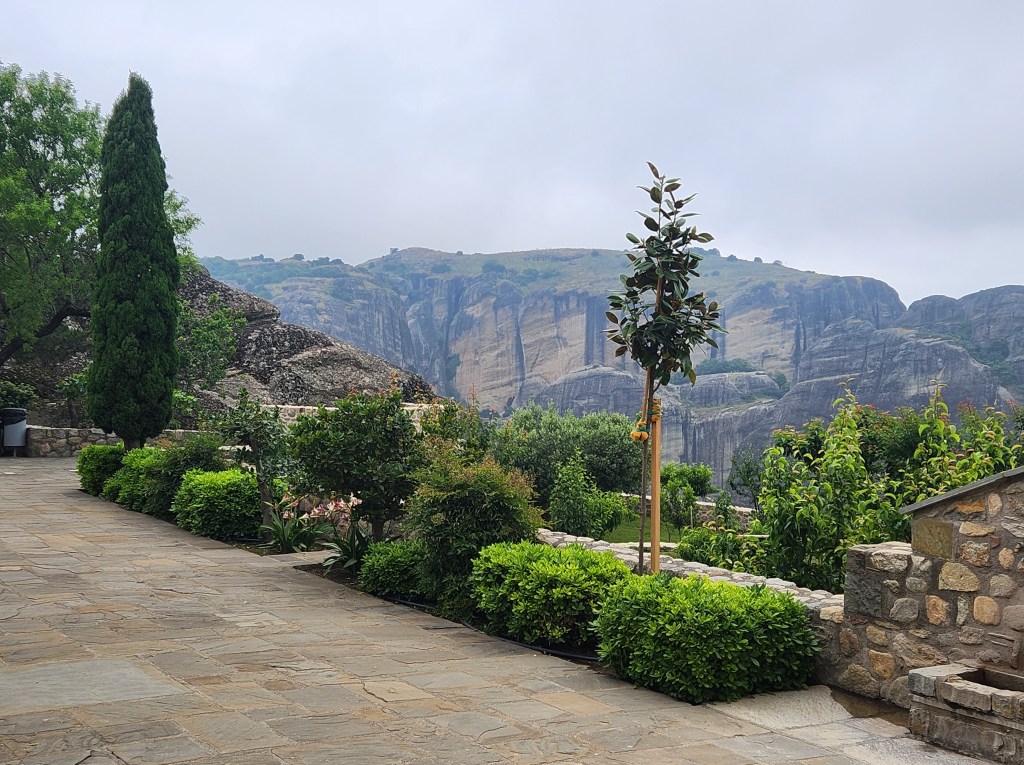
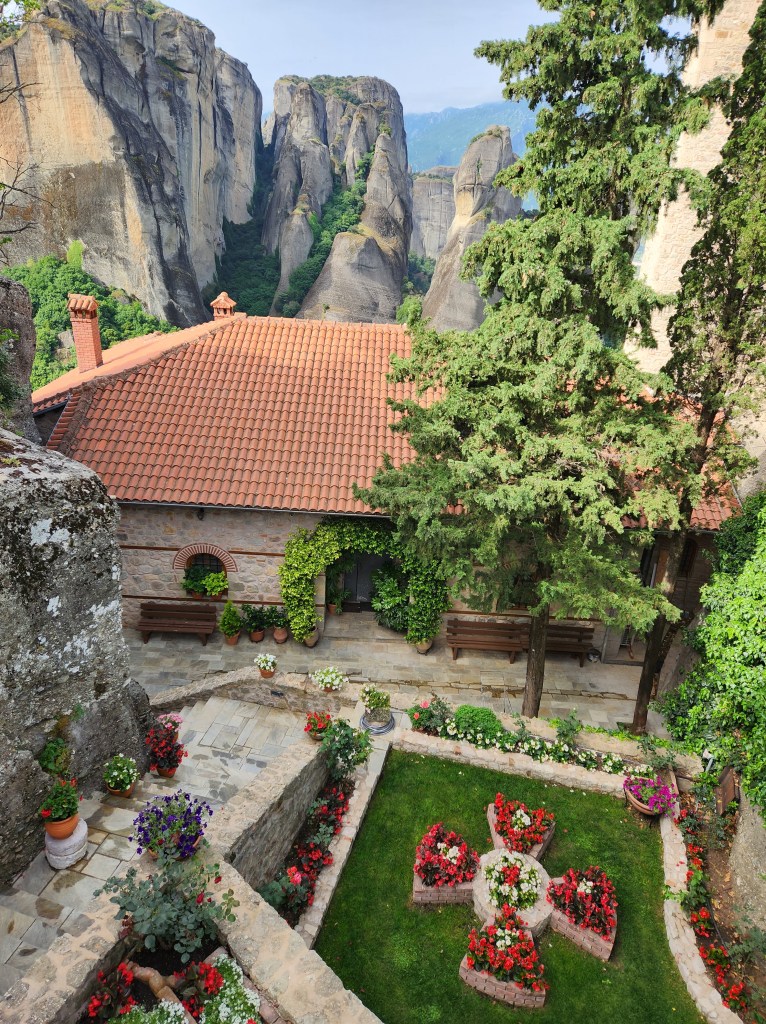
I took a taxi up to Roussanou, the other nunnery, and wore my sneakers instead of my hikers. As predicted, Roussanou was the prettiest of all. The garden was stunning, and the grounds were well-kept. Inside the church, people were lighting candles and praying. It was a beautiful experience.

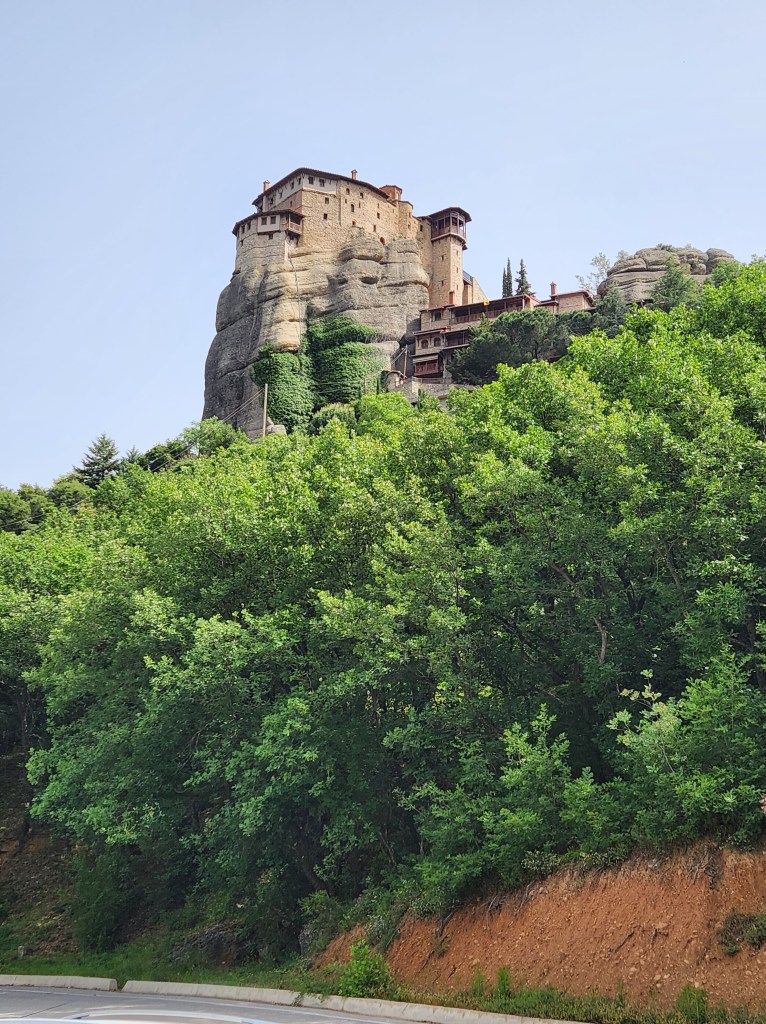
Looking back up at Roussanou as I walked down the road

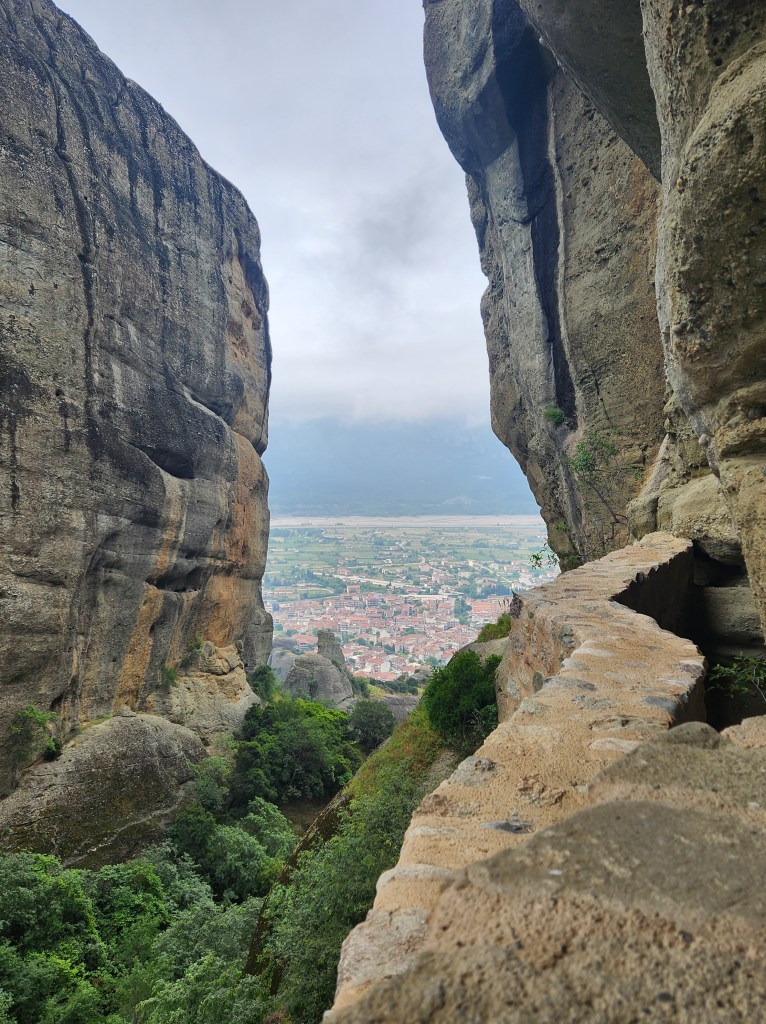
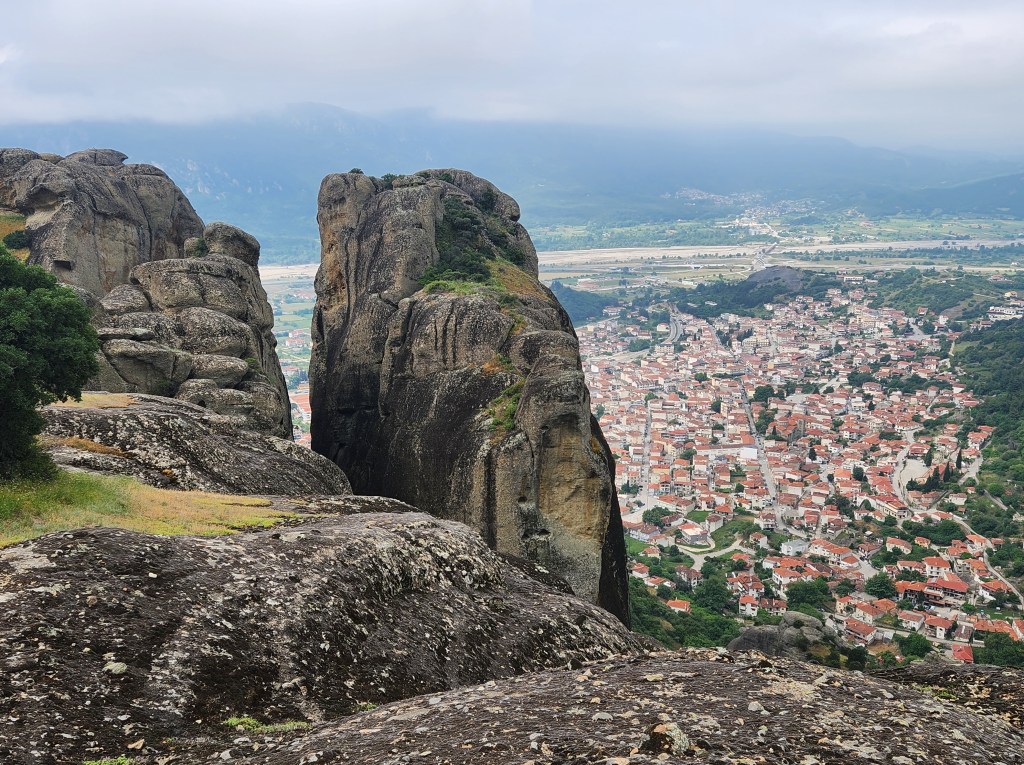
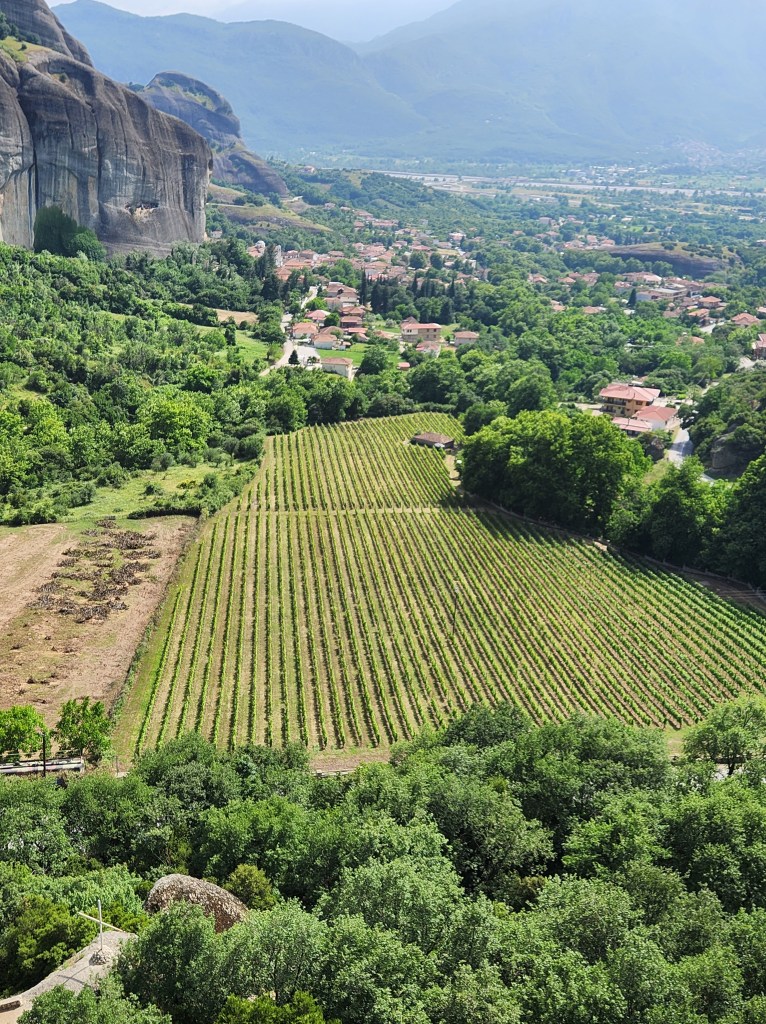
After the visit, I walked down the winding hill at a leisurely pace. I stopped to take photos that you’d never get from a tour bus and took a nice break in the old town section of Kastraki.

My plan worked out well, and my feet were thankful for the shorter itinerary.

I saw several bicyclists making their way uphill and ran into two Spanish men my age toward the end of my walk. They were excited that I spoke Spanish, and I helped them in the right direction. They were getting started in the heat of the day; it was 11:40 by then. I was glad to be headed back.

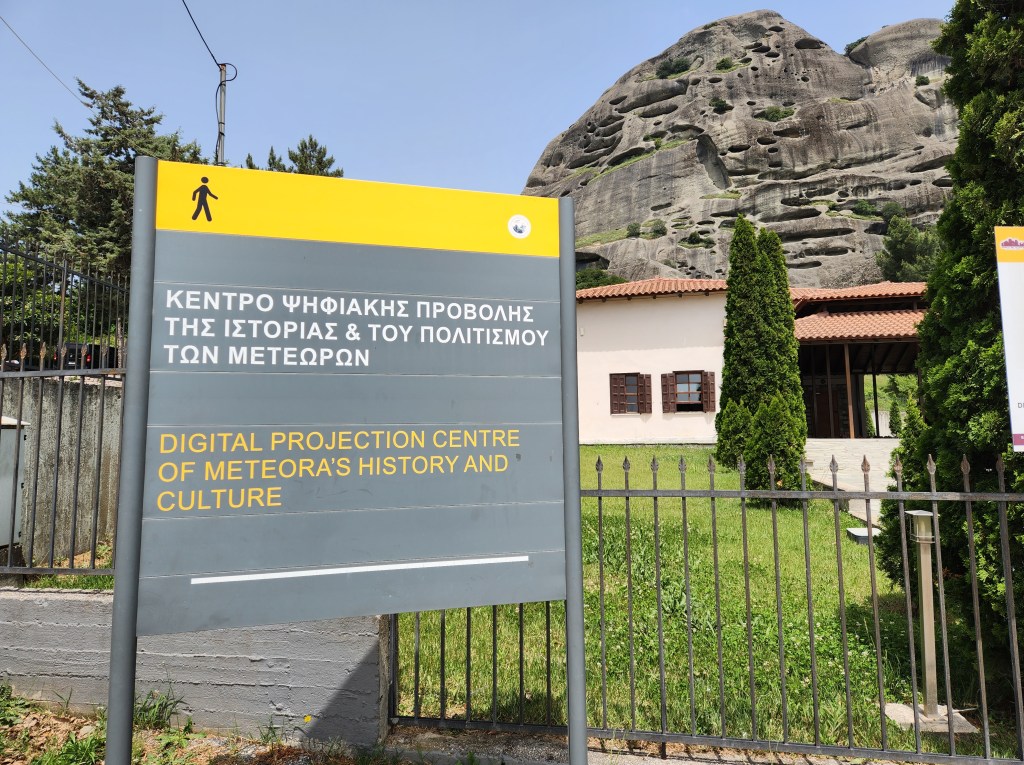
As I reached Kalabaka, I stopped at the Digital Projection Center to watch the 3D films. One was about Mt. Olympus and the other two were about Meteora. Well worth the three-euro admission. The tour guide from last night had recommended it.

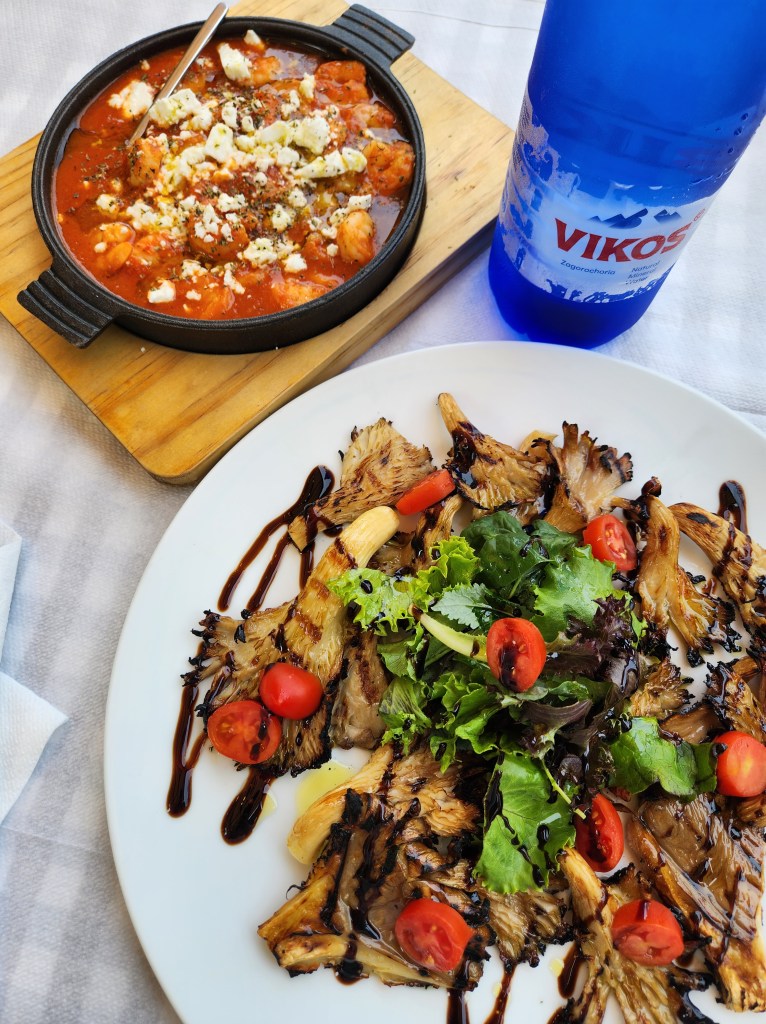
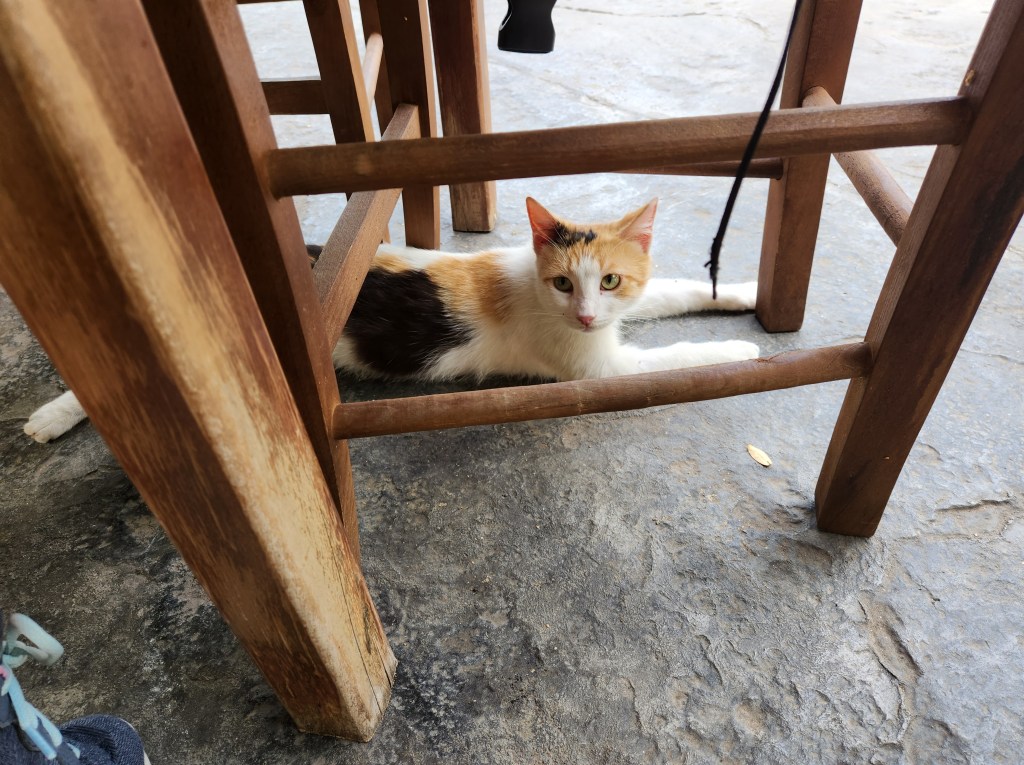
After yesterday’s long day of walking, I felt like I needed to catch up on eating. I stopped at Taverna Yamas for some fresh and tasty food. I had shrimp swimming in olive oil and tomato sauce topped with feta, and grilled mushrooms with balsamic. Both were delicious. I was so busy eating; I didn’t even share any shrimp with the cat who was patiently waiting.

For me, Meteora was an amazing place that everyone should see if they can. We’re talking bucket list like the Grand Canyon or Machu Picchu. I would happily go back to experience it again. I hope you see it someday, too!

Why You Should Stay in Delphi (rather than take a one-day tour from Athens)

May 24, 2024


I recently spent two nights in Delphi and wish I had stayed longer.
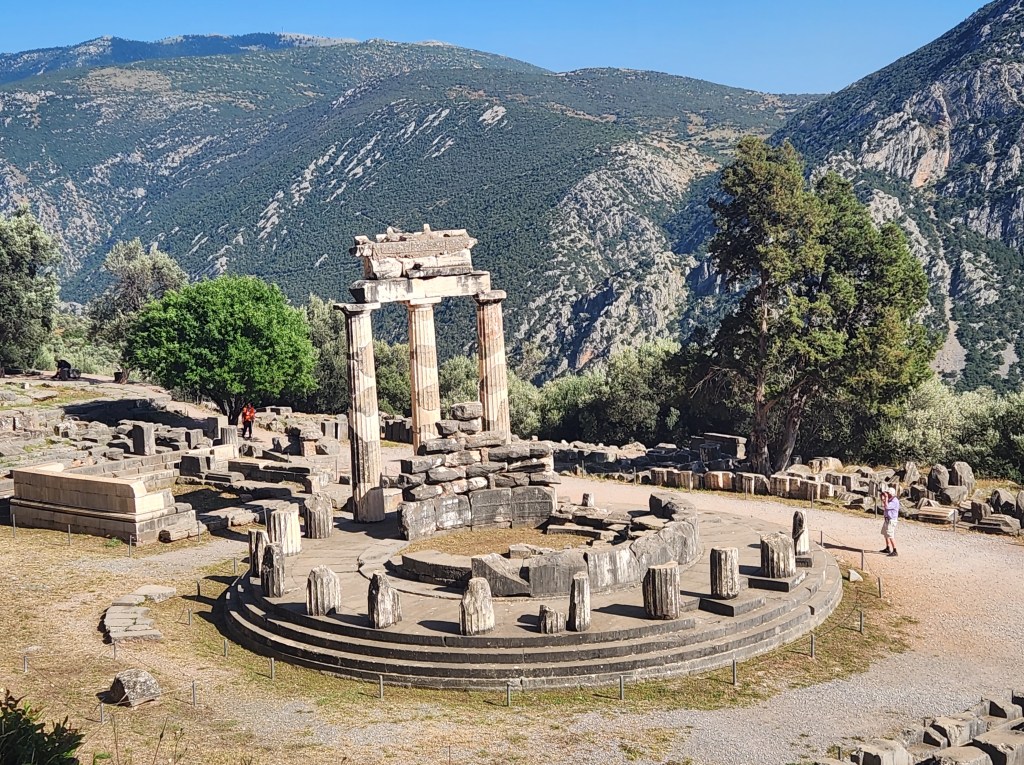
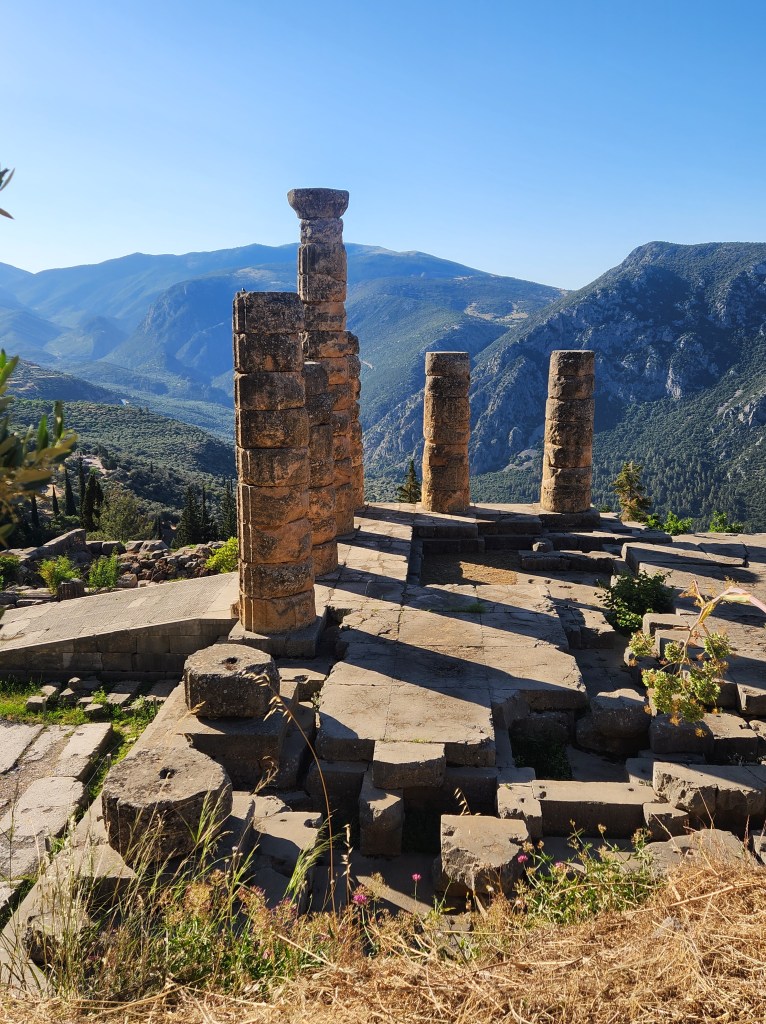
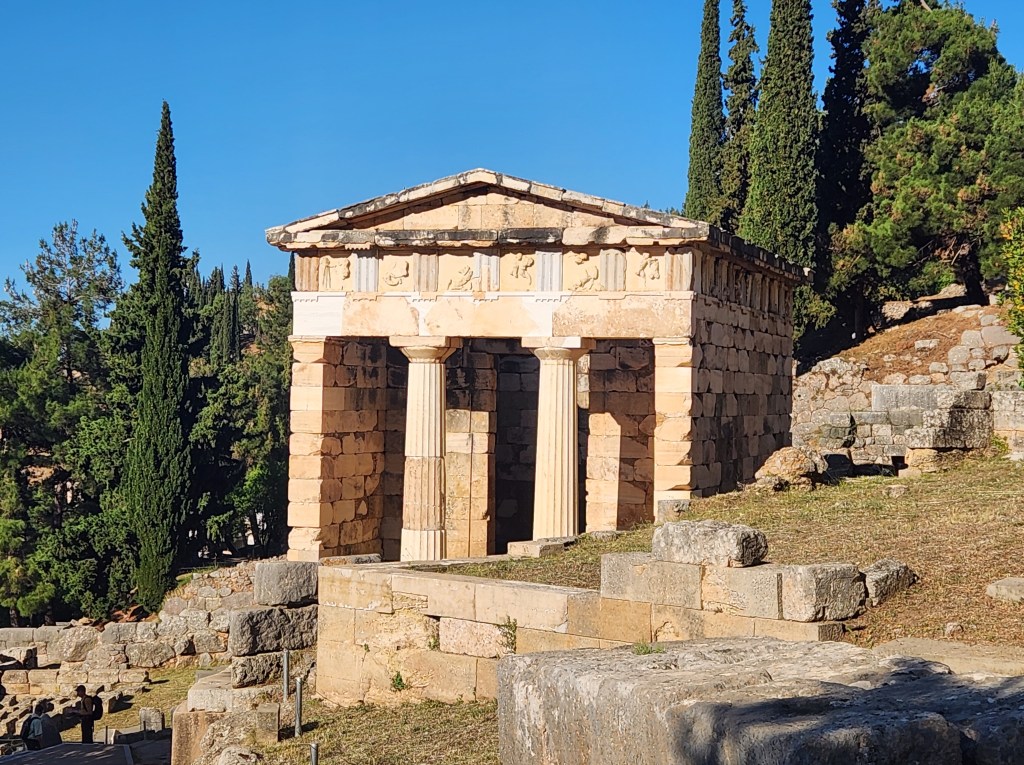
The archeological site is incredible! I mean, we’re talking about the center of the ancient world. The archeological museum is small but top-notch, with some beautiful and very old statues dating to the 5th and 6th centuries BC. (You’ll pay one admission fee for the archeological site and museum. I believe it was 12 euros.)

Since I was staying in town, I was able to arrive at the site when it opened at 8:00. There were only about four other people at the site with me from 8:00-9:00.


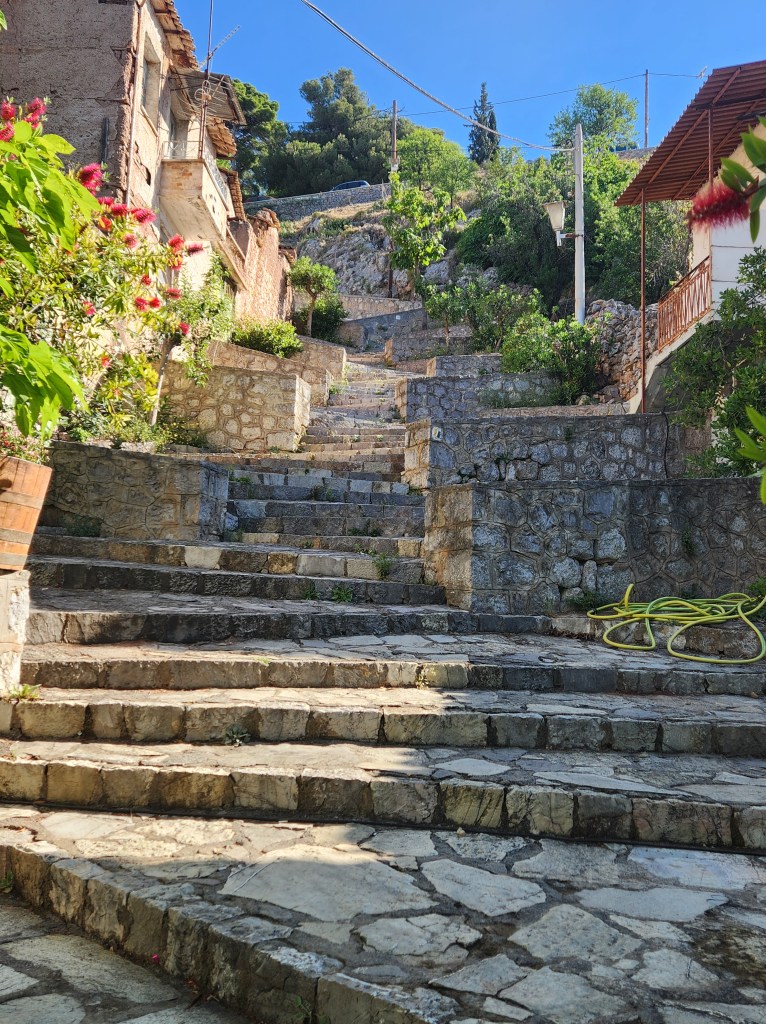
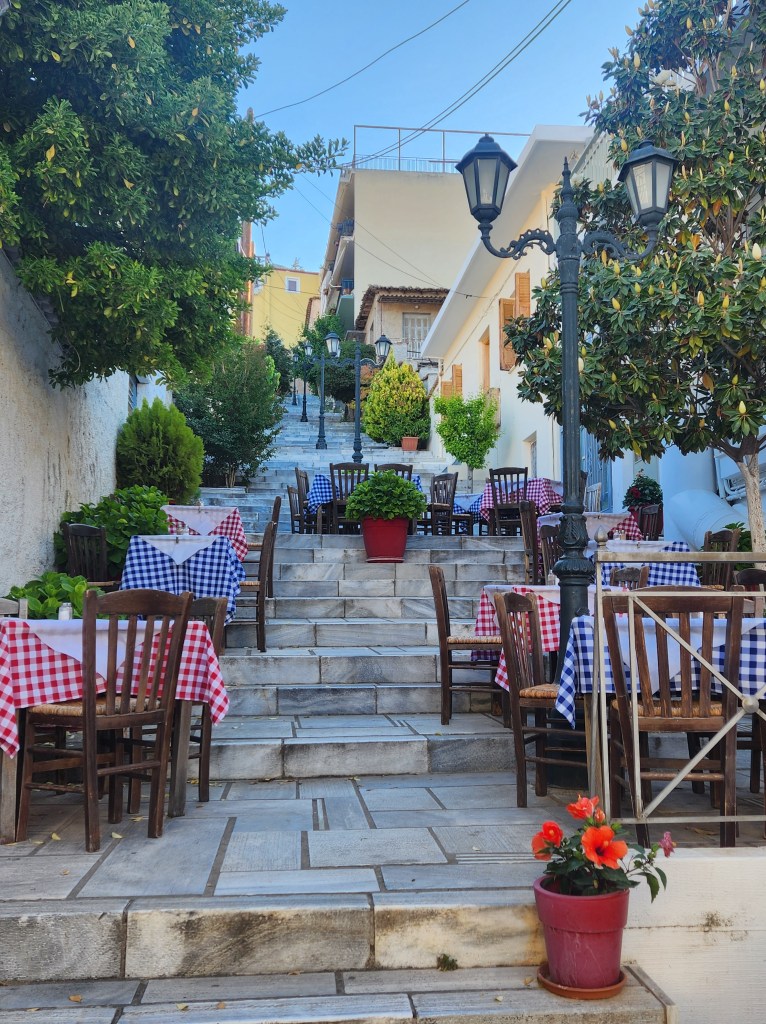
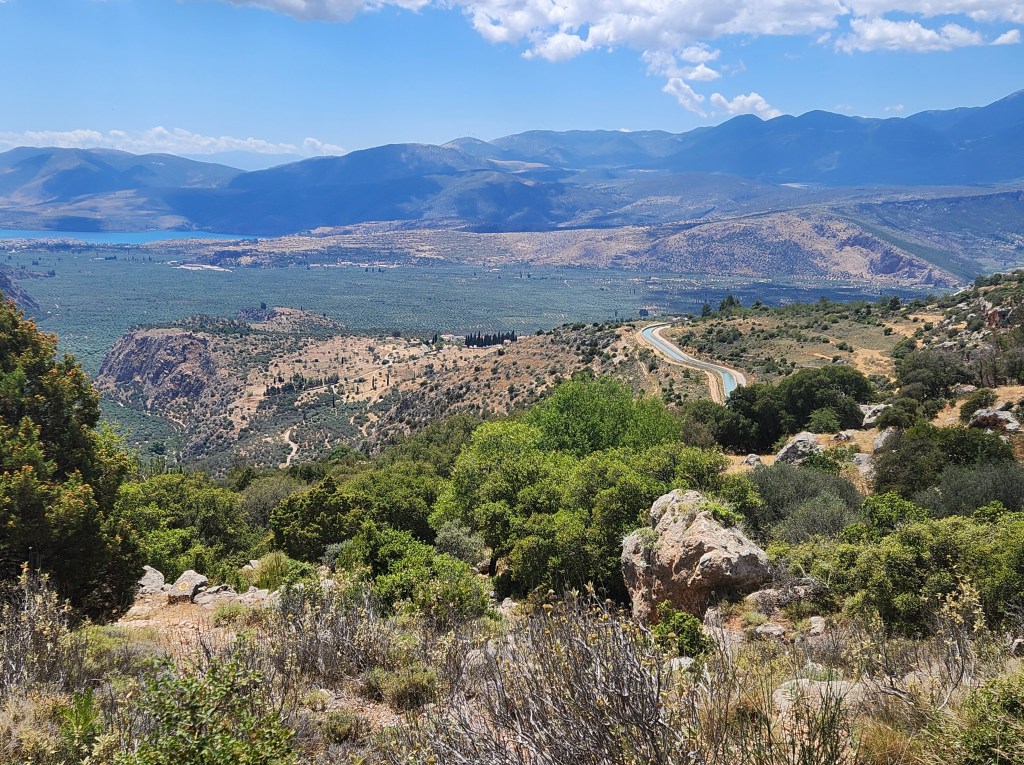
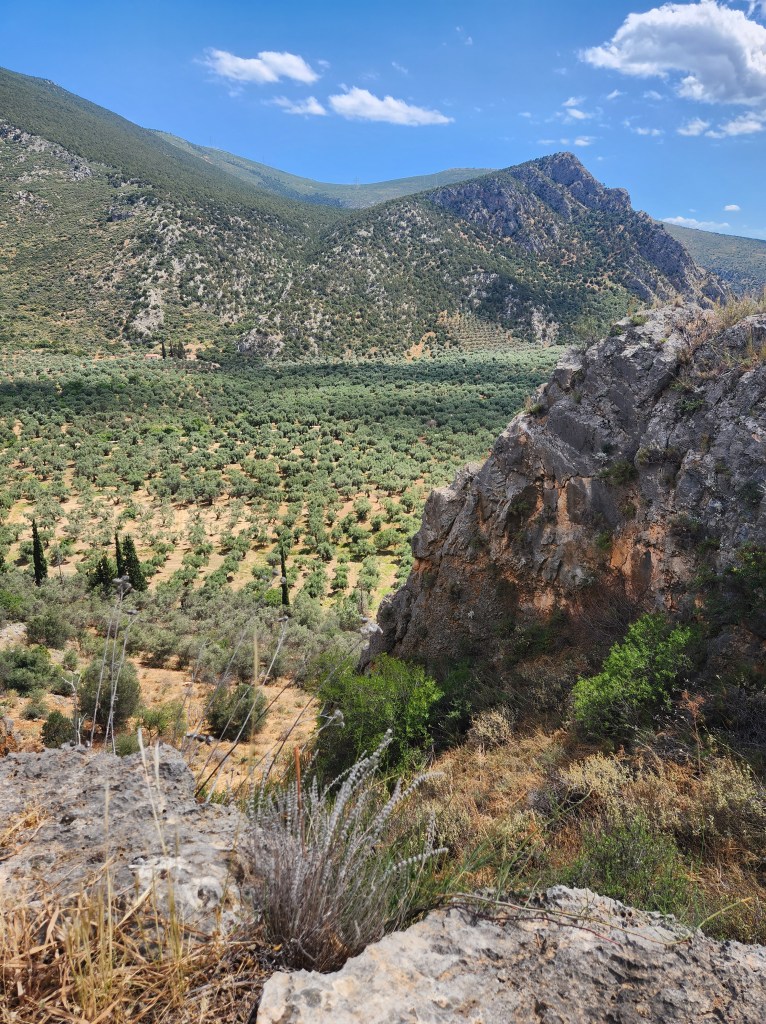
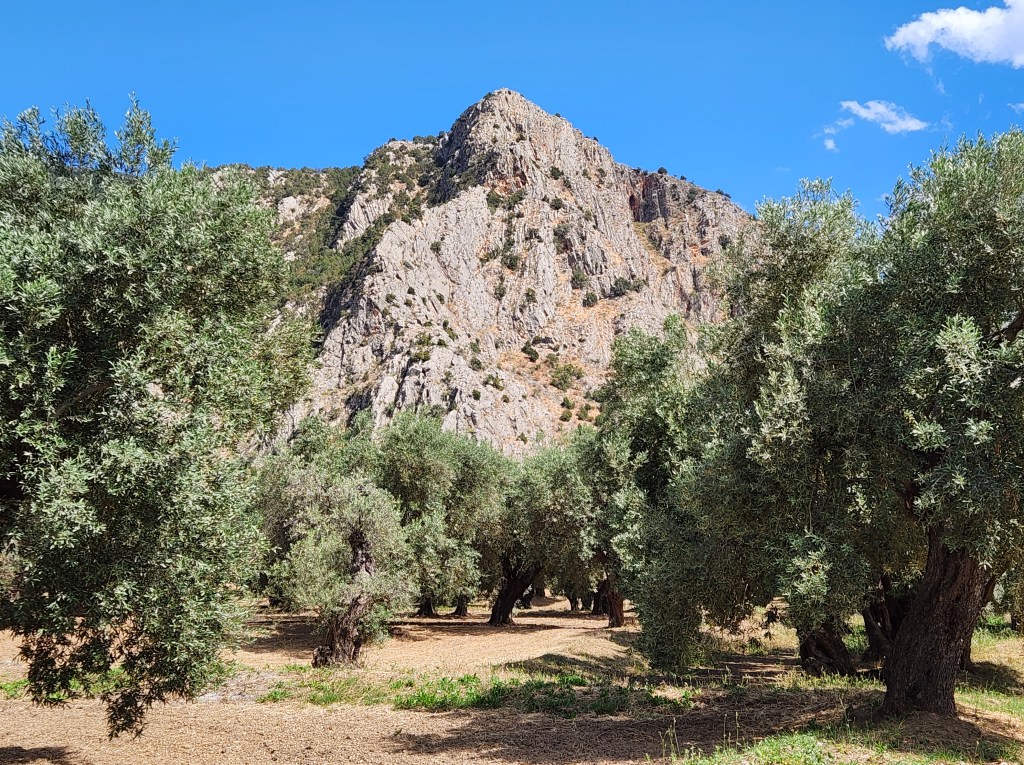
But I encourage you to explore the town of Delphi, too. It’s a charming village built on the mountainside. Its six horizontal streets are connected by several staircases, all unique and charming in their own ways. The views of the mountains and the Sea of Corinth in the distance are captivating! And, down on the valley floor is Greece’s largest olive grove. (We’ll come back to that later.)


Delphi is known as a foodie town, too. My limited gluten-free, low-meat diet doesn’t allow me to try everything, but each dish I tasted was delicious. I highly recommend Taverna Vakhos. Their menu is carefully marked with gluten-free, vegan, and allergen symbols. I ordered an appetizer of potatoes with oyster mushrooms in a turmeric sauce. It may not sound that interesting, but it was incredible. My main entrée was artichokes with lemon sauce. The menu said it was accompanied by other vegetables, peas, and (oops!) more potatoes. The portions were enormous; fortunately, my room had a small refrigerator.
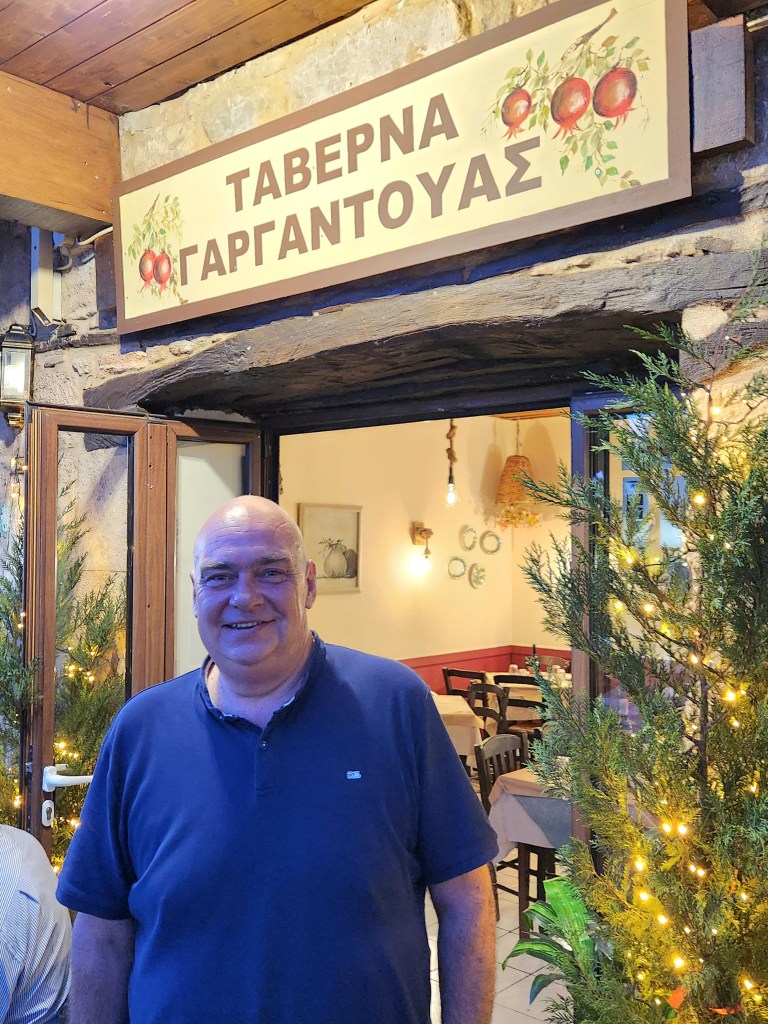
At Taverna Gargadoyas, I had a late evening bite of giant beans. The owner said they were his favorite, and his 84-year-old mama still makes them. Even if that isn’t true, (who knows?) they were to die for. I had only ordered a serving of beans but was given a small plate of cherries for dessert. In fact, at every restaurant in Delphi, I was served a dessert on the house.


I was impressed with the generosity and kindness of all the restaurant staff. As a solo traveler, I’ve previously had not-so-great experiences: being ignored, being seated at the bar…not in Delphi. I was an honored guest at each restaurant.
On my second full day, I walked the ancient path from Delphi to Kirra. The idea of walking through Greece’s largest olive grove intrigued me. I couldn’t resist the draw of the Gulf of Corinth either. Even though it’s mostly downhill, it’s still quite a trek, over 11 kilometers. Fortunately, a bus in Kirra will take you back up to Delphi.

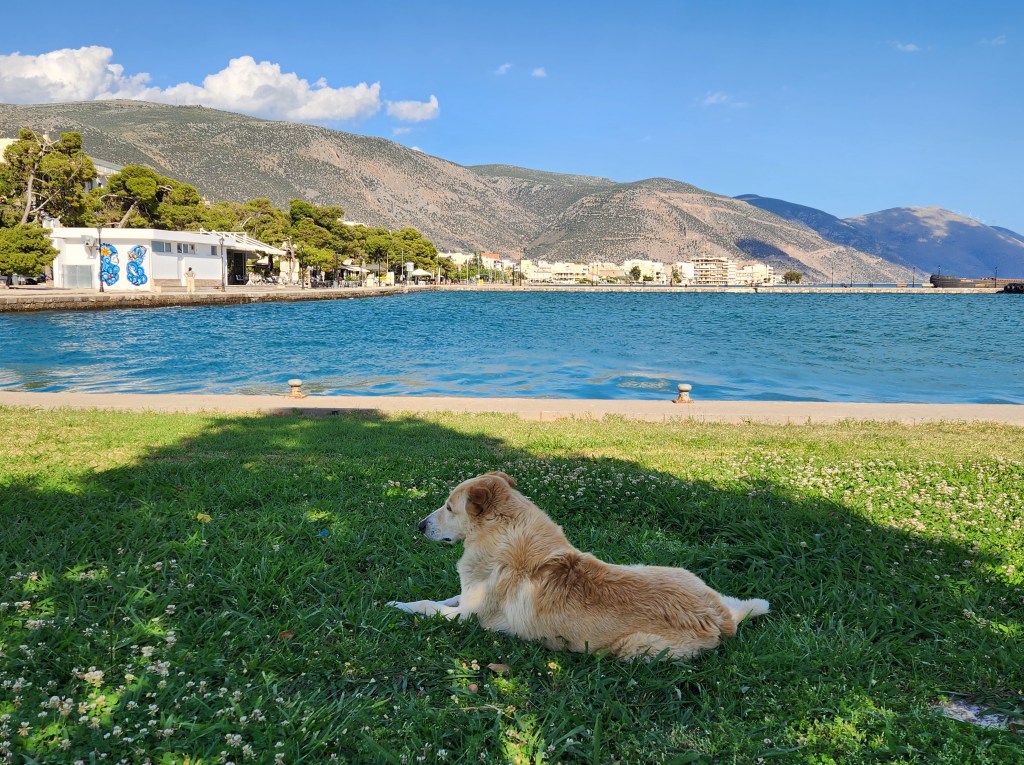
This sweet dog sat in the shade and waited for the bus with me!


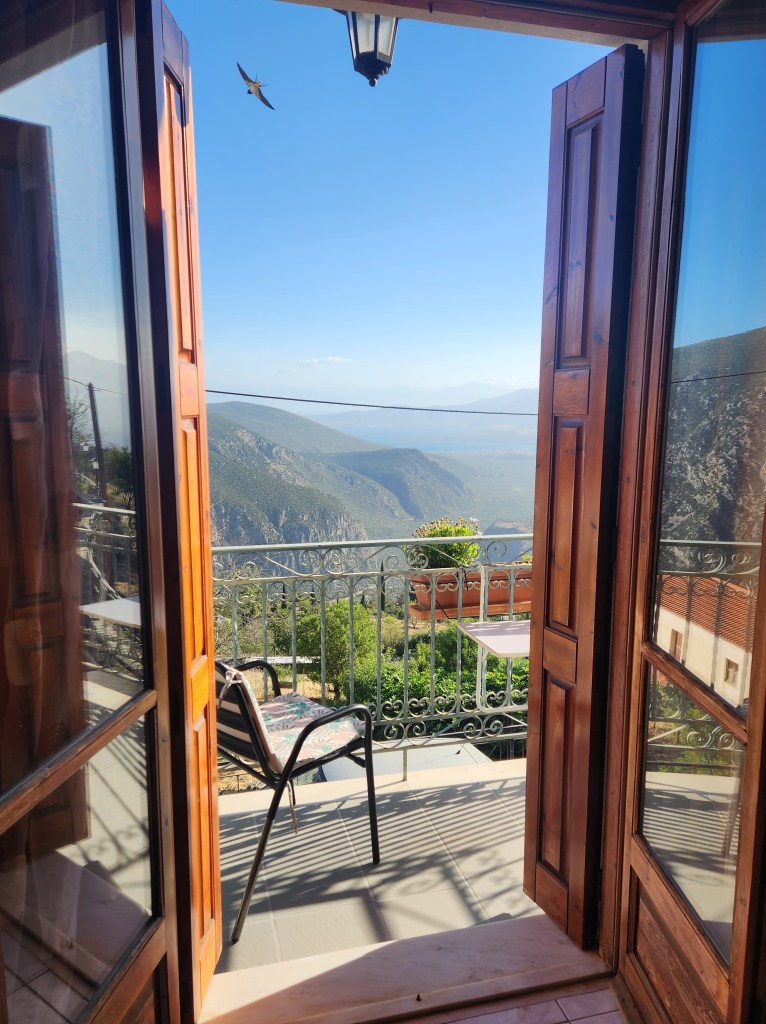
The owner of the pension where I was staying (Sun View Guesthouse: a bargain at 50 euros/night!) suggested that I also take the hike to the lookout above Delphi. Sadly, my time and energy were limited. Next trip!

Can you believe it? A view like that for 50 euros a night!


So, please, take at least a couple days to eat and walk through historic Delphi. Enjoy!

“Stuck” in London

January 13, 2023

You probably think I’m a little strange. What do I mean by “stuck?”

Shouldn’t I have been happy to spend time in England’s greatest city?

I’ll back up a little to explain.

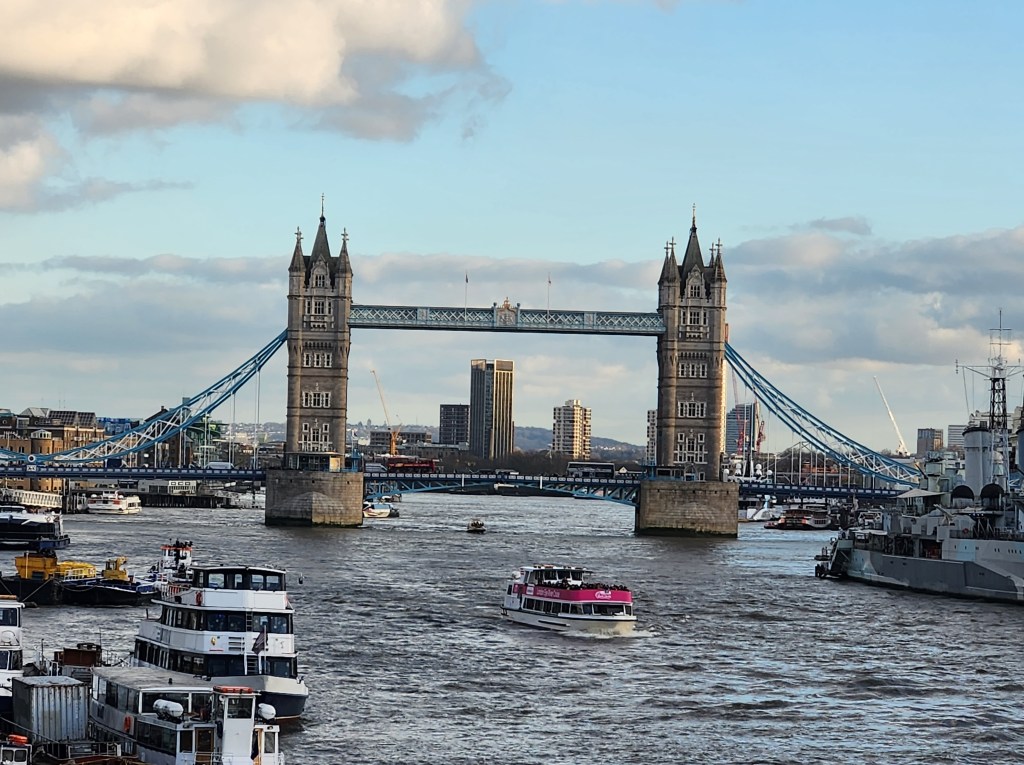
My last journey to Europe started on August 29th, and my first stop was England. I spent most of my time in Northeastern England and the Lakes District, which were fantastic. Then, I enjoyed a couple of days in London before heading to my next destination.

At the end of my trip, in mid-December, I had plans to visit York, England, for some Christmas shopping before heading back to the States.

Due to downed powerlines, my train, and many others, were canceled. It would only be a short trip (two nights), so staying in London was my only viable option. Therefore, I felt stuck.

I wasn’t enthusiastic about the idea for a couple of reasons: I’m generally not a big-city person, and London is expensive.

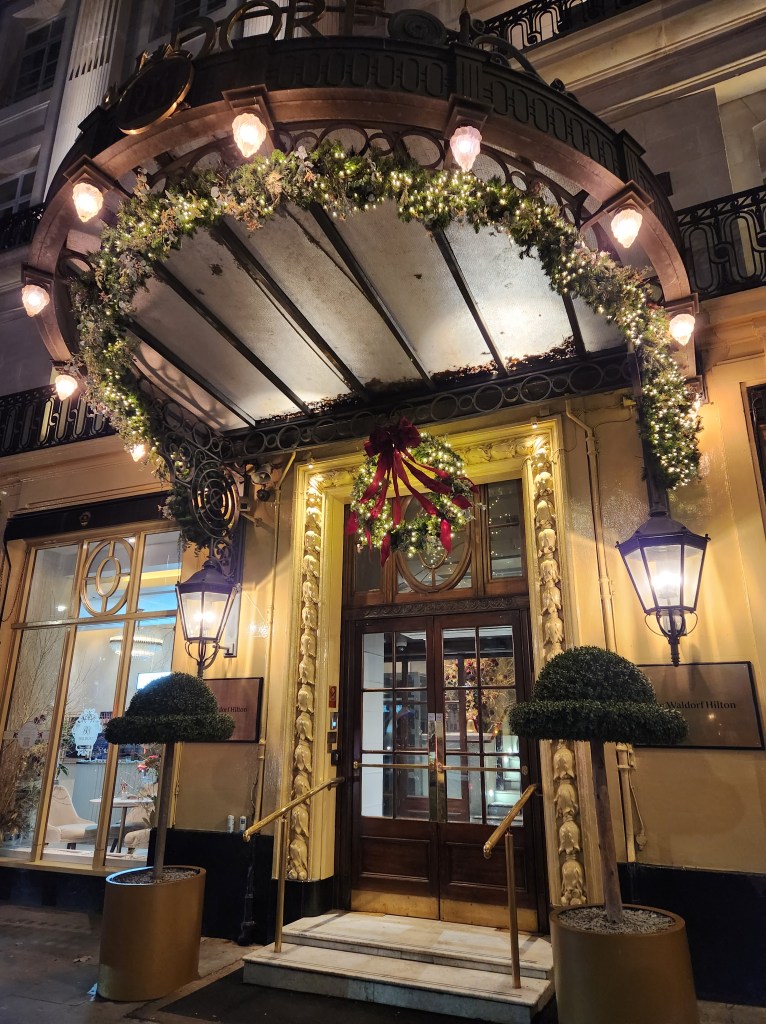
After the initial disappointment of the canceled train, I weighed my options. I remembered that I had a free night with Hilton. One phone call later, I was booked at the Waldorf for the night. Pretty cool!

I also got lucky and was able to cancel the hotel in York without penalty.

Things got better from there.

That evening, I was chatting with a couple at the hotel, and they gave me some ideas for my unexpected stay in London. They helped me locate a reasonably priced hotel for the next two nights and helped me organize an itinerary.

The next day had some magical moments.

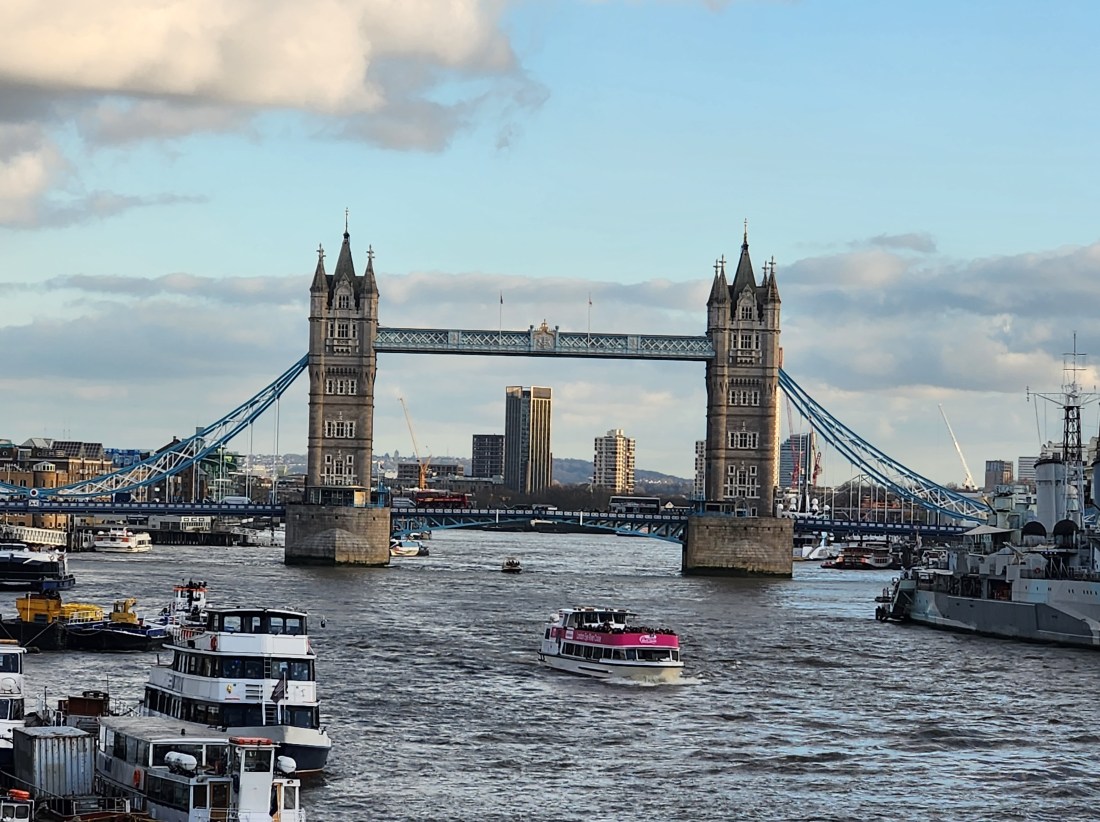
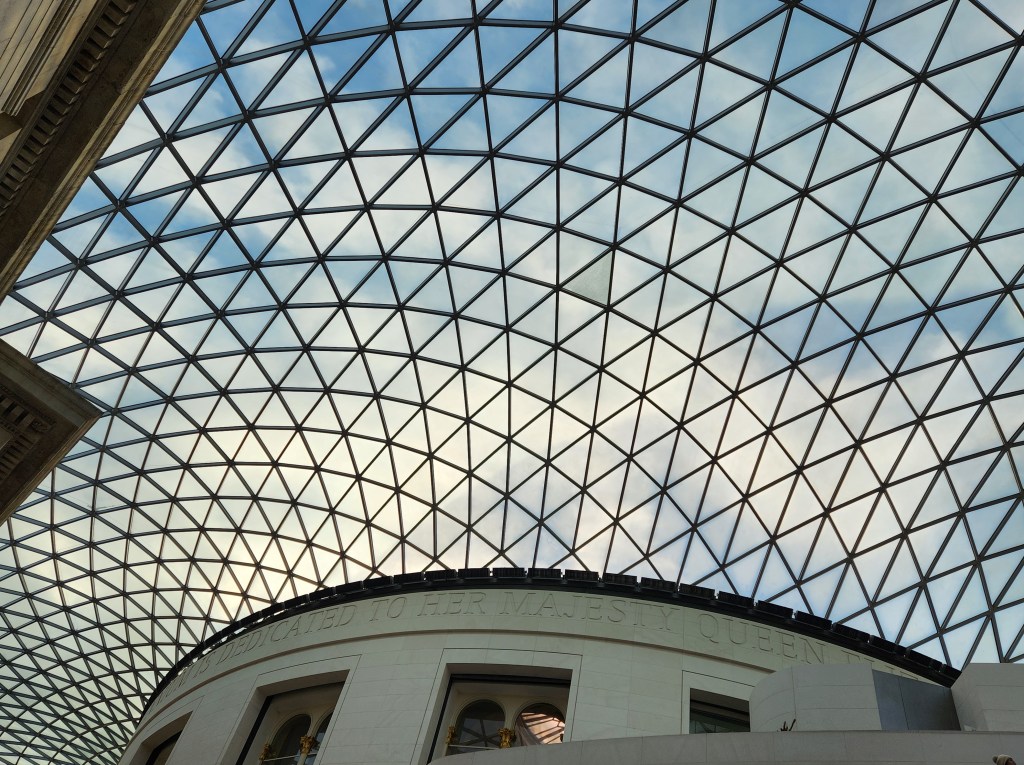
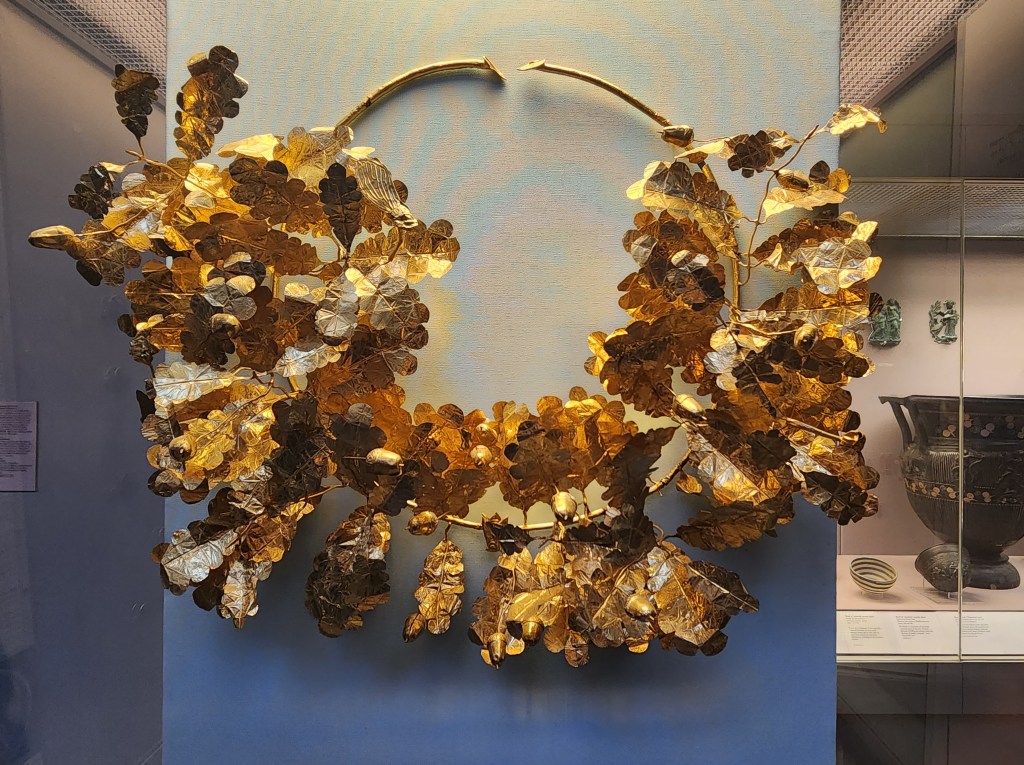
I revisited the British Museum and enjoyed the luxury of seeing just the Greek and Roman rooms. It was also much less crowded than it had been in September.

I moved to my new hotel and had the good luck to catch a classic double-decker. There was even an older English gentleman on board who said, “These are the buses of my youth!”

He and I enjoyed delightful conversation until his stop.

I checked in with the concierge at the new hotel and shared my two-day plan with him. He gave his full approval and helped me book a ticket for a show on my final night.

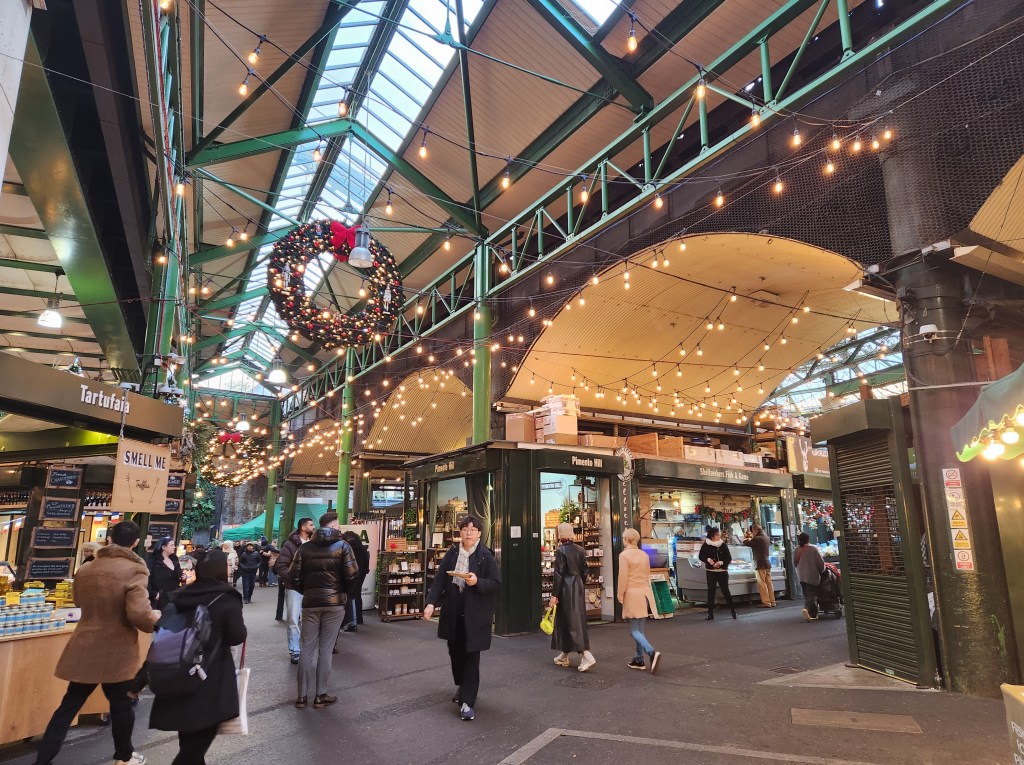
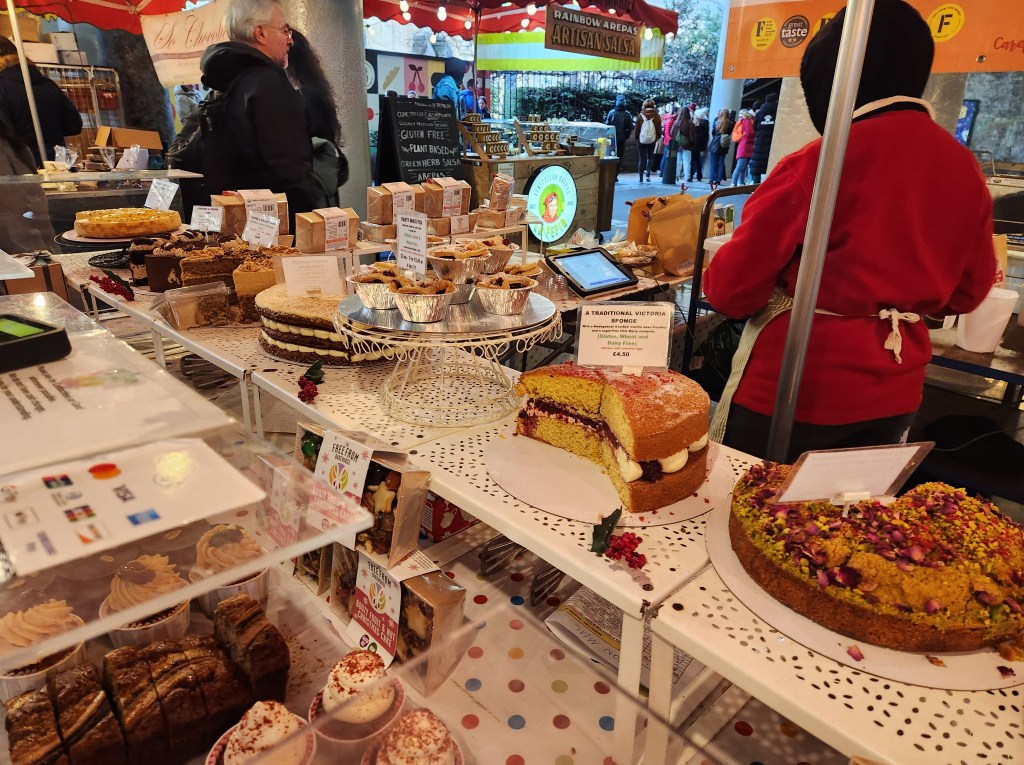
The other highlight of the day was visiting Borough Market. It is one of the most incredible markets I’ve ever visited. I found out later that it is usually closed on Mondays, so I had the pleasure of visiting when it wasn’t crowded. I also picked up some great Christmas gifts and gluten-free goodies!

Lunch at the market was Chaat. Lots of interesting ingredients and gluten-free.

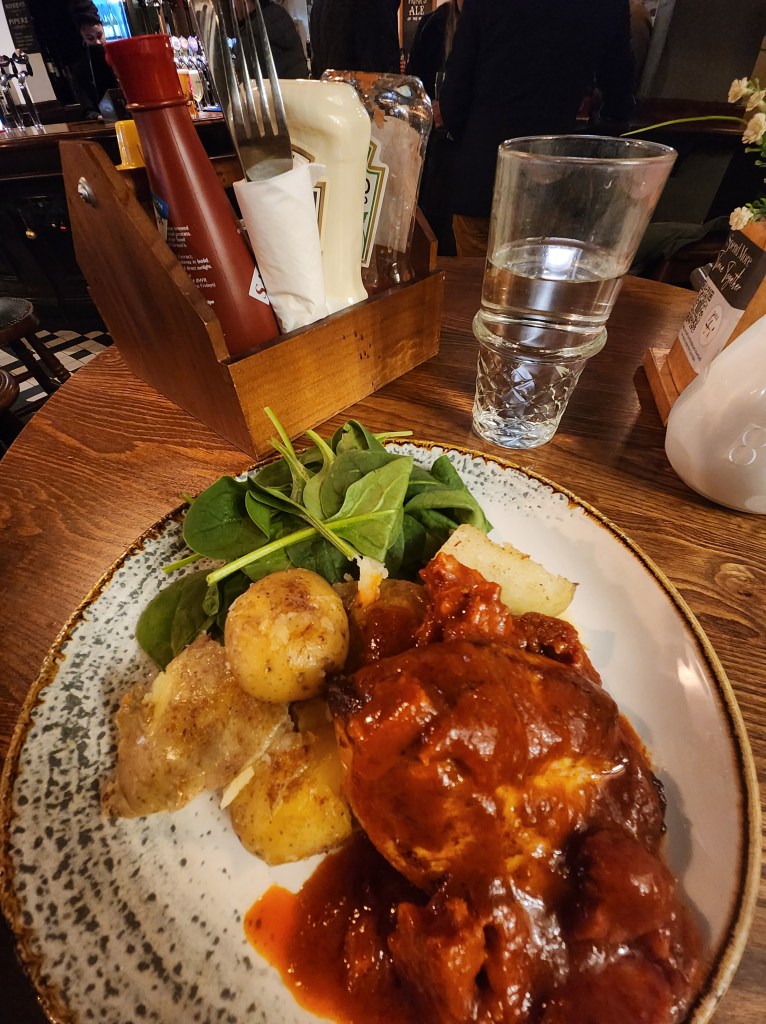
I found dinner on the cheap at a pub round the corner. Yes, it is possible to be on a budget in London. The two meals were around ten pounds each.

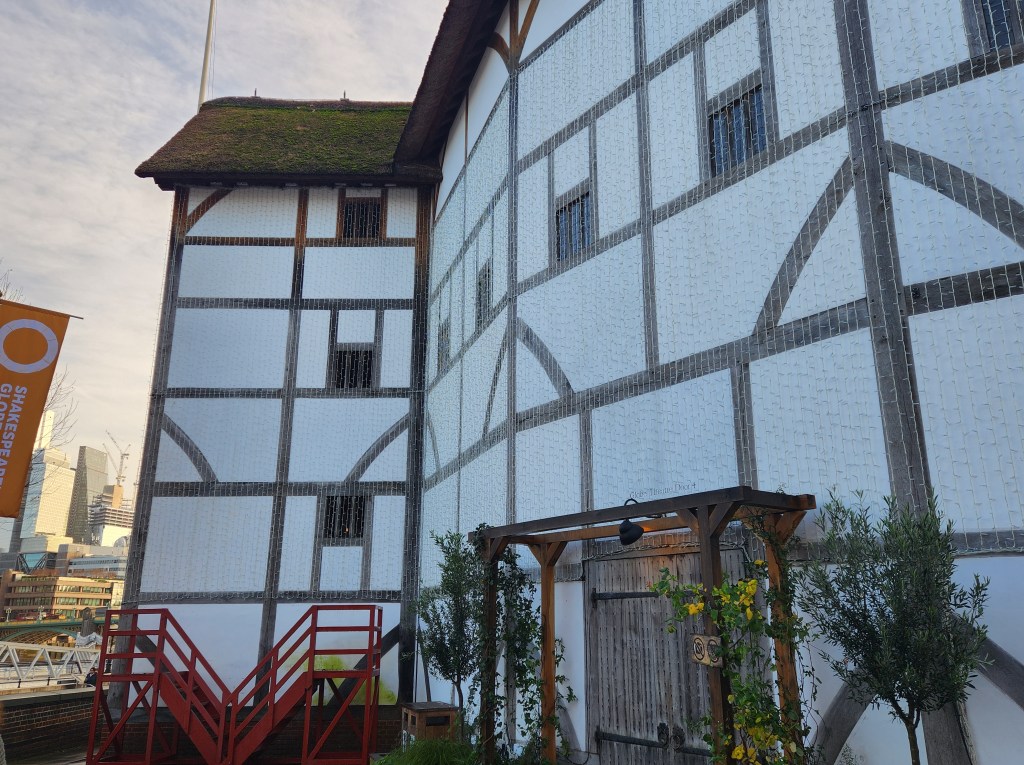
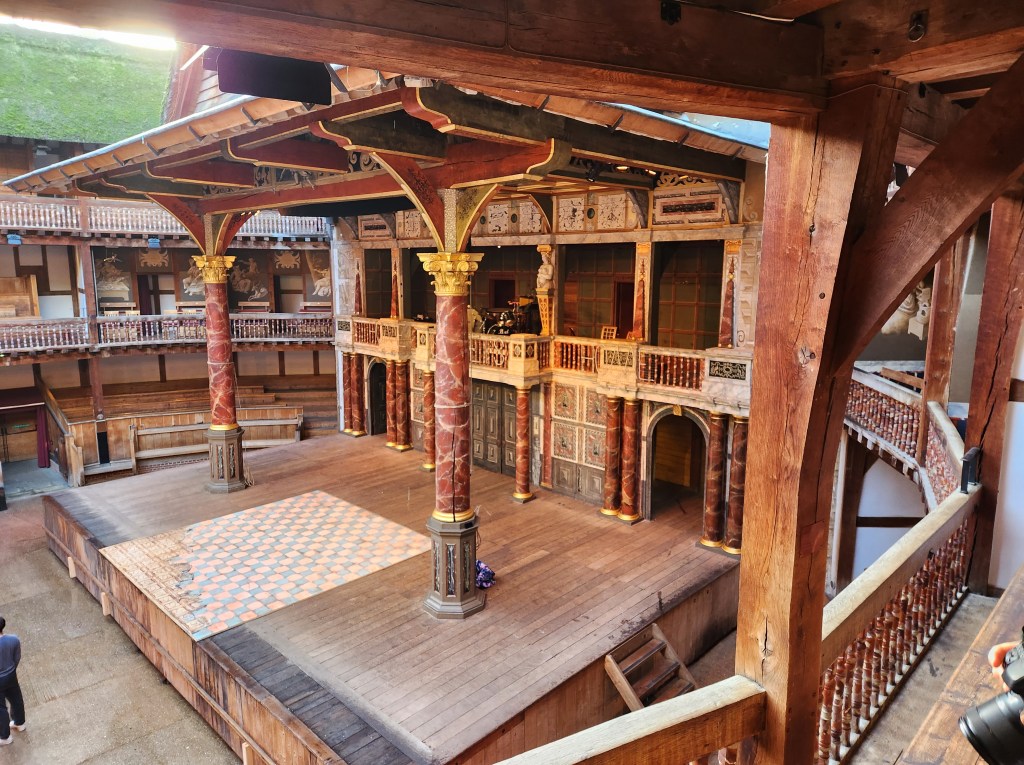
On my last day, I toured The Globe Theater and revisited Borough Market and the surrounding shops.

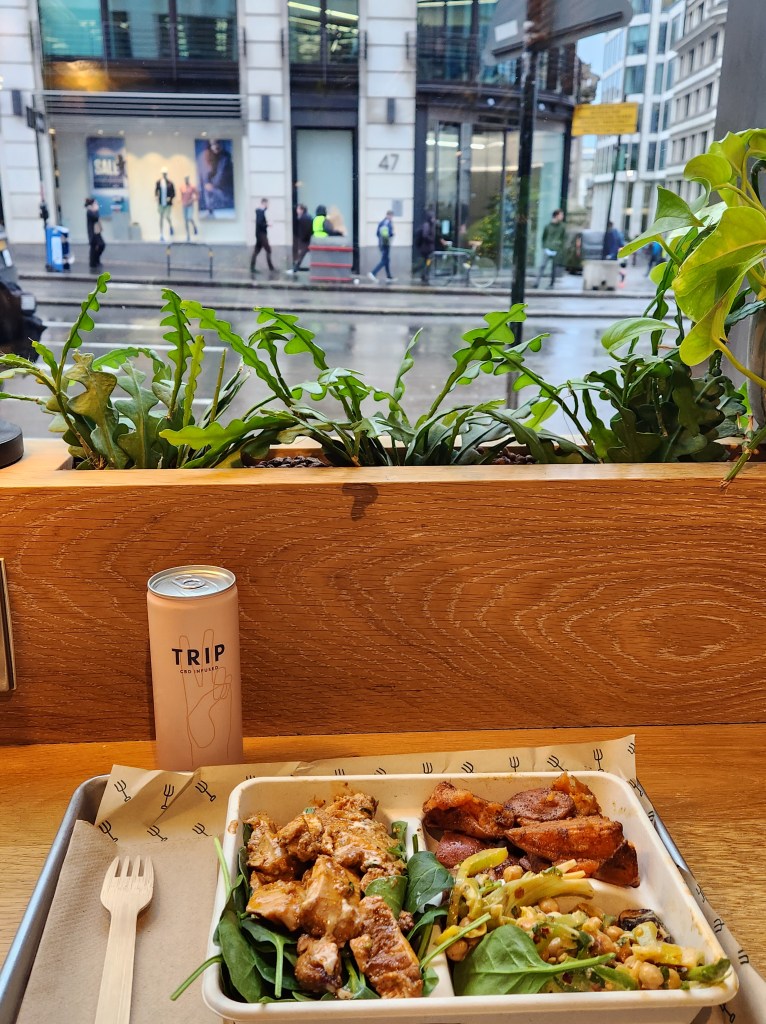
Once again, I found a good, inexpensive lunch by spotting a place called Farmer J. Lots of healthy and gluten-free options!

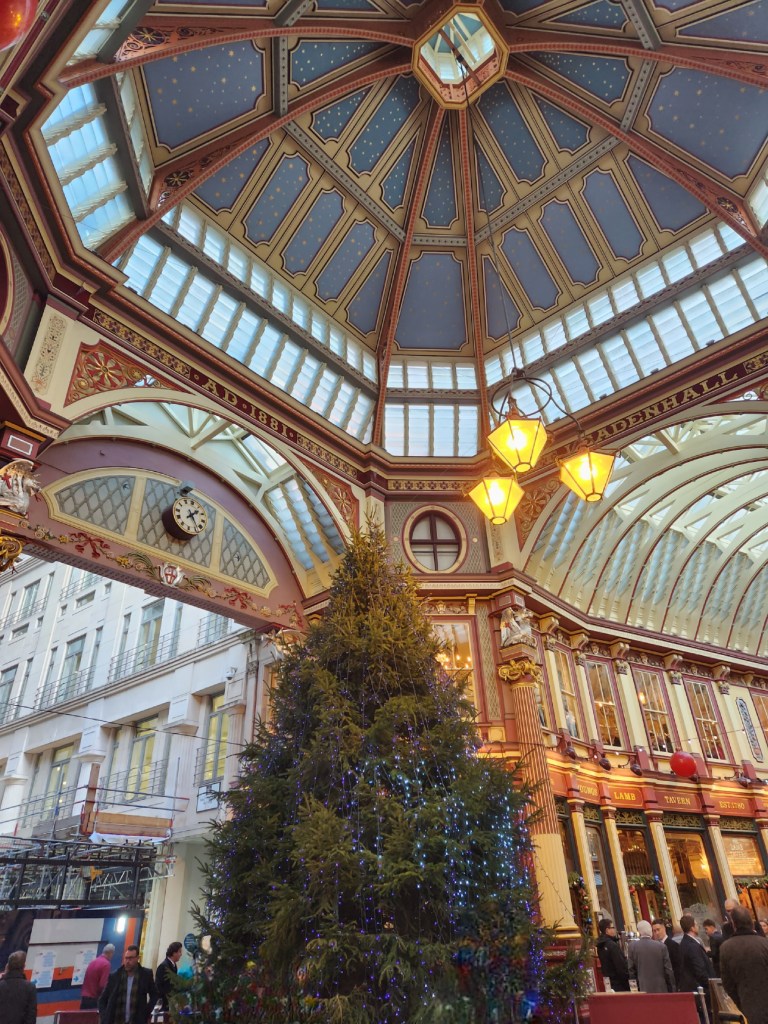
I then visited Leadenhall Market since it was on my way back to the hotel.

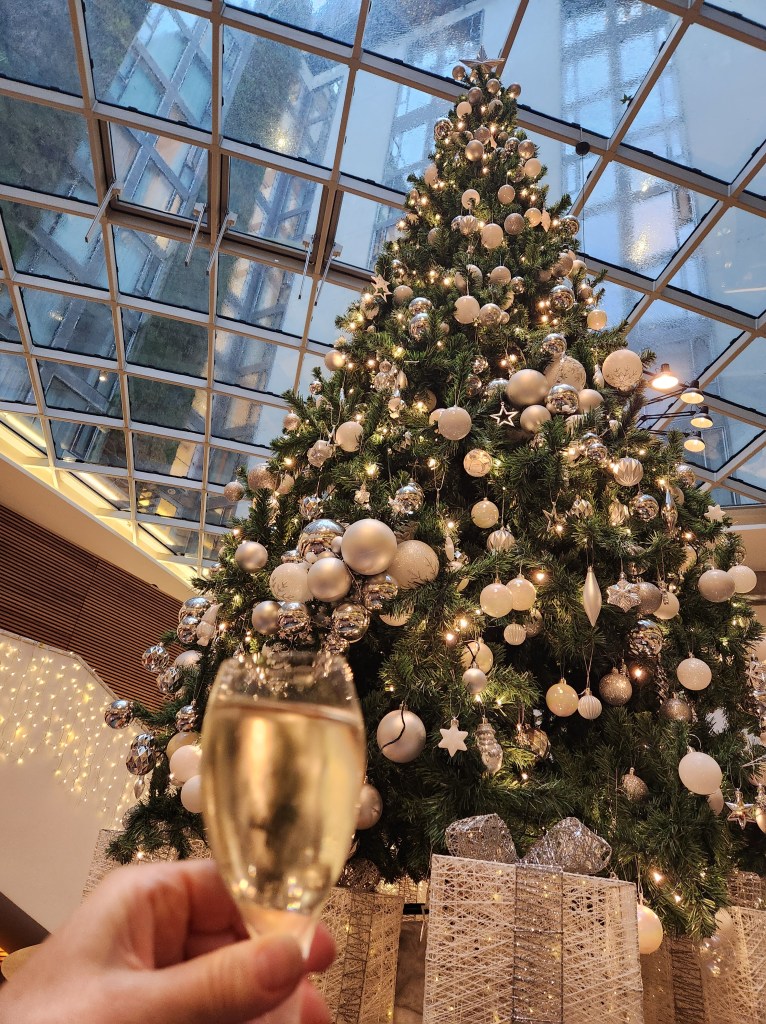
I decided to take an afternoon rest since I had a big night ahead. A little afternoon prosecco (compliments of the hotel) and a nap!

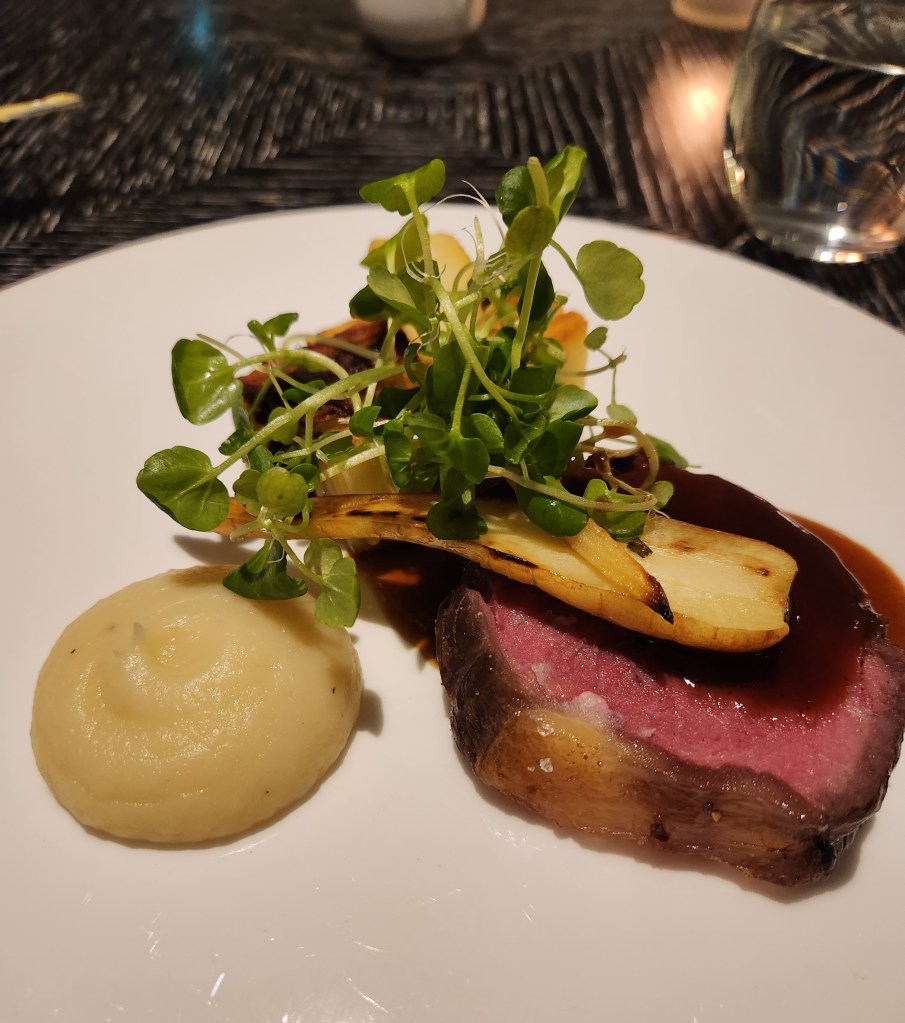
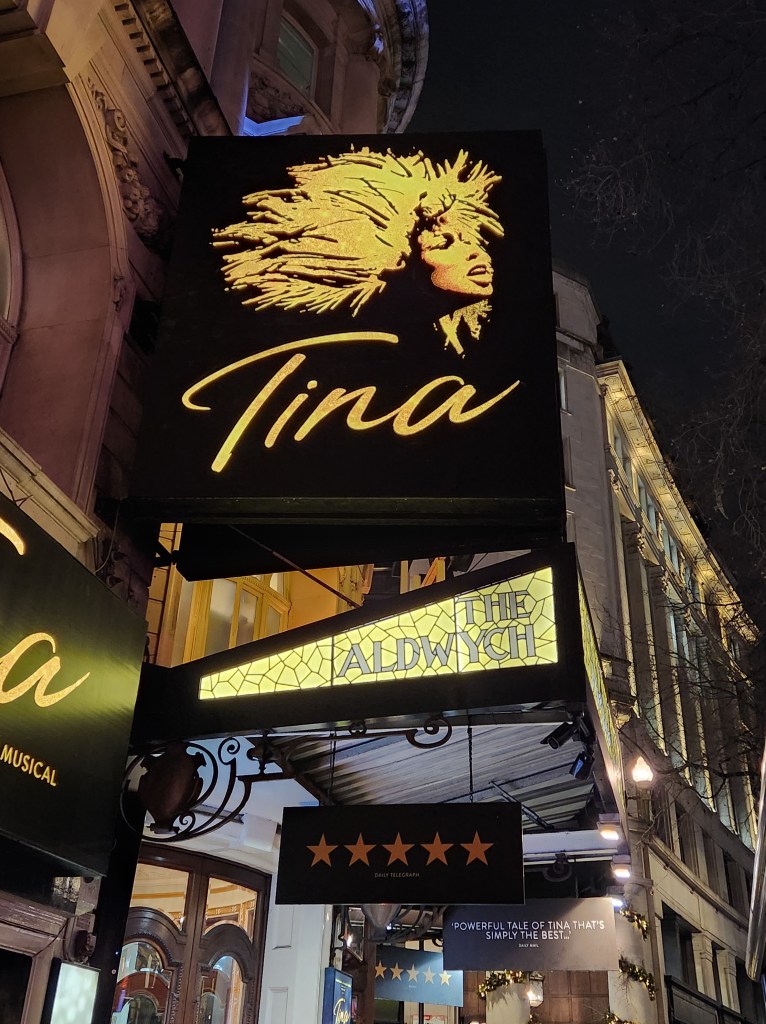
My final night splurge included dinner at Indigo, an all-gluten-free restaurant, and Tina! The dinner and the show were spectacular; I felt good about my bargain-priced last-minute seat, too.

So, in reality, I wasn’t stuck at all. It ended up being a better-than-expected end to my trip. And it wasn’t a big hit on my budget.

One month later, I truly am stuck. The weather has been so cold that one can’t stay outside for long, and I am dog-sitting. There’s nothing like playing chase around the kitchen island!

Just keeping it all in perspective.