
August 22, 2023
When traveling, do you ever think, “I’ll go back there someday and…?”
I do that a lot. In fact, I’ve been doing it since I was a teenager when I got my first taste of travel beyond my home state.
Since becoming a nomad, I have had several opportunities to “go back and…” The latest example is an 18-day trip to Hawaii, the Big Island.
I first visited fifteen years ago with my then-husband and two children. It was one of our most memorable family trips. We stayed in three different locations on the island for eleven days. In fact, one place we stayed, in Puna, was covered in the 2018 lava flows, so I truly can’t go back!
The one disappointment of that family trip was the weather on our visit to Volcanoes National Park. It was rainy, and both calderas were ensconced in fog. We didn’t get to see or do much.
More recently, I have returned twice, but each time I was with non-hiker people. I got to see Kilauea and Kilauea Iki, but I wanted to hike there. After the most recent visit, I promised myself to come back and hike.

This year, I returned by myself this time and did just that. I reserved an Airbnb close to the park for two nights and prayed for good weather.
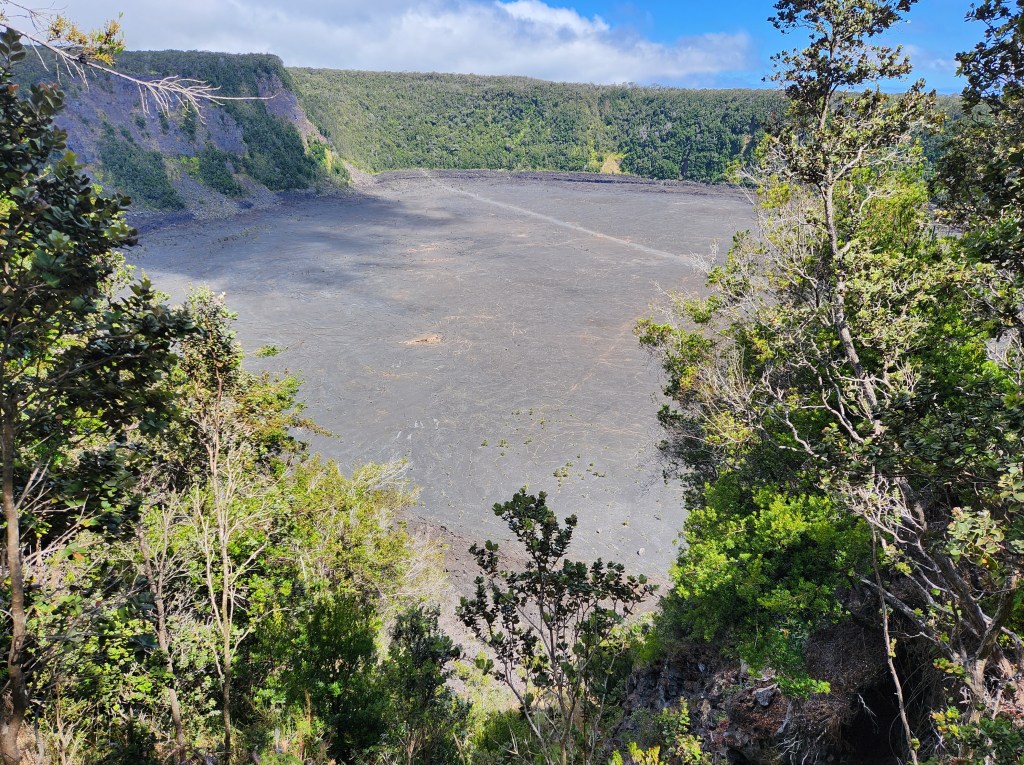
On the first day, I started from the Devastation parking lot to avoid the crowds elsewhere. I then took the Byron Ledge Trail and kept veering left until I reached the east end of Kilauea Caldera. After that, I went to the right and hiked up to the Crater Rim Trail (parts of which are the old Crater Rim Drive). I opted to walk through the Kilauea Iki viewpoint and took a little side trip through the Thurston Lava Tube. Finally, I dipped back down to hike across Kilauea Iki and back up the Byron Ledge Trail to my car. The distance was 8.1 miles.

While hiking through Kilauea Iki, the winds picked up and brought in some fog. It created an extra-eerie effect on the already other-worldly trail. The trail becomes rocky at the far end of Kilauea Iki and makes for a challenging passage. I highly recommend hiking boots with Vibram soles for this endeavor.
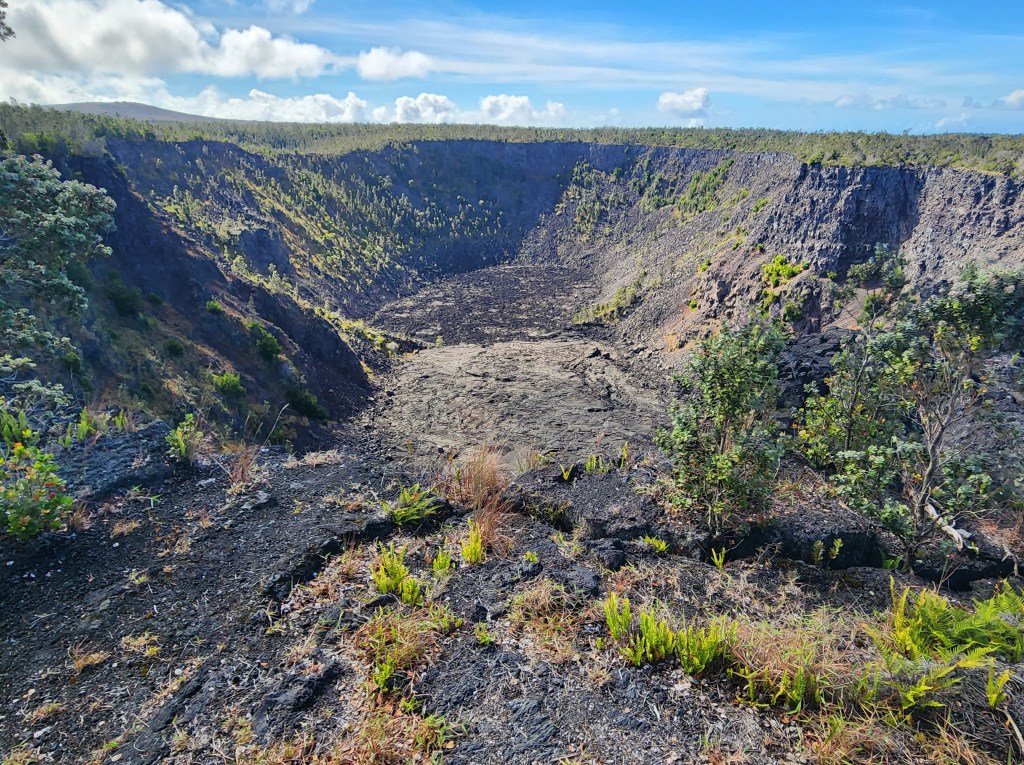
On the second day in the park, I hiked through the Mauna Ulu flow (1969-1974) on the Napau Crater Trail (off of The Chain of Craters Drive). I didn’t put in as many miles, but I thoroughly enjoyed the unique formations left by the lava flows.

After the hike, I continued down the Chain of Craters Road to the ocean, stopping at every crater and most viewpoints.
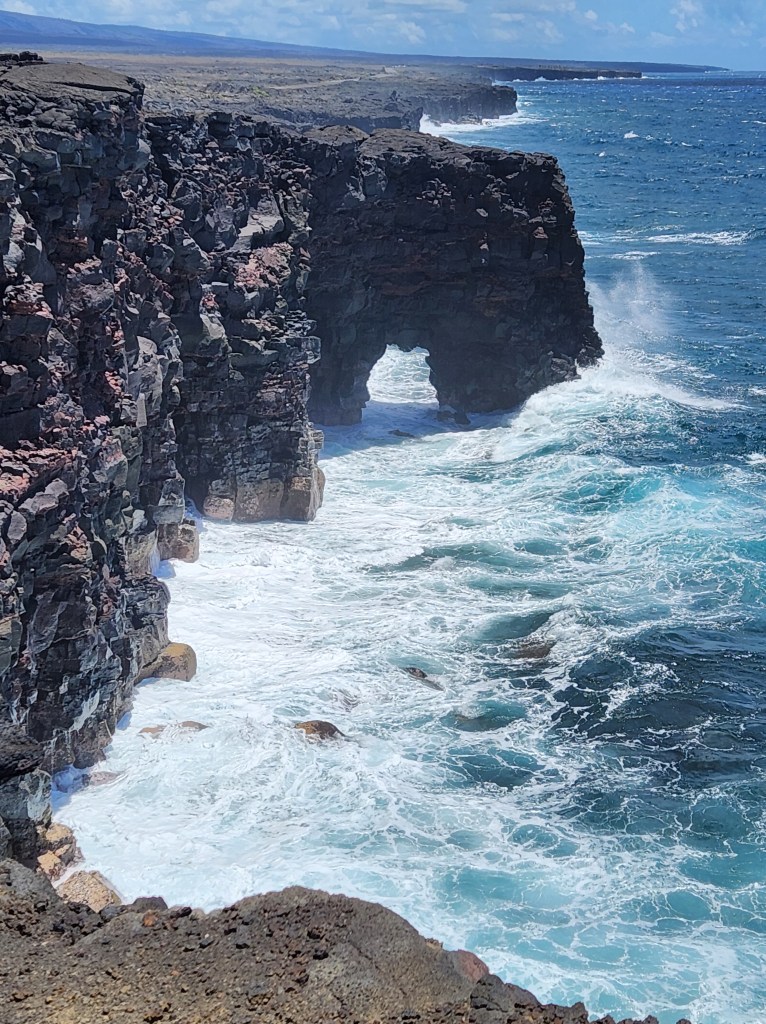
When I reached the coastline, I pulled over on the second pullout and saw a sea arch. It wasn’t the famous Holei Arch that everyone goes to. I thought it was a lucky occurrence.
But wait, there’s more!
The Big Island has more than one National Park. Don’t miss out, especially if you enjoy history.
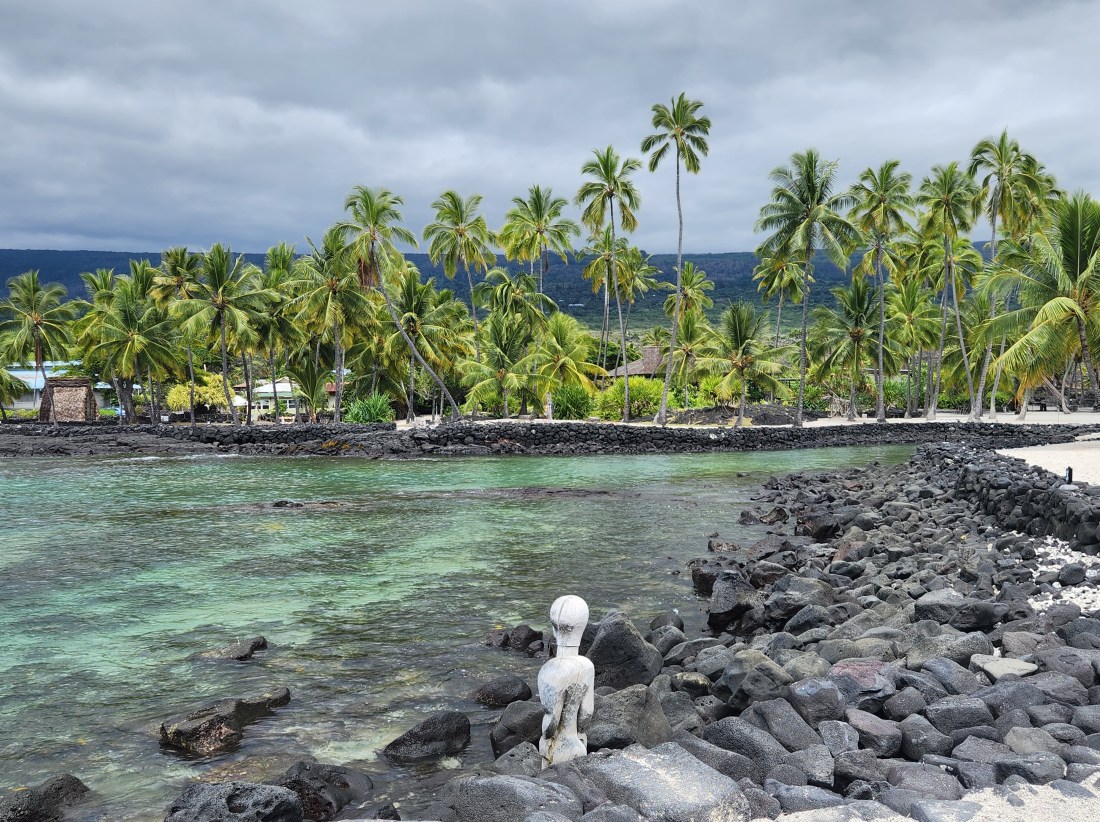
Pu’uhonua O Honaunau National Historical Park (Place of Refuge)
This is a highly scenic park with an exciting history. The trail is relatively easy, and you will see so much culture in a short walk.
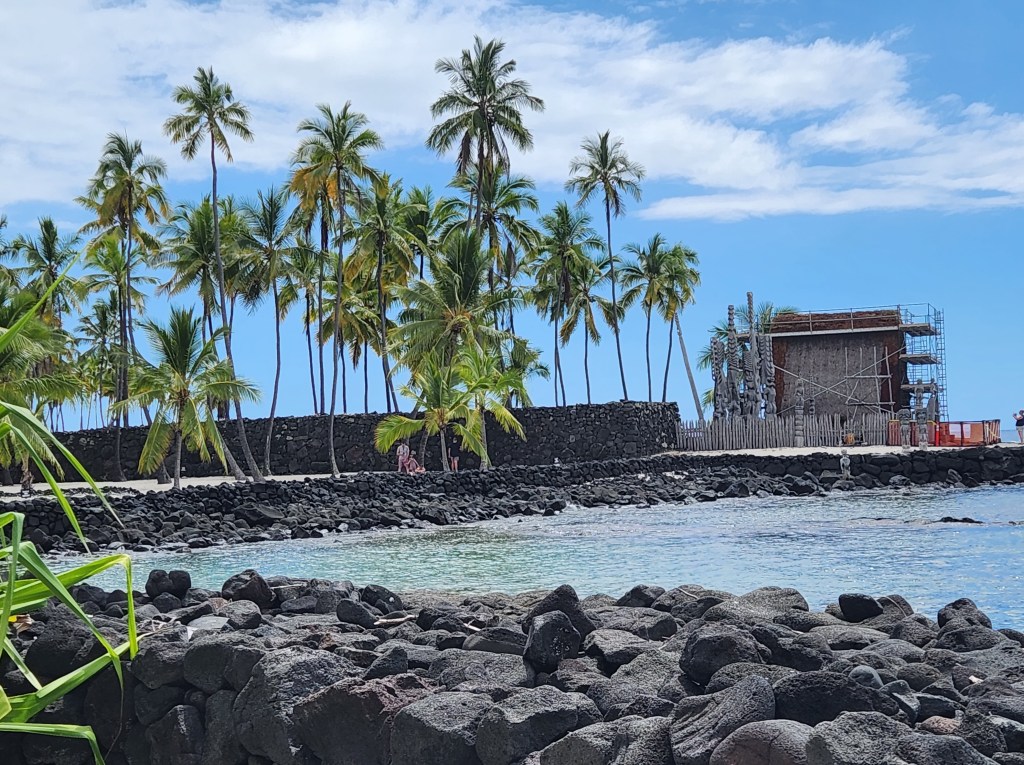
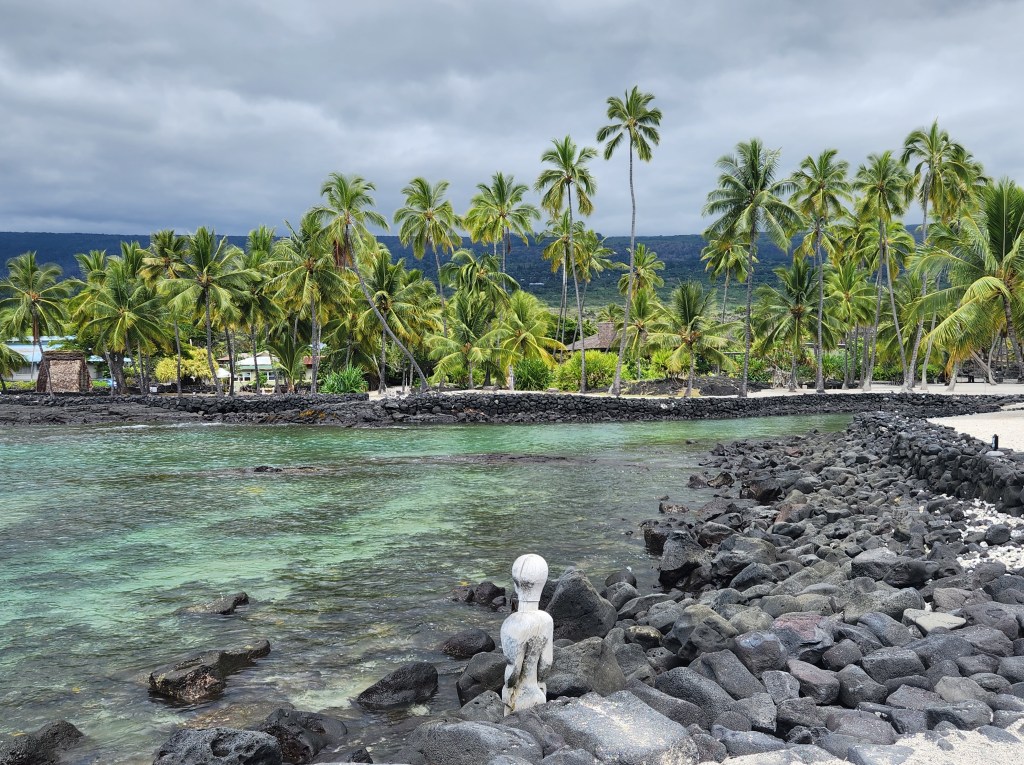

I recommend starting at the amphitheater, where you can relax in the shade and watch the video that explains the history of this sacred site.
Kaloko-Honokohau National Historical Park
This is the place you want to go to (almost) guarantee some sea turtle sightings. (A ranger told me there was only one occasion when a visitor returned and told her that they hadn’t seen any turtles.) You will also learn some of the history of the ancient Hawaiians.
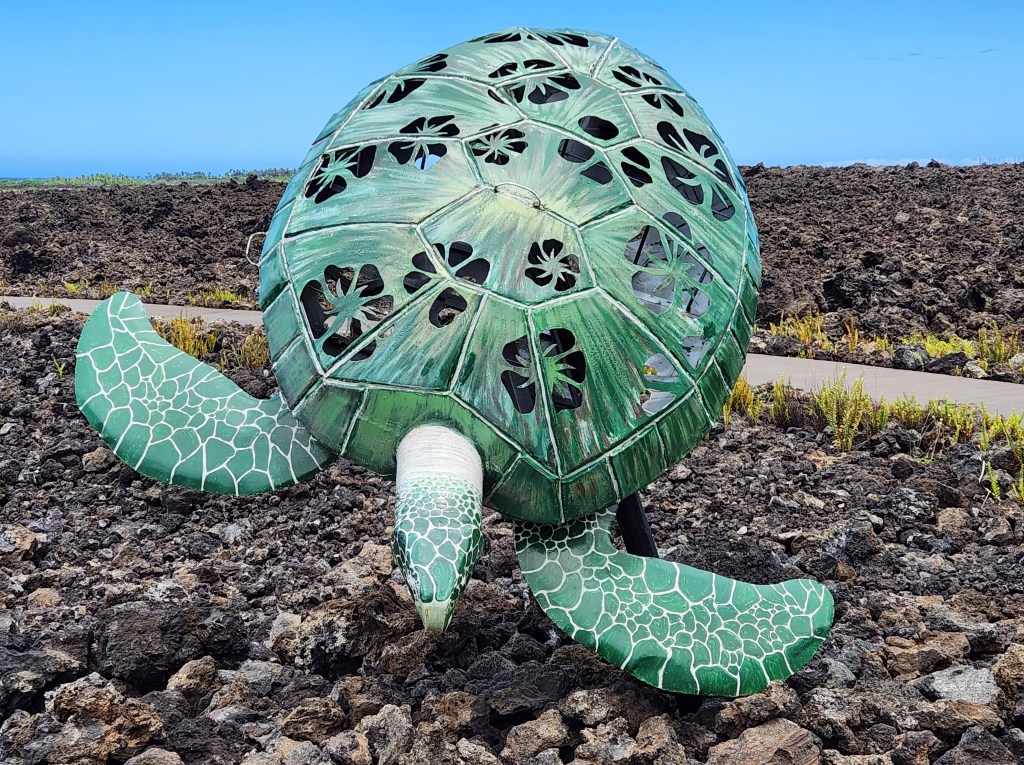
The main parking lot is easily reached off Highway 19, just a few miles south of the Kailua-Kona airport. If you aren’t big on walking, I suggest you check in at the Visitor’s Center and then take the short drive over to the Honokohau Harbor, where you can park and take a short walk to the beach, where you will likely see some turtles along with the fish traps and the Heiau (temple).
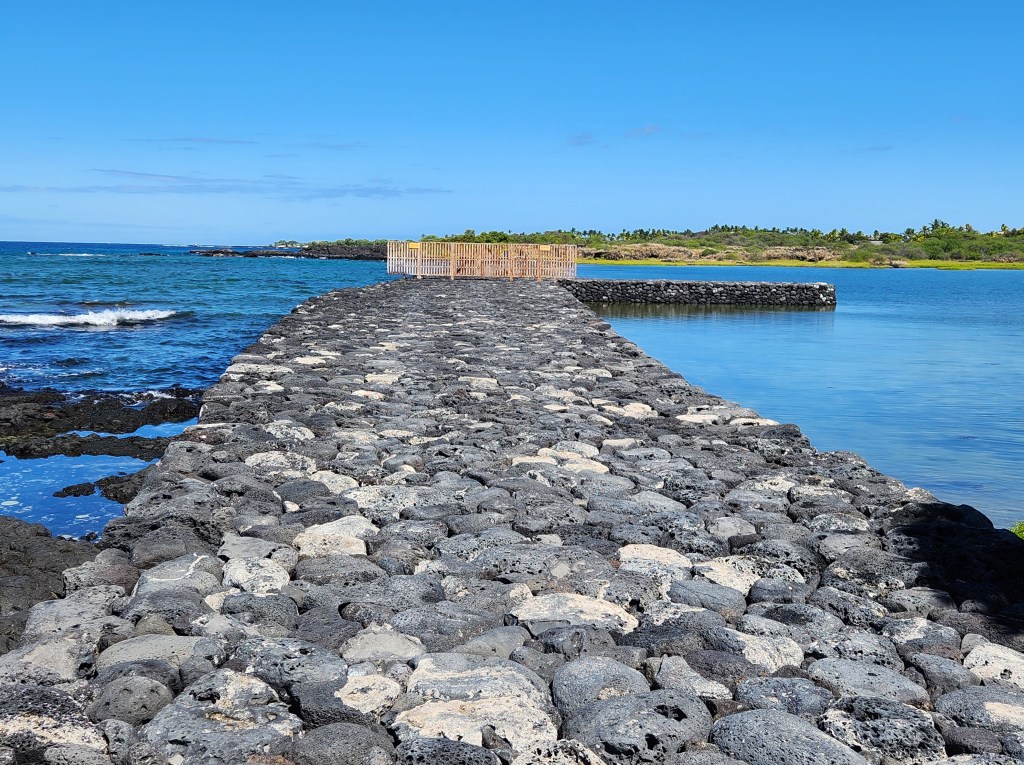
If you are up for a few miles, hike the “big loop” from the visitor’s center through the trail on the lava fields and up to the Kalako Fishpond. The pond was created by a “massive stone wall,” currently under reconstruction. It’s really something!
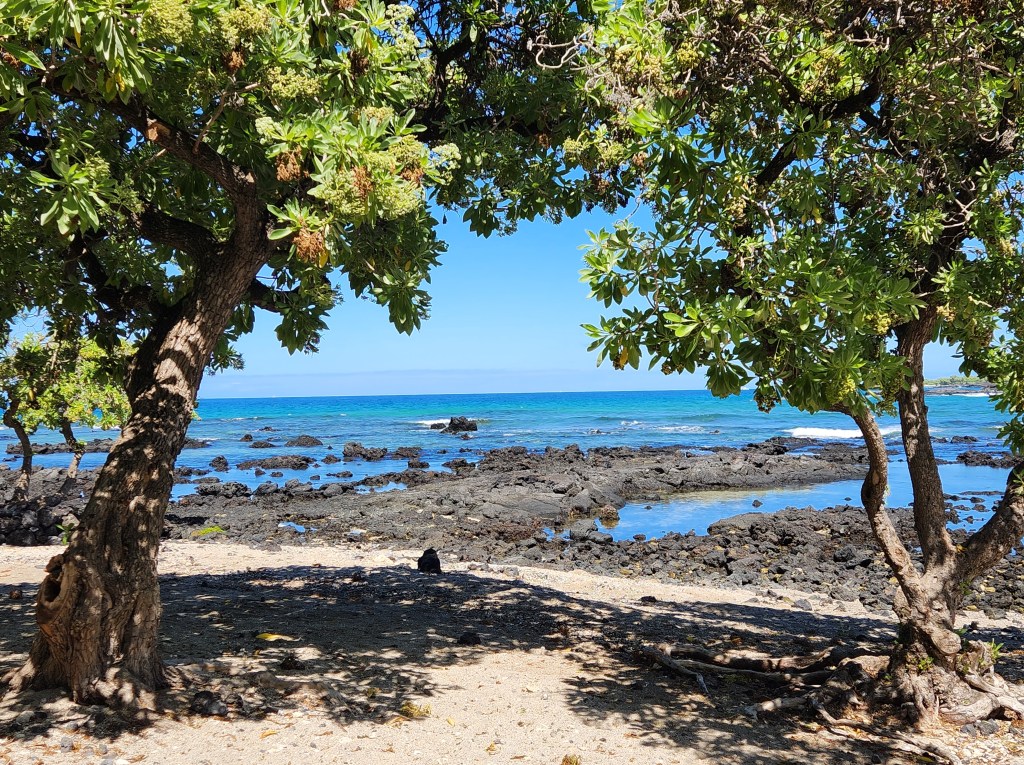
Afterward, you will continue hiking, mainly along the beach on varied surfaces, from very rocky to sandy beaches, back to ‘Aimakapa Fishpond and Honokohau Beach. Unfortunately, the final leg of the hike is a bit boring as you walk through the rocky lava back to the Visitor’s Center. Still, there are a few petroglyphs to see on the way.
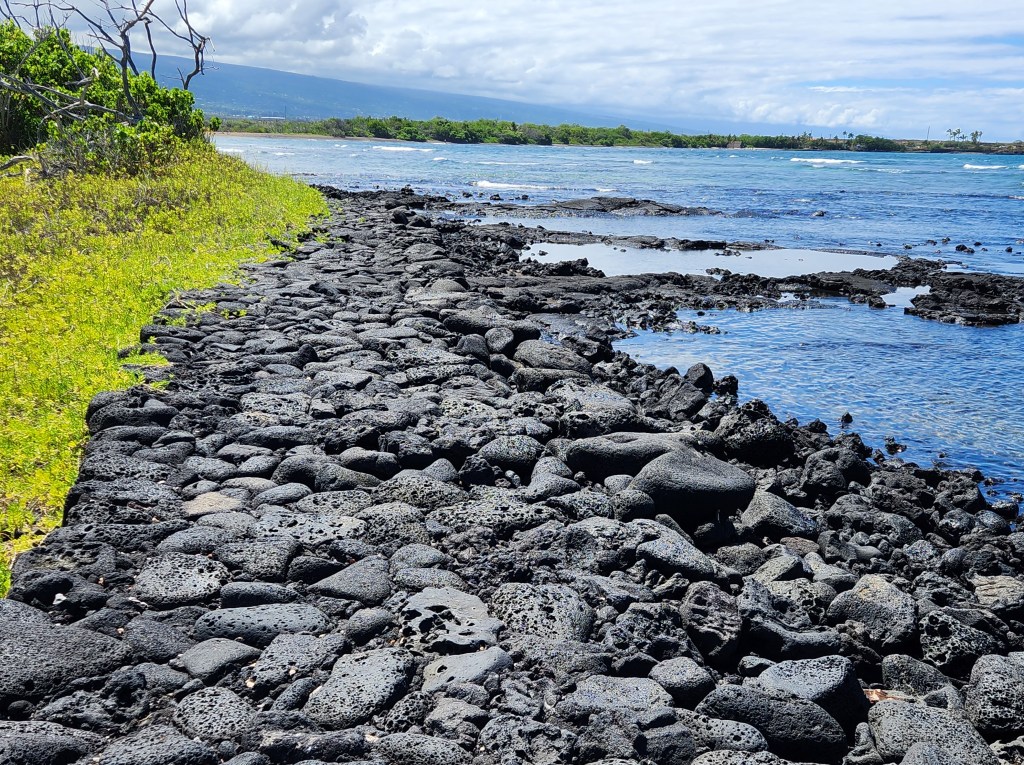
I highly recommend hiking boots with Vibram soles for this expedition. It’s a relatively flat hike, but many sections are challenging because of the sizeable, uneven lava rocks.
Pu’ukohola Heiau National Historic Site (The Temple on the Hill of the Whale)
Don’t miss this one! I had visited the island three times before finally stopping at the visitor’s center on this trip. And then I went twice!
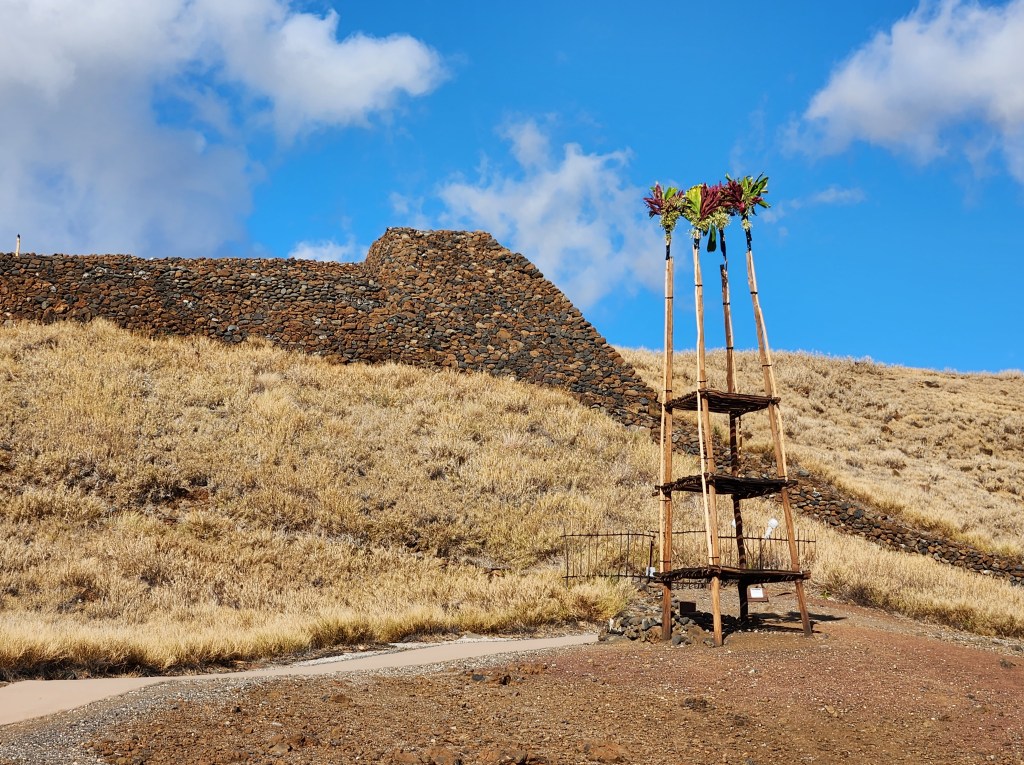
First, I hope you arrive when George, the park ranger, is on duty because he is the most enthusiastic ranger I have ever met. This guy loves his job! He also explained the difference between historic and historical to me. I will entice you to visit by saying this is probably the most important historic site to Hawaiians. But I really want you to go there and learn the history.
There is some hiking to be done here, but I must admit, I only walked out to the Heiau. No harm in leaving something for that next trip!
Now, your English lesson for the day. Both words are adjectives, and the following definitions are from Dictionary.com.
Historical: of, relating to, treating, or characteristic of history or past events
Historic: well-known or important in history
Therefore, to paraphrase Ranger George, a Historic National Park is where a significant event occurred. A Historical National Park shows the history of the place, but no important events took place there.
 Wandering Shannon